
224: 'Everything Is Going to Change', with Martyn Day
A conversation with Martyn Day about the transformative impact of AI and automation on the architecture and engineering sectors, the weakening of traditional software moats, and the strategic importance of data ownership in navigating the future of AEC business models.
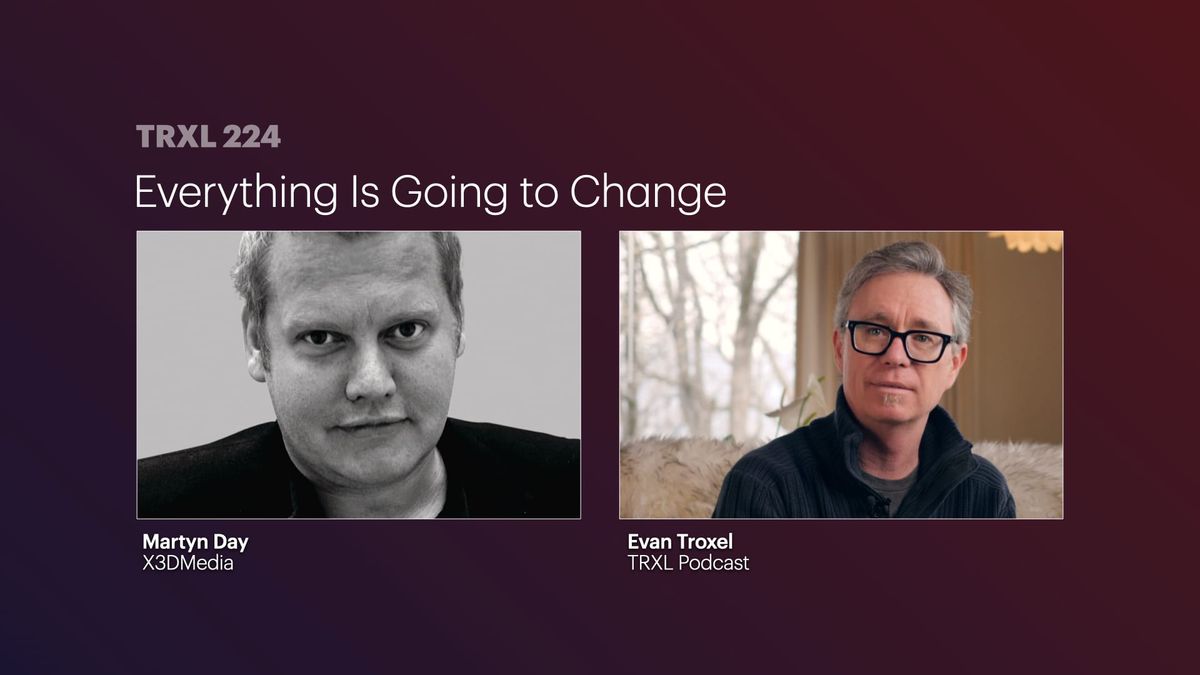
Martyn Day joins the podcast to talk about the forces quietly dismantling how architecture and engineering work gets done, and how it gets charged for. We explore how AI-driven solvers are compressing months of project coordination into hours, why BIM 1.0 is becoming a drawing conduit as open SDKs erode software moats, and what layered cloud and AI token costs mean for firms reconsidering where their project data lives.
This episode is especially relevant for firm leaders and technology directors who are watching these tools arrive without a clear view of what they mean for staffing, billing, and competitive position. Martyn moves past tool-by-tool analysis to the structural question underneath: if the business model depends on billable hours, what happens when the hours disappear?
Original episode page: https://trxl.co/224

Watch This Episode on YouTube:
Episode Links
Some links on this page help fund our work, and we may earn a commission from purchases at no extra cost to you.
Connect with Martyn Day
- Martyn Day — Journalist, Publisher, and Conference Director at X3DMedia
- AEC Magazine
- Martyn has covered the AEC and MCAD software industries for 37 years, known for critical, unvarnished analysis of vendors and technology trends.
AEC Magazine, Develop3D, and NXT BLD / NXT DEV
- AEC Magazine
- aecmag.com
- Martyn's flagship publication covering BIM, AI, generative design, digital fabrication, and the future of AEC software. Published by X3DMedia.
- Develop3D Magazine
- develop3d.com
- X3DMedia's sister publication focused on manufacturing and MCAD technology.
- NXT BLD / NXT DEV 2026 — May 13–14, London (QEII Centre)
- nxtbld.com
- Martyn's annual forward-looking conference on the future of AEC technology, now in its 10th year. The 2026 edition is centered on agentic AI, engineering automation, new business models, and the end of BIM 1.0 as the industry's primary workflow — exactly the terrain covered in this conversation.
Engineering Automation: The First Wave
- Augmenta
- augmenta.ai
- The AI platform Martyn calls "the secret giants" — Augmenta automates full MEP (mechanical, electrical, and plumbing) design from a Revit model. They've been building this far longer than most competitors. Martyn saw a December demo of their simultaneous electrical + MEP solver that floored him: you drop in a Revit file, wait seven hours, and get a fully detailed, clash-free MEP system back.
- Consigli (acquired by AECOM, November 2025 — $390M)
- AECOM acquires Consigli — AEC Magazine
- The Norwegian AI startup that branded itself "The Autonomous Engineer" — an AI agent for space planning, MEP loading, level 3 modeling, tender documents, and more. The $390M acquisition by AECOM was the deal that made VCs and software vendors realize: major engineering firms are now buying AI companies outright, competing directly with the software vendors that serve them.
- Endra
- endra.ai
- Swedish MEP automation startup that raised $20M seed in December 2025. Their platform reduces electrical system design for a 500,000-sq-ft commercial building from two months to less than a day. Martyn flags them as one of the serious players entering the automated engineering design space alongside Augmenta.
- Branch (founded within StructureCraft)
- branch3d.com
- Founded by structural engineer Lucas Epp within mass timber firm StructureCraft, Branch brings real-time FEA (finite element analysis) into the architectural design process — meaning as an architect reshapes a floor plate, structural solutions update automatically. Martyn cites this as one of the clearest examples of how engineering workflow is about to fundamentally change.
BIM 2.0: The Next Generation of Design Tools
- Snaptrude
- snaptrude.com
- Cloud-native BIM 2.0 platform that blends AI reasoning with real building logic for concept and schematic design, with clean Revit export. Martyn notes Snaptrude as ahead of the field on AI-driven conceptual design features.
- Arcol
- arcol.io
- Browser-based, multi-user building design platform with construction intelligence built in from the start. Designed for real-time collaboration across architecture and engineering teams.
- Motif
- motif.io
- Cloud-native BIM platform founded by former Autodesk Co-CEO Amar Hanspal and CTO Brian Mathews. Martyn's take: being late to market meant they could choose a modern tech stack with AI in mind from day one — potentially an advantage over platforms built on older foundations.
- Finch
- finch3d.com
- AI-driven architecture optimization tool for early-stage design, integrating with Revit, Rhino, and Grasshopper. Mentioned in this episode for their testing of Nano Banana to generate DWG-level drawing output from AI-generated floor plans.
- Giraffe
- giraffe.build
- Early-stage design and urban planning platform connecting spatial design to real-time feasibility analysis. Mentioned alongside test fit tools as part of the front-end design toolchain being disrupted.
- Higharc
- higharc.com
- Automated homebuilding platform where all designs are fully modeled at 1:1, enabling permit-ready construction drawings to be generated automatically with no manual drafting. Martyn uses Higharc as an example of why auto drawings work when the underlying model is built right — and how most of the industry still isn't there.
AI for Visualization and Spatial Intelligence
- Nano Banana (Google DeepMind — Gemini image generation model series)
- Google DeepMind — Gemini Image
- Google's family of AI image generation and editing models (Nano Banana, Nano Banana 2, Nano Banana Pro). Martyn and Evan discuss this as part of a broader ideation shift — from rough sketch to photorealistic render in a single workflow — and the limits of translating 2D to 3D accurately.
- World Labs
- worldlabs.ai
- Spatial intelligence AI company co-founded by Dr. Fei-Fei Li. Autodesk invested $200M as part of a $1B raise in early 2026. Their Marble product creates editable, downloadable 3D environments from images — a direct signal of where spatial AI is heading for AEC workflows.
- Google DeepMind — Sketch to 3D Demo (February 2026)
- Google DeepMind
- Martyn describes a DeepMind demo in which a 2D sketch of a gyroid shape was converted to a functional 3D-printed laptop stand — complete with physics-informed airflow optimization and a printable STL output. He calls it "a bomb landing in our little part of the world."
Data Sovereignty, AI Infrastructure, and Platform Risk
- Palantir — Construction
- palantir.com/offerings/construction
- The data and AI platform Martyn identifies as the most credible structural threat to AEC's existing power dynamics. Palantir's strategy: embed inside a Skanska or major contractor, learn every aspect of how they operate through their ontology-based platform, and become impossible to remove. Everything else — software vendors, CDEs, traditional project data tools — becomes "piping to Palantir."
- VIKTOR
- viktor.ai
- Low-code platform for engineers to build, share, and scale custom web applications using Python. Martyn mentions VIKTOR as an example of how firms can begin capturing in-house knowledge in code — creating tools that belong to the firm, not a vendor.
- Procore
- procore.com
- Construction project management and payment platform. Martyn cites Procore as one of the AEC software players with a relatively durable moat because of its integration with financial workflows — harder to replace with an AI-written alternative than a CDE or clash detection tool.
- Autodesk Construction Cloud (ACC)
- construction.autodesk.com
- The cloud hosting and collaboration platform at the center of Martyn's discussion of compounding token costs — subscription fees, hosting fees, AI usage fees, and access fees, all stacking up every time you touch your data.
Open Standards and Foundational Tools
- Rhino / McNeel & Associates
- rhino3d.com
- The modeling tool Martyn says is consistent across virtually every forward-looking firm. Cheap for what it does, endlessly extensible, not in danger. His read: Rhino survives everything coming, because it doesn't try to be the whole stack — just great geometry.
- Grasshopper
- grasshopper3d.com
- The parametric scripting environment for Rhino. Martyn argues that people who can think structurally and work with Grasshopper — who can break a problem down and explain it to an AI — are about to become "gold dust" inside any firm making the transition.
- IFC / buildingSMART
- buildingsmart.org
- The open BIM data standard that Martyn flags as a key reason open SDKs are gaining ground — they support IFC natively, which starts to dismantle the proprietary data moats that have locked firms into RVT, DGN, and other vendor formats for decades.
- Xeokit
- xeokit.io
- Open source WebGL-based BIM visualization SDK. One of the open frameworks Martyn describes as enabling bespoke firm-built tools without vendor lock-in — allowing firms to build software that looks and feels consistent, integrates IFC natively, and belongs to them.
Key Concepts
- Gaussian Splatting
- Polycam — What is Gaussian Splatting?
- A rapid 3D scene reconstruction method that generates photorealistic visual models from photographs. Martyn describes how quickly this is advancing — firms can now send staff with phones into a site and have usable geometry to start working from, without waiting weeks for a surveyor's report.
- Finite Element Analysis (FEA)
- Wikipedia — Finite element method
- The computational method behind structural analysis. The key to understanding Branch's demo: running FEA continuously and in real time as an architect reshapes a building is what makes the solver future Martyn describes actually possible.
- Ontology (in AI and data systems)
- Wikipedia — Ontology (information science)
- The formal representation of how everything in a system relates to everything else — not just geometry, but process, cause and effect, downstream impact. Martyn uses this to explain why Palantir operates at a fundamentally different level than traditional software vendors: they don't just store data, they understand how it all connects.
About Martyn Day:
Martyn is a co-founder and director of X3Dmedia. X3Dmedia produces Develop3D magazine (manufacturing) and AEC Magazine (Architecture Engineering and Construction). He is also the host of the NXT BLD and NXT DEV conferences, and is well-known for his critical views of tech providers in the MCAD and AEC spaces.

Connect with Evan
Episode Transcript
224: 'Everything Is Going to Change', with Martyn Day
Evan Troxel: Welcome to the TRXL podcast. I'm Evan Troxel, and in this episode I welcome Martyn Day back to the podcast for what you might Expect, another marathon conversation. Martyn is a co-founder and director of X3DMedia, which publishes AEC Magazine and Develop3D. Two of the most respected trade publications covering architecture, engineering, and construction technology along with manufacturing.
He's also the host of NXT BLD and NXT DEV conferences, and he's been at this for 37 years, building a reputation for saying the things most people in the industry are thinking, but won't say out loud.
He's sharp, blunt, and genuinely curious about where all of this is heading, which makes him exactly the kind of guest I want to have on right now to talk about the state of the AEC industry and the tech that is shaping it. In this episode, we cover a lot of ground. We get into engineering automation tools that can generate a full MEP layout overnight.
AI written software that's already threatening CDEs and clash detection products and the rise of open SDKs that are dismantling the moats that big vendors have spent decades building. We talk about what happens to Autodesk's business model when we hit peak named user licensing. Why firms need to take their data seriously before someone else does it for them, and what it means when a company like Palantir decides AEC is worth owning.
What we're all feeling that this conversation makes clear is the sheer simultaneity of it all. It's not one wave coming. It's a dozen waves at once, and Martyn compares it to watching an asteroid approach. The technologies are arriving faster than institutions, firms, or software vendors can adapt. The AIA's plan, the architecture firm's billable hour, the traditional software subscription model, they're all in the crosshairs at the same time from different directions. And yet Martyn isn't just sounding the alarm. He maps out where the real opportunity is. Firms that own their data, train on it and build bespoke tools with open SDKs are gonna have advantages the big vendors can't replicate. The people in a firm who can break down a problem clearly enough for an AI to solve it are going to be worth their weight in gold or as Martyn says, gold dust. He told me he's excited by the technology and worried about humans in equal measure. I feel the same way.
As usual, there's an extensive amount of information in the show notes, so please be sure to check that out. You can find them directly in your podcast app if you're a paid supporter of TRXL+. That's just one of the perks. And if you're a free member, you can find them over at the website, which is of course TRXL.co.
So without further ado, I bring you my wide ranging conversation about the state of AEC Tech with Martyn Day.
Martyn Day: I've been doing this for 37 years, I think now
feels like the most incredible time in terms
of development and idea. Yeah.
I think it's very hard. It's very hard to be a software supplier. It's very hard to be a customer.
Um, uh, it's really hard to be a journalist
'cause you can't keep up.
I write something and
then someone releases a new LLM on Monday and
Evan Troxel: It's great for you Martyn. It's great for you
Martyn Day: I have to write
quicker. That's my problem. But I
Evan Troxel: never ending content
stream. You just have to pick what to write about. Uh, yeah.
Martyn Day: Alright. I should
Evan Troxel: Well, I think that's the intro to the show right there. I mean, that little quick history lesson. So you've been on the show before. I didn't look up when it
feels like maybe three years ago I broke that long conversation up into three parts.
I don't think I'm gonna do that this time. I'm gonna try to keep you on track.
I've got six topics that I want to talk about with you today.
Martyn Day: For thi for this, for this, I actually wrote
some notes because it is kinda like, oh, I gotta,
I, I'm so spread out. I feel like I'm so spread out in my little research topics that,
uh, I, I, I am, I'm losing track and they all interact with each other, but it's, uh, it's definitely,
Evan Troxel: Oh, interesting. Well, well, let's start, let's just start with a meta, uh, conversation
about that. How do you keep track of the things
that you want to write about and kind of how, how do those, how do you control or make that, that connection between them? Like how do you keep that story straight across those
Martyn Day: Uh, I'm a non-linear
thinker, so I'm quite adept to taking lots of inputs and then suddenly something, it might be in
my sleep, but then I'll kind of wake up and go, oh, and then I'll go off and then
connect two things together, and
Evan Troxel: Oh, you sound like an architect. Yeah.
Martyn Day: I, I think I'm, I think it's A-D-H-D-I dunno if that actually, but it's, it's.
Uh,
Evan Troxel: There you go.
Martyn Day: my sister, my sister's a school teacher, and she, um, she's given me a late diagnosis, uh, at the age of 50. So, um,
uh, I, I take in lots of signals. I looked for
signals. Uh, in fact, one of the first agents I
wrote was to go out and scrape every week,
uh, forums,
uh, uh, industry websites, um, I don't know to do it LinkedIn.
'cause it's, they, they're A bit weird about it. But, and every week it kind of throws
up, uh, it'll throw up
some things and some it, it knows me. So it will then say, Hey, you wrote about this, this, and
this. This actually impacts that. So I've now got a little friend that kind of helps me. But before I was
kind of, um, uh, just talking to people.
I talk to people all the time.
Talk to the BIM two point I guys all the time. Um, I talk to,
um, if something is,
is particularly interesting, then I'll, I'll chase them down on LinkedIn and start having conversations. So, um,
things like Consigli getting bought
for like a huge amount of money. Oh my God. I'm getting people contacting me, going, oh my God, so much money.
Consigli. Wow. And then they give me bits of information and then I'll
then I'll see Andrew goes and gets
20 million for a startup
and I speak to them. And then so, so suddenly I've got Augmenter who obviously I've been talking to for a long time,
Andrew, who are new. I
do a search and say what else is out there?
Come across company called hvac.
The one of the guy does, this guy does a, a crazy, Um.
Video on LinkedIn. I message him. Really lovely guys. Have a really good chat with them.
I'm doing NXT BLD. I say, why don't you come over? Hey Andrea, come and speak.
Hey, augmenta, come and speak. And then someone else says, Hey, have you seen that company?
So I'll go and look at
Branch 3D and I'll talk to, uh, those
guys, and then suddenly I invite them to NXT BLD. And we've got all of them there. So,
uh, we can have a really interesting conversation about where engineering is
going. And once I start looking into that, that then makes me think
all of these plan of works that the a i A has
and Reba has that, that's so old compared to what's coming because these guys are gonna be nailing a engineering solution either overnight or in real
time.
Evan Troxel: Yeah. The
Martyn Day: does that
Evan Troxel: pace.
The pace of development of those frameworks that you're talking about is, I mean, in, in
the, you compare it to what's happening right now in, in
software development, mostly around ai. Right. It's, uh, like it's, you can't compare them. And so how
you're, you're right. Like those, those look like sinking ships.
Not even
just slow ships passing in the
night.
Martyn Day: augmenta has taken a long time to get to
where it is. And like there's the whole kind of thing. Is it ai,
is it generative? I don't really
care anymore.
It's just, it's, it's, it's generative mainly. But AI is playing an increasingly role, a bigger role in it.
But Augmenta are only
focusing on one country.
Country. The USA, they focused on one thing, which was electrical, and
they spent a load of money and time getting that right. And now they're focusing on MEP, which
was always their intention. And I saw a demo of that in December and it blew me away. And
they said, you know, this is 12
months before we got shipping product, but they're already throwing a Revit file.
You get
a MEP built into the Revit file. Um,
and
Evan Troxel: that, yeah, so that shipping, that shipping product
is not going to be a, a bare bones basic product. It
is
Martyn Day: No, It's going to do your
building and it will do electrical and I mean piece simultaneously. So you'll, you'll, you'll
chuck it in for solve seven
hours later you'll get both done. And then after that, they're gonna do
structural. And then, um, uh,
you look at,
uh, what, um,
Lucas EPP is doing with structure
craft stroke branch 3D. He's got a real time FEA
solver. So an architect moves the floor plate. That floor plate will automatically recalculate
the, uh, FEA analysis and then it will repositions the
structural elements. So you have an immediate response to an architectural movement. And at the moment, that's not really geared, that industry's not
geared up for that.
It's not geared up to connect those people constantly unless you're in a multi, uh, multidisciplinary firm where you have really tightly
integrated folks. So, so just looking at this,
this, this engineering
conundrum that's gonna hit the market. I mean, this stuff's I think,
I think branch three D's already shipping. Um, but obviously this is going to expand out over the next 12 to
18 months. And you are going to see engineering become a lot more automated, a lot quicker to get, to get your feedback.
Um, and
what the hell's that gonna do to the market? You got, you
might have an architect still spending 18 months designing a building, but the engineering is gonna be almost like press a button.
Here
it comes. You're gonna need
somebody to sue. So
there's gonna be
Evan Troxel: I'm gonna, I'm gonna go through my, through my topics in reverse
order based on what you're talking about, because that's, that's this, this kind of solver based
stuff that we're seeing, right? It's like the architect put, I don't even know how to frame this anymore, because it is changing so drastically.
And, and so it really kind of, it, it revolves around the business
model of architecture. Billing money for
Martyn Day: Oh, it destroys the architecture
business model. They have to
Evan Troxel: So let's, let's start there. Yeah. So, so, and, and, and many people say that we have to rethink it, but like, what, what do you, so, so you're painting a picture of why, and so, I mean, there's the, there's the why, but there's also the how or the what, like how, what does it look like?
And
this, what's, what's, really interesting to me is that it gets, it actually gets back to the value
of architectural design. It doesn't,
it doesn't rely on the commoditization of this is how long it takes to do drawings,
and drawings are the output. It really points back, I think, points back to the idea of where the value lies in architecture.
I would love to hear what you think
about that,
Martyn Day: first thing, the industry's being attacked from many different places. It's not being attacked by
one thing. It's going, it's being attacked by automation, uh, in the traditional workflows that we have.
But then you've got, um, uh, solver, which is,
above automation Solver is, is kinda like, here's the MEP for the building that you designed.
That's really bad. And
I had to put all this MEP, the, the software said you had to put all this
MEP in because you, you, you, you, the heat load on this building's crazy. So you've got that, you've got companies like, uh, Palantir
coming in. Holy crap. I mean, I'm, for me,
I, I, I can't stand
the company. I find
them.
Despicable, but they've got an AC
division and that AC
division isn't, doesn't care about. And
all of the traditional software have got like locks on
people. Moat, they're called moats in is, is the kind of common thing. But, um, yeah, RVT is a lock. You know, ACC
is a lock. uh,
uh, DGN is a lock. All these kind of formats, which kind of stop you from having ultimate freedom with your data and Pa Palantir is just
gonna go to a Skanska, '
embed themselves in a Skanska.
They will own the layer between everything downstream and their
business processes. They will
learn
everything that happens in a Skanska project. Uh, everyone else suddenly just becomes piping to send information to the penalty system. And, uh, Skanska will be incredibly inefficient. What happens to construction
managers when you have an AI
layer that's removing risk, that's automatically removing risk and it's automatically planting the planning.
Yeah, proactively looking ahead, oh,
Evan Troxel: Like open claw. Open claw for construction.
Yes.
Martyn Day: It's like
GPS it, it, it'll be looking
forward. And so suddenly, where does that
leave the, the existing players? None of them have AI
development teams or the AI capability or the ontology. You know, the Palantir, the word ontology
is, is kind of
a, if you don't know about it, it's essentially how everything
works.
The ontology of a process, how everything works, how
everything is connected to
one another. And if
this changes, then the impact of that
change. Not just, you know, in, in, a, kinda like
a Revit, um, parametric thing saying that geometry must change. It's kind of like this has happened, therefore this, this, and this are all impacted by that
timeline. Therefore, I will, I will
act, do whatever. So, so
Evan Troxel: And it's goal-based. It's goal. It's like it's not gonna stop at what you would traditionally even think
as solutions for those problems. It will find a way to solve the problem because
Martyn Day: 24 7 and it'll be
working on your projects.
And so we we can all depending on which,
which kind of it, it's almost like a, a fian series, you know,
it's, it's kind of fractal because we could all concentrate on all being, well, I'm an architect and I've got Revit
and,
and you know, I'm using a CC and I've got issues there.
But actually go out, go out, go out, go out this onion, you can go
to the out onion skin and everything is being attacked by this. And that's why it's so hard to understand
the impact of
this. 'cause everything's changing at once or everything. The technologies are changing
at once. They haven't really impacted yet, but we're just kind of looking
at this
asteroid coming towards us.
And we've gotta try and
work out what's gonna survive in terms of the workflows, the technologies,
the products, the, the, the institutions, Reba and a i a have to get their act
together and understand how these things are going to impact architectural practices. And I
how do you charge, how do you do bill, bill
by hour when you have automation and you have, uh,
you, you have things being solved overnight that would
take three or four months. How do you charge the customer?
Um, how do you keep
track of that? Um, I think there's a, a move with automation for drawings, automation for design,
even that will, that will make billable
hours just, just be useless. So then you have to start thinking about what
your value is and how you charge for your value. And by the
way, the software companies are thinking exactly the same.
They know we're kind of near, we are near peak,
uh, named user license because from now on in people are gonna be using automation. They're gonna be using
smarts to reduce the number of seats that
they need. And when that happens. Then these guys, these guys are going, well, Autodesk, I'm a $7 billion company.
I need to be a $10 billion
company. Oh, I might have a problem trying to stay being a
$7 billion company if this revolution impacts
my software sales. Therefore, I I need to do
something to a new business model
to, to keep bringing that money in and then grow into new areas. There is new opportunity for all software vendors as
well, but essentially they're gonna have to do it.
So what I'm
seeing is tokenization. So you're seeing tokens are coming
in
Evan Troxel: like
ai, everything running on tokens,
Martyn Day: and, and yeah, and this is kind of one of the fundamental things that was,
software has moved to the cloud or moving to the cloud, right? Okay. Someone else's computer, and you've gotta pay for it. So not only are companies like
Autodesk charging you for a subscription, they say, uh, let's
imagine that Revit was on the cloud rather than it's on your desktop.
Um, but they're charge, they're being charged by Amazon to run that instance and do that processing. They put a
markup on it, and then they pass it on to you. so they're making, they're making money not only from selling
you the software or subscribing to the software they're making on charging and making money
on
you actually touching it or using it because it's, it's now hosted.
Now, if you. Go out a little bit further and you start
looking at a PS and the whole idea of, um,
a, a gentech, uh, approaches,
they're now going to charge you tokens based on how many
megabytes you, you, you access from a CC. So you're paying to subscribe to, to get the design software. You are getting to pay, to have the stuff hosted with the services on a CC, which aren't
insignificant. Um, and then on top of that, you are paid to, to touch your
data to then process it with an a ai. That
AI might also charge you for processing as well. It
might be on your side of the firm of the, of the firewall. So pay, pay, pay, pay, pay,
it's, it's, it's, it's, it's, got to be a bad thing. So that's why I
think, uh, the net
result of this is that large firms are looking to reshore their project data to have it
in-house. If you have it in-house on your server, you, you don't
have this kind of constant,
uh, bleed of money. And you could charge,
you could develop an LLM on your data, which doesn't
have high token usage, which you, you are
paying through the nose for. So I kind of feel, think that, that, that firms need to start thinking about
where their data is,
how good their data is, can they centralize it?
can they protect it? And then what, what is it that they want to
extract, extract from that? Um, and have they got the in-house knowledge
to do that? Or, you know, there are gonna be new roles in firms where you're
gonna have to have someone with some kind of agentic ai, uh, approach. These people have to be structured in mind.
A lot of firms
don't hire
programmers.
Evan Troxel: You have to think think about data differently. Yeah. I mean, it, it's, it is interesting to even think about like you are, you are then competing against these
companies that you're talking about who are doing, developing their in-house and they're paying way more than architecture firms pay
architects, for
example.
I don't know how how much architecture firms pay data scientists, but it can't be anywhere. I can't imagine competitive
with a planete. I mean, not that you have to shoot that high, but it,
but
Martyn Day: Well, even in an, even in an Autodesk, in any software firm, so some of my friends
who've gone off from architecture to join software firms are amazed at the amount of money that software firms pay people. Um, you are an important person because there are very few of them, and
they develop something with that has a good margin
on it.
And, um, there's a huge market to sell to, but I, I,
I, there are, everything is going to change and it's going to happen a lot quicker than
I think people are, are, are, are looking at it in terms of, um, in 18 months time.
Well, I'm getting, uh, uh, uh, I'm getting, calls from
people who are programmers who are saying that AI programming is getting so good
that they're gonna be at the job within a
year. And if that's the case,
that level of programmer is AI programmer is gonna be available to every single AEC firm on the planet. And all it takes
for you to do is to have, uh, you need to be able to ask the right questions of the system to develop
the product. This is the, this is the the, big problem is understanding what
your problem is and being able to explain it to the AI so it
could give you a, uh, a, a program.
So, and I, I think a lot of the programs are gonna be ones that you stand, you see, so.
Right. You have an ai, you have hopefully
someone who kind of has a structured mind and says, okay, we need to develop a CDE. We want it to do clash detection. We want it to do X, y, and Z. So you, you specify it. Now every time, if you were to sit in
front of, of Claude and say, right near a C, d, E, and here's
the spec, it's not necessarily gonna write the same
piece of code with the same stuff in it every single time.
It will
be unique. There's no framework.
It's just off. You go, go and, and what, whatever is it, it
does on, on its research at that moment in time, it will go and build it
differently. This is
why a lot of the, a lot of the, I think that some of the most important firms in the next five to 10 years are gonna be open SDKs.
So that open company, Creo, XO kits, those things, they're out there and they're open source, they're free. And if you point, or you tell your AI to use that
SDK, you get common frameworks, common user
interfaces, uh, access to file formats that are
standard like IFC. It's all built
in. And you, so when you, when a company develops something, they develop a product that it,
uh, and then they develop a next product, they'll all have the same look and feel. And you, you kind of end up with creating your own software,
but you have a standard. And that standard
is this open, these open frameworks, and these open frameworks are, are starting to crush,
um, data moats. I mean, it, it. Things like, uh, CDEs are, are in real danger because that's, that's gonna be
easy. Bread and butter for a, for an AI to program. Um, clash
detection is another one, which is a, a another problem, uh, which will be solved. Um, uh, things like c Celebrity I kind of have worries about
because, you know, model checking is another thing. You know, if you can write rules, uh, uh, put, put your rules in the ai, then it can then put
that in the program.
So I think you're gonna, you're gonna find certain
products. Um, uh, uh, I've already had software firms reach out from that. Just that little thing I put on LinkedIn
saying, I asked, uh, Claude, could you rewrite a CC in '
open SDKs? And it just went,
and it, you know, it kind of last year it said it was
difficult this year it kind of said, yeah, I
can do it.
But, um, uh, there were, there were certain things that it couldn't do. It could do
70%. Um, and so software companies are coming to me going, Hmm, what does this mean for me? What does this mean for my
product? There are gonna be some low hanging fruit that are going to be
struggling. cause if you really wanted to, you could have an
AI write that for you specifically. Um,
and that will be from next year onwards. Um, you're still gonna have to understand managing code. You might have to
have some idea about user interface and how you like it.
Um, code has to be kept up to date to run on, uh, various, uh, standard software. And there that, so there are some, it's not, it's not,
straightforward.
You're still gonna need to have some knowledge, but. People like fostering partners have 30 or 40 computer programmers, and a lot of, these other firms have got zero. They're relying on an architect
who happens to
have, you know, studied Python because they're, they're a big fan of McNeil or something. Yeah.
It's like a,
it's it, that person or those people in your firm who have that
mind, they're gonna be like gold dust
because not only are they gonna be able to help with the grasshopper scripting or whatever you're doing,
but that, that idea of breaking down a problem
is going to be, and then explaining it is going to be
essential in, in firms to create tools for the, for
the, for the, for the company.
Um, and they'll be saving a lot of money. Um, and this is the other
thing is that firms will be able to start looking at their software
estate and start deciding what's important
to them. I don't think offering tools are in any real
danger. I think that BIM 2.0 and I think Revit and, uh, ArchiCAD, you're not gonna be able to have AI write, write you a Revit.
It's
just not, not, gonna happen. But it will do CDEs
model checking, um, uh, clash detection,
you know, those kind of things. Um, uh, but if there's
an
Evan Troxel: the side, plus the side of it that you talked about earlier when you're talking about how, how you're synthesizing all of these, like it knows you, your tool that you
use to do research knows you. And that's the other side of the coin that
these firms have to develop. It's interesting to me to think
about like this idea of, of like the billing structure, but there's also
the phased structure of our
projects and how they're linear.
Like seed, you know,
conceptual design, schematic design,
design development, and how compressed pieces of that get for sure. Depending on who's on the team, right? and
and, and who on the team could also mean these kinds of solver apps, right? So,
um, it's, it's really interesting to think
about, like you said, everything is going to change.
So it's not just
the tools that we're talking about. It's the way we
do the work. It's, it's how the time it takes to deliver
the work. it's like the value of the work. It's, it's so many layers deep.
Martyn Day: just, just think, just thinking about the one that I absolutely know is gonna happen first,
which is engineering, is
how do architects work with a structural engineer
and what's the timeline between design and then giving it to the
structural engineer and the structural engineer handing it back, and then the
way
Evan Troxel: look at what Core Studio did with, with asterisk years ago, right? And, and it was kind of too early. It was
too a big idea, a little
too soon. And now they're on the verge of doing it again and they're, they're doing it to themselves because they know these solvers need to exist and they need to solve 80% of the problems
so that they can work and focus on the, the
Martyn Day: why did AECOM buy Con
Sigley for 360 to $90 million? I mean, that is insane. Um, I had, I had VCs ringing me up I had software vendors ringing me up. No one could believe the price. Uh,
and then software vendors were worried that suddenly they
were going to
be competing with their customers to buy AI startups.
And that is gonna be the case. I've,
you know, I think C or on
Evan Troxel: big ones.
Yeah.
Martyn Day: C Scansca, Skanska, aecom, and, and I don't blame them because
aecom, if by looking at what was happening, they're gonna be in competition with other people, with
automated systems. So that makes. You know, uh, that's the reason why Andra
got a, a huge, uh, vc, uh, uh, they were turning money away.
They told me they were turning money away because they had so many people wanting to put
money into Andra. And then you,
you look at Augmenta and they're growing and Augmenta are the kind
of secret giants because they've been working on this for a lot longer than anyone
else. And they're, they're a lot
more,
holistic and they're, they're much more, um, press a button and seven hours later we've done some inquest.
Not only have they generated
the electrical, they've done all the conduits, they've punched all the holes. The MEP is exactly the same. All the support
structures in there to
put, it's it, and it's done it from the Revit
model. and it's all
happening outside of Revit. And this is the thing
that's gonna happen with BIM is that BIM is this kind of thing where you kind of do some Lego
modeling and you're kind of like building this thing.
What, meanwhile that data goes
out, 'cause it, it can't do it inside of Revit. it
needs to be in something more, uh,
modern and, and AI friendly. And that's being, then it's
being pumped back into Revit, like a
puppet just to create
some drawings. And this is the future of BIM. 1.0
is just going to become this kind of drawing conduit for geometry.
And I, I, think, I dunno how long
that will last for. Um, I have,
I, I, Yeah. I, I come across firms that are spending an inordinate amount of time and effort trying to perfect their bin 1.0. Uh, platforms to, you know, like really refine
it. It's just like you're wasting your money. You, you, you are, you are trying to refine
something that's already dead.
You have to start
thinking about these tools that are coming out and how
it's gonna change the way you work. And I hope that,
you know, I was, I was concerned that a lot of the BIM 2.0 guys
started too long ago for AI and the AG agentic future
to. It, it, uh,
I, I, I've, in this issue of, uh, AC that's just come out, I asked them
all, and I'm kind of,
uh, okay with a lot of the, the answers that I got back from people in terms of what they're
doing, I do think that they have a handle on it.
I think motif,
um, being last to the party are the ones that are probably gonna
benefit the most from it because they're, they were still deciding their tech stack kind of last year already
for a lot of stuff. So I think they've got a handle on it,
con it con, have
a handle on it.
Snap Truth's already been demonstrating some very interesting
conceptual design features. And I, I think
he's kind of ahead in terms of delivering,
uh, AI at the concept level. Um, ar call has
has tended to focus on really that one platform that it's got, but I know full
well that Paul and the
gang, their total focus
is to replace Revit at some point in that kind of detailed design and drawing stuff.
But.
The question's gonna be is, is there really gonna be one platform
that does that in the future? Or is it gonna be specialist, specialist, uh, developers, like there'll be specialist, uh, MEP,
uh, and electrical. There'll be sort of like, uh, specialist facade
maybe be, um, auto drawings is coming along.
There's now more people involved in that. so are you just gonna have your, have your model in whatever you've designed it and just throw it into whatever drawing,
drawing service it is, and then you get all your drawings out, um, as opposed to having it in the monolith.
Um, and it seems like a lot of, you know, at the moment it's still
very file-based.
So that's another kind of problem is fi
all these files being sent everywhere. It's just they have to be in the cloud. It has to, it has
to move to the cloud. Um, but uh, it has to happen in a way which I
think the industry needs to recognize. They
have to protect their data. They have
to try and minimize the cost, and they don't want other people to train on their data.
And I think
that, um, in-house is going to increase. I think people are seriously going to
be, um, looking at buying some. Big hardware,
big server hardware, uh, in-house as opposed to, um,
paying and paying and paying and paying
for every single thing online. But where a CC and kind of project hosting sites will win out is you are working on a collaborative product project.
So
you have to put your data somewhere together. So, okay, a CC is maybe the
place that you do that, but um, in terms of your
archive and other things that you're working on, you really need to have that on your side of the
fence with your own intelligence running on it. and because this stuff is gonna be so
low cost to develop, it's not be free to develop.
I, I wouldn't be surprised if architects sharp sharing
applications that their ais have written. So why
reinvent the wheel? You know? So here's, here's, a CDE, here's a clash detection thing we
wrote. It works really well. Um, maybe there's a secondary market for
that, but I'm the, the, the, the very high
end architects are totally rethinking their product mix and the way that workflows go from
simple sketching to, uh, so you sketch,
you make some, you get some nice ar renders from the sketch, then you get a 3D model, um, from the
sketch 'cause that's now viable. Um, and then you are in Rhino.
Rhino is the one thing that seems to be consistent throughout everyone. It's, it's, it's so cheap for what it, for what it does. And it's so beloved. It's the product that no one's said that they're gonna remove from the, from the, the thing. And then
people are trying to work out how to get drawings,
um, or if they're gonna stick it into
Revit, how few revits they can get away with to produce those
drawings as opposed to having a Revit
on every single desktop.
So that you are using it primarily for
output of drawings of a model.
Um. So I, yeah, I'm, I'm intrigued every time I talk to a company that that's doing, doing some, doing
some internal research as to what, they all seem to be roughly
heading in the same direction. Um, and it's about hosting their own
project information.
Um, and then that opens up once you've got, if you've got a server with all of
your data in it, then you run the, you can run the application on your data. You don't need to put it in the
cloud. Um, so you can write your own agents. Um,
you can, so at the, moment I'm sort of talked to Greg Sch Lizer a lot age of came.
He's, he really wants to have real time clash checking. He said that his, his, I think he's been on his,
his bugbear is that, uh, people work on a project all week and on Friday they do a
clash check. And the clash detection
goes, you know, this is screwed up. And that, that's then wasted a whole lot of work.
Why, why couldn't, why isn't that happening in real time
so that it
Evan Troxel: Why? Yeah. Why isn't there a clash detection recommendation engine
that's working alongside you like an
agent would, right?
Martyn Day: and you can't really do it in Revit.
'cause Revit is single threaded. And, um, he told me that every time you need to save something out, then it, it's obviously gotta pause and then
Evan Troxel: Mm-hmm.
Martyn Day: output that
object and then move on. And then
it, it, I'm hoping, I'm hoping that,
um,
uh, we're gonna have these
real time systems, uh, demonstrated soon.
So you can see the benefit of having your data, uh, local and, uh, these kind of agents constantly running over it with no real huge token cost to then give you immediate feedback and flag things up as they
go along. Um, but everything that, that point downstream, the same kind of
agents running, you are d you're de-risking the whole process
Evan Troxel: Right.
Martyn Day: because you're checking drawings, you're checking models, you're checking everything.
And then, yeah. Well, and then what happens
to insurance? So if you've got these tools
and you are, you are
you are not guaranteed, but you, you've got a high, high, um,
uh, uh,
feeling that your data is always gonna be meet, meet the quality. So maybe there's not gonna be suing going on downstream then, you know, without litigation.
That's gonna be obviously a benefit to
the, to the market. I mean, these project hosting sites should be trying
to stop future legality.
If they, if they're hosting the project, they should be looking at all the data and, and immediately flagging up if there are kind of any kind of
anything missing. So when we get to the point
of
currently being sued, um, that's been handled
before, so it smooths the
process.
And that's why, another reason why I think kind of construction managers are very worried
because we're gonna have these, these, these software
applications of, uh, of loving grace looking after the whole process.
Evan Troxel: Well, let's, let's talk about the people side of that equation, right? I mean, you're talking then about needing
people who have tons of experience
on projects actually getting projects built. Right. And so that to me is concerning from
like the, like, obviously there's like the technology layer, but then we've talked for years
about those people walking out the door with all of that knowledge inside of their heads and newer generations coming in without any of that because they haven't done it yet.
Right. And a lack of mentorship and things like that. So, I mean, what, how do, how do you see firms dealing
with that and what are the, are they doing
anything to address it?
Martyn Day: Uh, well, they're, they're trying
to capture it. So if you look at products like Victor,
where if you've got anyone who writes
any code in-house, then the idea by using Victor is that you say they give you all the tools to write
the code, but they also store
it, and then they produce it as a piece of code that
the rest of the company can use. Hopefully you document it and
it actually makes sense. Um, so there's, there's, kind of knowledge capture
a little bit going on now. Then, uh, AI
is gonna be able to
reverse engineer some of that knowledge,
um, or capture some of that knowledge. People like Palantir are definitely gonna capture a lot of that
project running information once they get really stuck in. Um, so that's,
that's, yeah, I don't,
Evan Troxel: It's, it's
Martyn Day: I don't
Evan Troxel: because a lot of that information is exchanged just over conversations, or it's real time on the job site or, you know, and it's not captured and nobody does kind of that retrospective, well, not nobody, right, but
but like going back and saying, well,
what happened and why did we decide that? And
like a lot of that stuff just falls
through the cracks because it's never needed, it's never previously been needed. It was just one of those
things we, we just did in real time.
Martyn Day: Palantir gets enough information to go and kill people. I think they can kind of work out,
uh, what is and isn't necessary in a project. I think they, it is gonna be reading every single email. Uh, it's gonna be looking at every single drawing.
It's gonna
Evan Troxel: think it'll be able to kind of infer,
infer what's, what's meant in a red line of a PDF kind of
a thing? Mm-hmm.
Martyn Day: eventually it will understand everything
and, um, the more you train it, the more it's gonna know.
And I, I just don't think, I don't think that there is, um. Much
knowledge that can't be captured over time. And the more information you give it, the
easier it is. And, um, my, my deepest concern is for the next generation, because
what's happening in, in legal, um, it's definitely happened in engineering, but not because of ai, because of sheer stupidity, is if you don't keep
recruiting people in and training people up, what will happen is
what happened in engineering.
Like not, not build,
not building engineering, like engineering, engineering. Uh, I also run Develop3D magazine
and Develop3D live the show. I would, I'd go to these events, which were all about engineering. I remember it
was just being on the bus, going back to the car, in the car park. And there was this old guy there and we were just like chatting.
And he just said, the average age in my
company is 56.
Evan Troxel: Mm
Martyn Day: And I was like, wow. And he said, we are really worried that there's nobody below
35 who's actually worked on a project that has got a project done, completed, understands the whole thing. And he put it down to the
fact that they didn't have apprenticeships for a long time. The government introduced some tax breaks, they
took on some apprentices. Great. Then they took the tax breaks away. They got rid of the
apprentices.
Evan Troxel: mm.
Martyn Day: And essentially what's
happened is you, you've got a functioning being, which is this, the,
the company, but everyone's aging out. And as they start aging out, if they haven't recruited at the bottom, then you've literally annihilated yourself at some point that that business doesn't exist. Then you multiply that across all the engineering
firms in the uk and the average age is very high. So our engineering
is in real problems. It doesn't matter how much money you shove
at them, how are they gonna find somebody
now to want to go and study engineering as a course versus business studies, which is, you know, engineering is a tough, you have to actually know your maths and then once you get
out, someone needs to put time into you to teach you everything. Then you have to
ac accrue business
knowledge to step up And in the company, this is like, it's a, it's a
20 year process and how many, how
many firms have that mindset? And I think I see AI coming along and in, in the legal profession, it's very
hard to get hired now, uh, to, they're not recruiting anywhere like they were because the easy jobs are
where AI is killing. And so you deploy it, you don't
need to hire anyone. I make more money.
Brilliant. So that goes on. The longer this goes on and the better the
AI gets, the AI is gonna creep its way further and further higher
into the capabilities of, of lawyers and solicitors.
And so you might actually start getting rid of, know
real knowledge workers who've done stuff, but if
you're, if you haven't recruited at the back end, your business is, is, is gonna die. Not that I like Elon Musk and, uh, his, his views of um,
uh, um, I dunno what
his view is, but he keeps thinking that white people are killing themselves. I, in, if you, in businesses, if you do not bring pe
continue to bring people into the base,
your company is, has a finite life.
And I, I that will happen because
of, um. The same reason why
engineering firms handed all offshore,
all their engineering to China. And so you might have someone who designs
the product in, you know, Colorado, but it's actually every, all the real '
knowledge is in China for making it. And eventually
they, the Chinese are gonna learn how to
make really good products like cars.
And so then
you don't have the engineering base. And I mean, this is, you
know, it, it, there is, there was, there's not a lot of joined up
thinking going into the next
generation and instead there being mire
in debt encouraged to go whatever. Even
though if they're studying something, it's not particularly super useful.
Um, and the meanwhile their jobs are be, have been offshore
to China, or are gonna
be AI automated out. And, um, I really wouldn't know what to say to anyone's kids at this moment to, to go and study, um, you know,
Evan Troxel: A trade,
Martyn Day: I,
Evan Troxel: a
Martyn Day: a trade, uh, I, I, do,
you know, there
Evan Troxel: laugh because It's true. It's just true,
Martyn Day: that you don't know if,
if the next kind of, uh, call traver until they've actually gone through the process of studying
that and then practiced you.
You can't tell which kid is going
to be, you know, the next
big thing. And I, I'm horrified
to think that we're gonna end up discouraging, um, greatness or the next greatness that we
need.
Evan Troxel: Mm-hmm.
Martyn Day: An AI
in some ways, almost, it's almost like social media, it's just mind numbing because it, it, it, you can get into the, to the part where you're
not ask, you're not engaging with ai.
You're just accepting the answers. And then that's your,
that's your output. And I, I think as humans, as a species, we're a bit lazy when it
comes to that. And I think that, um, yeah, I, it's more of a danger than Facebook
is to people's mentality. Um, but I, I do hope that the people who do persevere and go
through the process and think they're good enough can find a job in the, in the industry in the future. Um, we're definitely gonna need more civil engineers, people who are physical and out
there and, you know, learning how to build projects. Um,
uh, that's, that's, that's probably the biggest, um, physical thing we can
Evan Troxel: have you seen this website? Rent a Human, rent A human.ai, I think is what it's called, where AI actually need a human to do
Martyn Day: Oh, to do
Evan Troxel: take a photo of a thing or go deliver something to
somebody, and you get paid a hundred dollars an hour. I mean, there, there's the
future for the, for
Martyn Day: Well, we'll be slaves.
Evan Troxel: the physical things that AI need.
Martyn Day: Yeah, I, yeah, I'm, I, I, I'm excited by the
technology, but I'm depressed by, by humans in our inevitability
of, and in some way cap,
you know, it, it, it really confuses me that a lot of people are selling this
future are billionaires. And,
um, you know, I
think, uh, Musk said that we'd all be millionaires in the
future, eh?
I don't think so. Um, capitalism fought, fails basically when,
when AI and robots
are doing everything, um, I think it's been said a number of times.
It took a hundred years for the industrial revolution
to sweep through this thing's gonna
hit us and it's gonna be, uh, a 10 year process, and we're just not ready.
Uh, if you, I think all half of
jobs in America are driving or
related to driving. So if Musk gets his way and you flick a switch and suddenly everything becomes automated, that's, that's
who, where are they gonna, what are they gonna do? What, how do they
retrain? Uh, and then you go to Amazon and Amazon's gonna replace the people in the, pick 'em, choose things with robots.
Where, what are they gonna do? Um,
I, there's not a, there's not a holistic approach by any government to fully
understand what's what we're gonna put ourselves through. And as a technologist, I'm kind of excited,
but as a human, I'm, I'm deeply
worried.
Evan Troxel: Well, yeah, there's like that day-to-day kind of excitement of
development cycles and how quickly, and then there's like, you step back and look at the bigger picture. And I
think like this, this, this happens on many levels. Like you're talking about it
government wide, you're talking about it, um, organizational, like a i a
REBA level. And then there's, and then
there's firms and, and it's
like all of those
organizational levels have to be doing that all the
time now, right? It, it's like
a new model comes
out, you know,
all the time. A new, a new function comes out all the time. And it's
like the companies that are moving at this
pace are constantly reevaluating where they're going.
They're not just saying, this is how we do things. This is how we've always done
things that that doesn't exist in these companies that we're talking about, but that exists in our industry to
the deepest root, right? And,
and this idea of
creating a place where people want to be in the future doing this
kind of
Martyn Day: Mm-hmm.
Evan Troxel: I don't, like, you have
to step back and you have to look at that holistically.
Like, where are we going to be? How are we gonna get there? Who is going to be a part of that
and create, because architecture firms didn't ever, ever have to use, they never had to think about this. There were people lined up at the door, there were graduates lined up at the door of architecture firms because they got a degree in
architecture. Now
that degree in architecture can serve so many different functions.
Martyn Day: Mm-hmm.
Evan Troxel: firms are competing against technology firms and all kinds of other
things for those
candidates. And, and they might not be feeling it right this moment, but this is like the near term
future that I see. Right. Especially on the coasts, especially in the urban areas where that's where
the technology companies are too.
Right. And so,
uh, you might be a little more protected if you were in the Midwest,
but I It's, it's going to ripple through everywhere
Martyn Day: So, I, I dunno if it's the same in the States, but over here a lot of your traditional run of the mill architectural
practices will give away the design. So they're going to, they wanna
win the job, so they'll design pretty much right up until detailed
design in a year or two.
The systems that will be available
will be
able to leap, literally leap from A A concept
design to level three 50 at a pressive a button. So you, at the moment, people are kind of going up just before the real
work starts and just to get the, just to get the job. And so they're kind of punting time and, and energy on that. But what happens when you're up against a company that's using ev, they don't really care about the, the, uh,
oh yeah, they want to win the business, but maybe they're, they're,
charging based on, um, the value of the building and they're not gonna charge you billable hours.
And they're, they've refined their
process to the point where they produce a pretty nice looking building all the renders and stuff, but they've already done the level 3, 3 50 drawings by pressing
a button. And so when the, the customer goes, yeah, do it.
Okay, wait two months. And they say, here are drawings here.
Here's, here's the business, pay us the money,
or, you know, if they're gonna manage the site, then pay us the money. But pe the, the, the business models that exist today will come under pressure from some firms that run with this stuff. And the question is, has it de will it devalue
the designs? I think there is a, I think there is a,
a physical limitation as to how quickly a client
can understand a design. And so you might have,
uh, a client can, uh, you win a co you win a, a,
competitive bid, the client goes,
okay, build a building. The next thing is, oh, the guy's changed his mind. He wants to, he wants an
atrium. Uh, we've already ordered the
steel. I mean, this is, this is like the future.
We, we, we've designed it, we've given you the drawings, you okayed it, we've started ordering
stuff.
Uh, the client might need. Six months to a year to really fully seep themselves
in your design to go, yeah, this is great.
Or we've been thinking, we held a meeting and we think
that
this should be looked like this, this, and this. so
um, maybe there is a physical limitation to how, how
quickly clients can fully appreciate what it is they're
gonna sign off on.
And if ai, what swans in
and within a month and a half you've
got everything to level three 50 and it's
required a small team of 10, what, what
role does the client have?
Evan Troxel: Well, okay, so yeah, let's talk about that because that, that small team nimbleness and maybe tech savviness, that, that, because you can assemble this
team today, right? Um, and, and compete against these largest
firms out there with a, with an entirely different tech stack mentality, way about,
you know, approach, um, billing structure. The way you can kind of spin that up, like, like a startup gets spun up,
uh, and to to test a, a, market fit for a product. I mean, that's basically what you're talking about. And, and why
Martyn Day: there's going to
Evan Troxel: why shouldn't architecture firms and engineering firms
operate like that? there is going to be commoditization
Martyn Day: of, of. of. bread and
butter design, bread and butter designs, office blocks, um, maybe not, maybe not a hospital, but
kinda like, you know, student buildings. Um, those,
those kind of things are gonna end up and you've already got it.
So with, um, H Arc, I love HAI love what they do, and, but the idea
that what you're seeing there is a expert system,
and I truly
believe we're gonna end up with expert systems for designing very specific building types, and they will be incredibly rapid and incredibly
autonomous in generating those designs.
The problem is, uh, is that even for
fostering partners, 50% their bread and butter is,
is probably buildings that no one knows anything about, but
they've been commissioned to accept
fostering partners. So I think, I
Evan Troxel: If they don't talk about 'em Yeah,
Martyn Day: no, there's
no name on them. It's just, it's just, and those are the kind of buildings that are gonna be in danger
and that threatens the size.
I don't think it threatens the companies themselves, but I think it
threatens the size
of
Evan Troxel: doesn't threaten their brand. Right. Their brand is not built on their size and their Yeah, absolutely. It's,
it's, it's, it's something else, but you're, but yeah, it won't continue to need to be
that big to
Martyn Day: that they'll be more boutique. And I
think you've got the large, really large,
um, firms, uh, the HOKs, the soms, kps, you know, they're gonna be under threat
because a lot of what they do is, is bread and butter.
If it, if
they've got niches like hospitals or labs or something like that, then I think they're gonna de, they're
gonna develop their own kind of, uh, high arcs for designing those buildings because to
get, if they know these people, know what the problems are with, with, with those styles of building, Autodesk doesn't know.
And they, And with the ability now to have. Bespoke applications written for them, then they're going to,
and, and there's enough open SDKs and there are, you know, things
like, uh, I, Twin was it uh, I, twin studio with Bentley. And then it
is the, the, potential for them to develop their own, their own BIM
applications. Bim.
But I say bim, it's so loaded as to thinking about what it was, but their own design
applications I think is huge. And then you then,
but then you've got very unique
firms. You've got firms that are highly specialized and that's the, that's the company you
go to, to hospitals, and that's the company you go to for, you know, student accommodation.
And I think, I think niches need
to be carved. Um, and I,
it'll be, it'll be a bun fight. But also,
you know, there's this whole capitalism thing, hangover as how profitable they are. There's, they're gonna be trying to be as profitable as possible. They're gonna try and curtail design time
and people and software as much
as possible. Um,
uh, and, and, they need to work out what their reward's going to be if they can't really do bit of hours. What's the
accepted, um, way new way of working out what that
is? And it's gonna be the same for the software companies.
Um, so there's an article coming
out, uh, it should be out by the time this goes out, which is all about a AI and the agent, the agentic
feature of bim,
Evan Troxel: Hmm.
Martyn Day: I spoke to Andrew Amos and he said, you know.
We, we understand things are gonna change and we, we probably need, tokenization is
one of the things, but then maybe we start charging a fee
per project. Maybe there's a, a slice of that kind of,
uh, project fee that goes to pay for the technology partner providing the, the, the technology as opposed to named use of
licenses or whatever. Uh, it probably could be a combination of those. So everybody's trying to rework what this
is. I mean, uh, anecdotes took 10 years to kind of
like refine Autodesk SaaS, and then suddenly
AI comes out of the, and then everybody's share price gets whacked
because that's old software.
SaaS is dead. Um, uh,
it's, it's every single part of the,
um, the, the business landscape is, is being
changed by this.
It's, it's share
price. It's how you pay for software. It's how fast you design, how you charge your client, uh, what software you do buy, what software you do develop if you have your,
uh, if you pay to have your data hosted online or if
you pay to
Evan Troxel: Who you hire?
Martyn Day: Yeah.
It's,
Evan Troxel: are the roles? How do you do your contracts? Yeah.
Martyn Day: so every single practice
should be trying to understand what the dynamic is and start making five year plans, three year plans even so that Five years too
of understand. I, I, yeah. I said five years.
I was like, well,
Evan Troxel: That's the old number, Martyn.
Martyn Day: So then the, the other thing
is in 20 28, 20 29, I think Autodesk's two for one deal runs out.
So eight years ago, uh, if, if I was in 20
28, 8, so in 2020 they gave people two seats for one, if they would moved to subscription for eight years. so that's one thing on the, on the
horizon.
And then I think also there are some people who are
running some very low cost copies of AEC collections
because they're historic and, um, uh, they got, they got special deal for upgrading that at the same time
also gets nixed.
So, So, there's a kind of a, we're heading towards a brick wall
in our traditional world, and I wouldn't be
surprised if Autodesk has some kind of offers coming out maybe to try
and, um, uh, help, help with that because
it's, it's, it's, it would be a hundred percent price increase if you've, if it's two for one
and you've got double amount of software, most people are, after eight years, are probably using all of those
seats. Um, and maybe
the, the manager, the, the, the BIM manager doesn't know The deal was done eight years ago, so I think it was called M two s,
uh, the, I can't remember what the exact term was. But, um, so on, on top of all of this stuff
that's happening in the next two years, there's a, there's a, a wall ahead where
firms, I think all the firms I've talked to are saying,
yeah, we, we will have to decide what we cut, what we keep, and what we cut.
Um, but that's, you know, it,
it,
Evan Troxel: Well, by then they, the new authoring platforms will be more mature at
least. Yes, you have a, then you have an uptake cost of
like what we already know versus what
we have to learn. Right. And, and I
mean, maybe that's where AI plays a part as well in these agents, right? Is just getting people
Martyn Day: unless Autodesk does something
very clever, what, what people are using
now isn't gonna be the future because file formats, RVT, all that stuff eventually goes away 'cause it's gonna be in the cloud. And the question, is it gonna be former or are they going to take Revit
and refactor it? I don't know what, what the score is with Autodesk any
anymore in terms of, um, their plans
for that.
But you've got
Snap through Connic
ar call Motif. Um, uh,
Evan Troxel: Giraffe test
fit. Yeah,
Martyn Day: well, yeah, they're kind, they're kinda still more at the front end. I think the,
uh, statute alcohol, um,
Connic, um,
Evan Troxel: BIM 2.0.
Martyn Day: they're going for they're going to, they, most of them were trying to replace the Revit stack from concept to drawings. and I think over time, and maybe the drawings thing isn't so important anymore,
maybe that's 'cause it's gonna go for automation. So
maybe that's a automated service in the cloud from your model in the future. So they're
not, I'm not seeing a lot of effort put into that. I'm seeing a lot of effort now being put
into detailed design. Um, but on top of that, there's gonna be an agentic
layer, which is gonna be sat inside these platforms running all the time on your data as you
enter it.
And, uh, you, it, it'll be a diff it'll be a different ball game to
just creating a family of a family of
parts and then creating some
Evan Troxel: So I wanna go back to something you mentioned earlier and you, you made the comment that Autodesk doesn't know kind of the nuance of hospital
design as an example, but don't you think there's a threat of them learning what those ne nuances are by a, a tool like what you're talking about right now, an agent running
on top of this stuff all the time or, and maybe and
not, or in the cloud, right?
Where all of these models are coming together and
it's watching changes and how, you know, like it, it knows your docs as well. Like so it's got
your meeting minutes in
there and it knows. The reasoning behind and what's
tied to what, and I could see, I, I'm just curious what you think about that kind of potential threat there as well.
And I don't know if they want to compete with
architects. I, I, I don't know. But, but it seems like they could learn a lot really quickly
with all that given, given all of this stance on noncompliance, I think that there'd be a bit of miss if they didn't comply with their own terms
Martyn Day: and use, which would they have to have explicit permission
from customers to train on the data. And it's very hard to prove, not, the only thing that
pisses me off is that Autodesk keeps saying, We've got all the data.
We've got all the data.
Evan Troxel: do. They say that, and I believe when they announced Autodesk ai, they even talked about it being like, opt out. Like it
was automatically opt in. I could be wrong about that, but, but it was, it's like one of those things where it's like, oh, this just seems like a gray area. And so they're gonna capitalize on it as long as they
can.
Martyn Day: it is a gray area. And I, but the thing is that a lot of the, a lot of the data that they've got
is, is not great. 'cause those models aren't
super accurate. You
really need to have a really, a really, really, really good Revit user to make sure that you've got
some great data to train off. If you part, stop putting
crap in, then you're gonna end up with a, a useless one.
So a, a, they've
got
Evan Troxel: that's a, that's an argument for keep making crap models,
architects.
Martyn Day: Yeah, just, just
throw, throw, a whole lot of rubbish
in.
Evan Troxel: Just get it over the finish line
people.
Martyn Day: So I, I think there's this,
Evan Troxel: Yeah.
Martyn Day: I, I, I think that Autodesk has to comply with its
customers. I think that they do
desperately want to train on that data. Um, they're telling the markets
that they've got all the data because that's part of
the AI play.
They're also saying that most of their
sales are based on the fact of all the great AI they've delivered,
which they haven't. So I kind of think that that Wall
Street gets one version of it, but we, we have to look at the reality.
And they haven't really developed a lot of AI yet. They haven't, uh, they haven't.
There's, There's, no huge changes for people at the moment. It's, it's coming, but they're definitely not, not delivered.
It, I, this is another reason why I think. Yeah. Oh, oh my God. Yeah. It's serious. I, I go from Claude to Siri and all I can do is set a
timer up for cooking on, on,
Siri that I think that's the only thing I use here.
Set my alarm. Set an alarm. Uh, God, I just realized, I set Siri,
set an alarm. So did go dig. Um, so yeah, I think, I think there's, there's, there's a whole lot of stuff that needs to get worked out. I think customers are better off training on their own data, um, and
cleaning up their data. That's the important thing is not only, uh, bringing it in
house, but also cleaning
it and, and realizing that their data has great value and it will have great
value for the future.
Um, but, uh, and also
start running agents over them to find
the problems that were in past projects. That's really useful information to know, uh, historic failures as opposed to, to help iron them out in the future.
Um, but I, I'm,
I think there is A,
um. A, a big problem in, in, in, the whole data world, and I don't think many practices fully understand what they can extract from their data.
Um, it's too easy to rely on a large vendor to,
to do these sort of things when in fact they will capture all of the information. It is possible that in the future, we, 20 years from now, Autodesk has fully understood every single aspect of the industry. And they actually, you, you say, I want a building, this is the land parcel. Give me a building, uh, you know, for, gimme the spec and it'll de and they'll design it. Why not? Because they have everything. Um, and
Evan Troxel: Yeah, so that's my question. Do they actually want to compete with architects? I kind of don't think so. And I, I think about the AEC market of Autodesk, which is a pretty, isn't it, a pretty small world within the, the grander
Martyn Day: no, it's huge for Autodesk.
It's, it's the number one, their mcat, their MCAT is, uh, so out of the 7 billion, it's very hard to work out because there's AutoCAD and lt and they kind of weirdly allocate those to different, uh, divisions. But I think, I think over 50%, um, is, uh, is ac
And then you've got MA and then you've got MEM and E
is kind of dwindling. Uh, it's spent 300, 400 million,
uh, MCAD is over a hit, I would imagine, with
Oh, m and EII, I, I, scratch my head on what the feature of m and e is.
Um, and, and they were, yeah, I, yeah. Sell it. I dunno, I dunno what's gonna happen
there. This is, this is the, the thing with, with, with the whole Palantir thing is your Autodesk, your Bentley, your N check. Do you do a deal with a Palantir or an open AI or, or Google to superpower your products, your business, your business offerings, because that seems to be like a quick way to get in. But if you don't, then Palantir are gonna come in anyway. Um, and, and they'll, once they're kind of king of the castle because they've come above you, then suddenly everyone kowtows to that system. Um, but then there's this whole ownership thing, the whole prot of and moat structure, um, which, you know, we might be swapping, we might be demolishing all of these lower down modes, but then suddenly Palantir turn up and they own the entire process, the entire, the whole business model of a company. They become such a important substrate for running that business that, that they can't be removed.
And anything else that's underneath, you know, what's stopping them? Palantir, buying an Autodesk or buying a
a Bentley and having a vertical, direct vertical channel. Um, and there's, uh, in this article, um, there, there's, there's huge questions about even down to the kernel level if, uh, because knowledge and when you create an object in, in Revit, it doesn't really know what it is.
It's just geometry with some metadata.
What happens if. The wall when you created the wall had some AI to the point that it knew what it was and it knew the limitations of what could be built and physics and stuff. So maybe there's an argument that we need to go right down to the bottom level and say, you know what? We have to go into the kernel level and start having AI right from the get go. So everything that gets made has some level of knowledge, has some intelligence, and then you have a totally different outcome from the BIM systems that we've used. Even BIM 2.0 doesn't really go to kind of sub-level. There's a great guy called Blake Quarter who, um, I, I knew him once, uh, first time at PTC. He kind of helped write the granite 3D modeling kernel and I've had lots of chats with him and he thinks that even geo geometric kernels need to be rewritten in the day of AI so that um, the kernels understand what it is that they're making so they can help as opposed to just be dumb geometry. Um, so, you know, that's quite a deep thing for a lot of people 'cause they probably don't understand how kernels work.
But, um, and kernels in AEC are, are tend to be very dumb 'cause it's like faceted geometry.
They're very rarely solid models. If you go to, um, Bentley, do, um, paras, solids and Vectorworks do paras, solids, uh, or the Revit has, um, uh, space maker I think or so, uh, they've got their own thing, which was ACEs, which isn't really used for much inside of Revit.
I think it's STL out. Um, but maybe someone will come in at that lower level and start thinking about how we can make software tools that are intelligent from the atom up as opposed to us formulating what a, what a win, what a door is, what a window is.
Um.
Evan Troxel: it's interesting to think about that though from like a design process standpoint, because a lot of times design starts ambiguously, right? It's like this represents space and there's no space object right in, in these tools that you're talking about. And so it's like containers of space and walls and ceilings and soffits and floors and like a wall could also be a something else, and it's really ambiguous.
And then, and then at some point, I mean, that's why people love Rhino, right? It's because it's just, you're just, you're dealing with form, like you're not dealing with those level of specifics, but at some point you have to transition to that
Martyn Day: It is, it is this whole leap from, from
conceptual massing
to level three 50, let's say you are, you are, you start off with some blocks and you convert those blocks into walls. Okay? Um, now it has an inherent knowledge of physics. It has an inherent knowledge of construction, of walls. It will then realize which walls are supporting loads.
So it'll then automatically detail, uh, the right or, or the right place, you know, structures to support that wall, that the windows and the doors and stuff in that feature. And, and as you leap forward by pressing a button, all of that, all that detail appears. I mean, you are, you're gonna have it, it's not impossible to have construction level information from the press of a button because it will have inherent knowledge of structures. Um, and I think kind of schema do it, but it's, it's not really ai. It's, it's a, they sit down with the architect and they say, okay, what kind of things do you build? Okay. They'll capture how they, how they design their kind of like, um, multi occupancy housing projects. And so that every time that you've done a massing model, you press a button, it'll leak forward and do all the detailed design for you.
Evan Troxel: Yeah, it takes like those, that, that catalog of, of space spatial components and plugs 'em in, like the jello cubes, right?
Martyn Day: And that, that, again, that's kind of almost like a expert system, uh, 'cause they have to go in and program their expert system with how their customer is working. And you're gonna see a lot of that. You're gonna see a lot of people trying to make, all the software companies I speak to are trying to compress parts of the, the, the, the monolithic bim.
They're trying to speed up drawing. They're trying to speed up massing to detail. They're trying to speed up, uh, detail modeling to fabrication. And they're coming up with all these different ideas. I dunno if anything we're gonna stick, but they all have the potential to save huge amounts of time.
Um, uh, and you know, I think architects need to maybe be, learn a little bit more about offsite construction or just construction, uh, actual, you know, the actual physical and about how that is represented within their model.
And maybe they need to start thinking a little bit about workflow better, where saying, well, if I see the great thing about, yeah, architects, architects weren't super great at high quality drawings in cad. They would, that you'd always have like lines that didn't meet and it was, it was quality wasn't necessarily there.
You jump up to 3D and if you haven't got good quality in 2D then it gets even worse. And then if you try and get auto drawings out of a not great model or a model that you just say, I'll fix it in the drawings. 'cause I didn't, I didn't know how to stop Revit from doing that automatic connection. And I don't read like the way that those walls join, that's a problem because auto drawings really relies on your model being great. If your, if your model's great, then your auto drawings are gonna be great. And, uh, when I, when I wrote about auto drawings, Michael from, uh, uh, hi A contacted me and said, we do great auto drawings. And I was like, well, yeah, you, you designed the model. Uh, there's no modeling involved in hi arc. It really
Evan Troxel: Yeah. Right.
Martyn Day: automated.
Evan Troxel: You didn't get the model built by an intern, right?
Martyn Day: yeah, there's the, it's it and it, and it's, it's level. It is one-to-one. The whole thing's modeled at one-to-one. So
yeah, you get great auto drawings out, but everyone else, they're gonna have to have trouble. But I think now with, with agen layers, maybe constantly patrolling your model,
making sure that it's correct, then you're gonna end up with really good models and
Evan Troxel: I was gonna say that,
Martyn Day: then the next thing is you get that helps auto drawings.
So a lot of these things, uh, are kind of stacked benefits and I think that, um, uh, all this stuff we're seeing, it's so compelling. It's so, uh, exciting. And that's when I, you know, to start where we started off is, I see when I see people trying to perfect their revits by, uh, you know, just, I, I'm just like, this is, this is really, I know it's current technology.
I know it's gonna be probably for the next five years, it's gonna be incredibly popular, the most popular way of probably doing bim, but the leading firms are not stopping there. They, they think that, that, that revit's a drawing tool. It's a thing to get drawings out of. And if automation comes into it, then that's gone. And they're, they're more keen on Rhino. They're more keen on, um, some of these AI tools that are coming out, the rendering tools, they're all over. Um, they're the ones that are, are looking at, at hosting their own pro uh, project data in-house, doing their own AI training, their own ais. Um. Uh, I, I think a lot of them are building their own workflows.
And so they'll build a workflow where, um, they're routing stuff to go into AI applications that are in the cloud as they're modeling. So they're modeling, they might be modeling in Rhino, but automatically there is there, there are re uh, renders ready to go
because the modeling is being fed directly into these things. Um, so productivity wise, uh, it's, it's, it has a huge potential, but you have to watch your tokens because that's gonna be the new bleed point, is
an unmitigated, unfettered access to AI tools, which require a payment, uh, for a large team is going to seriously start adding up. Um, uh, I was talking to, um, Greg, HOK, and he said, you know, they're, they're spending like $10,000 a month on tokens and he could quite easily see that doubling or tripling
based on their,
Evan Troxel: it gets more useful the more, the more you use it, it actually gets more useful and more, I, I, I hate to say addictive, but, but you know what I mean. Right? It's like, well, yeah, I'm gonna try, I'm gonna see, and, and there's a lot of experimentation that needs to be done to figure out how to work and the best way to use it.
And you're gonna get stuff that didn't work right. And you're gonna have to try again and again and again.
Martyn Day: And the real skill is having somebody who, who's AI cognizant to say that, okay, when you're doing this, the first time around your first iteration of this process, you're gonna bleed tokens. But once you refine it, yoga, then going to, uh, the, the most expensive, uh, thing you can have is like Opus, uh, 4.6, and
that's, that's really expensive to run, but once you've
Evan Troxel: Well, you're gonna come up with an instruction set and you swap it over to sonnet 4.6, right?
Martyn Day: yeah. You start farming it out. So that's,
that's how you, so that's the new thing is kind of like spending a lot up front and then over time,
working out ways to minimize your cost and some of it Yeah. Reduces it almost not to zero, but really low and working out which LLMs are best to do each task.
'cause they're all changing all the time.
Um,
Evan Troxel: task, just managing that pro. Yeah. For somebody
Martyn Day: I, I, I've,
yeah, I, so I, uh, yeah, I've spent 30,000 tokens this year. Um, just learning and yeah, I've had some real fun and real pain. I mean, I've been up, I've spent five hours n nurturing this, trying to create this one thing. And it is, yeah. My, my accountant on me saying, oh, I need all your invoices. I go, oh God, this is a pain.
I've just gotta keep going to all these different sites every month. And I was like, so I'm gonna write an AI agent. So I sat down with an AI agent and we went, okay, right. We're gonna go to this site, this site, this site, this site. Um, I don't really want to give you my luggage details, so I'm gonna, and, and all of them were, um, uh, two part authorizations.
So I had to sit there with my phone when it, when it wanted to get in there. So I was like, okay, here we go. And it, out of the 12 sites I wanted to go to, I could only get into two 10 of them. Immediately recognized. It was a bot once said, oh, your IP address is coming from Germany. A well-known and it's a well-known bot ip goodbye. Then your cursor's moving too quickly in my, in my browser. You are a bot. Goodbye. And I, uh, I was just running, I was running into this every time and you kind of realize, well, all this scraping and all this stuff that these, these current agents are doing, they are bots. And we have spent 20 years developing internet protocols to farm these to figure out, you know, two factor authorization, whatever, to try and stop this happening.
And I was
Evan Troxel: And now. And now. it's gonna be the main way you actually do things.
Martyn Day: and now it's, if you haven't got a good API, and so this, this, um, this, uh, agent said, uh, I was trying to get it to scrape Google Analytics. That shouldn't be too hard. For some reason, the, the API key that this thing kept getting would only allow it to look at YouTube videos.
It wouldn't allow it to go into our account. And, uh, I, and then I, uh, we, we several times it was like we delete, refresh the screen, get rid of all, all of the, um, uh, detritus from history to, okay, I did that. And then it kind of went, oh, hang on, the problem's at my end. I can't flush my own cash and it's stuck in there and I can't do anything.
However, I cannot write cri anything cryptographic in my sandpit. Have you got Python? And I went, yeah, I've got Python on my computer. And went, right, okay, let's write some code to get around
my, my sandpit.
And I was at This
Evan Troxel: oriented. Yeah. This is the goal oriented thing. It's like, uh, it, we'll figure out workarounds
Martyn Day: will not give up. I had to go make coffee 'cause I was like, sat there with it then. And we created a script. Then it said, okay, create a Google Cloud account. Um, put the script in the Google Cloud account. I can then poke it to then generate a key, and that will get me into, um, after, after five hours, it still completely failed. Um, but it, it was relentless. It was, it, it tried every which way it could to turn hack into Google Analytics because I've told it to, um, which is kind of worrying because, uh, this, this is, this is out there, this is what everyone's got that
this thing will, it, it was, it was writing code, going to some other site, putting it in a debugger.
I was watching it debug its own, uh, Python scripts. And it, this is a, it, it it's a very, um, if it couldn't do it through APIs, it's actually showing you the interface of the, the site it wants to go into. And if it can't get in there, it asks you to put in the password or the two factual authority. Uh, and it goes in and it, it, it, it just does whatever it wants to do. And I'm, I'm, I'm, I was blown away by, uh, the, in intrepid of it. It just didn't give up. It was highly fallible. But at the same point, um, these things are now out there and people are gonna be using them. And it kind of gave me a bit of some security feelings that, that perhaps were automating, uh, something which. Security wise, we're also not really prepared for all it takes is one person in your company to to be scripting agents and give it security, access, password protection to emails or something. 'cause, 'cause it thinks it's, 'cause the, the person doing that thinks it's a great idea to automate a solution and you've got an immediate security problem.
Um, and the humans as usual are, are kind of the fallible part of this. Um,
Evan Troxel: and you're gonna pay for it, right? With, with
Martyn Day: and
Evan Troxel: token usage.
Martyn Day: yeah, I, I, yeah, I, I emailed the, I emailed the company in the morning, said, I've been up, I've been up all night with your computer trying to hack into Google, which I thought you might find interesting. Um, uh, and we also spent 4,000 tokens in the process.
They gave me the tokens back, apologized and said, try again. I was like, oh, this is like, okay, there's something about this conversation they didn't quite understand. But, um, I, I, yeah, I, I'm, I'm, I'm in this really weird place of being in awe of it all. But at the same point, every now and again, something comes up, which makes me flag up problem worries.
And, um, I, I want every design IT director, every BIM manager needs to read up on this. They need to, um, I wouldn't say use open claw, try and find something else, but just learn about a creating agents and agentic feature because it's coming. Um, and there will be AEC agents that do exactly the same. Uh,
someone contacted me today saying that they were working on something like that.
So it's got, uh, a chat interface, it'll write programs. It'll go in and scrape information from AEC destinations. Um. Uh, yeah. Used with caution. Um, but, you know, your legal department needs to know about what, what, what's involved in this, um,
Evan Troxel: And, and not just shut it down. Right? Like I think that's kind of an important distinction is, is yeah. They need to know, and it needs to be a dialogue about, because to, to your point, like this is coming and it's not like lock it down. We're never doing that. We,
like, I think about this kind of internet thing, right?
And I, I kind of see it splitting into two, I mean this is not a, a, an original idea, but it's like there's gonna be like the internet for computers and the internet for people. And those are gonna be kind of two different things. And I think that you want to apply that thinking to these workflows and these processes and the access to data and the learning, the way that these agents can talk to each other behind the scenes and argue with each other and do all of this kind of thing while you're designing a project.
Martyn Day: we haven't even discussed that. I mean, that we're talking about individual agents of now, but there has to be rules and governance for multiple agents. So in, in the future, when you have automation, you are going to have, uh, when you, when you've got an agen system, so these things are running constantly on your data. You'll have an MEP expert, uh, agent, you'll have a electrical expert, you'll have a AC architectural expert, and all of them will need to work together to, uh, solve problems because everything impacts anything. It's got, comes down to that ontology argument about understanding not just the geometry and the, uh, it's actually the process and how different things impact other parts of the design.
And no one's come up with that yet. I mean,
what we're seeing at the moment is very early agent scrapers and gonna get some information from here and some information from there. And then we'll try and merge, mash it together and offer you some kind of insight. Um. Uh, uh, that's very hit and miss at the moment with Claude and with the tools I'm using. Um, in terms of what you get out at the end of the day, you can get some very deep reports and it's all based on assumptions, so you have to kind of question as well, you know, it's, it's overwhelming some of the reports you can get back and thinking, wow, it's so in depth. And so, but yeah, there were some assumptions made on there.
So, um, it's all, all to do with how good your data is underneath and how, how clean it is that if you got some information there that's not quite correct or not broken up very well, then it makes assumptions based on what it sees.
Um, and you'll, you'll have errors based on that. Um, I, I, it's, yeah,
Evan Troxel: You can do this now, right? Like people are doing this now with like hiring. They, they can create like a virtual hiring team of different roles within a company who look at a candidate or candidates and then argue about who they should hire, and they can, it can do this fully autonomously.
Martyn Day: So what you got, you've got people using AI to write cvs, to be emailed in, to be read by ais, to read the CV,
and
uh, and eventually at the, eventually at the other end. Uh, it's, it's filtered out the people. It doesn't think so, you don't even standard chance. Uh,
if, if you haven't matched that inner inner criteria, then you're just not gonna get a response.
So this is another thing I feel incredibly sorry for, uh, young people trying to get jobs, is that they're, they are literally feeding into an ai and they're not given a chance by a human who might have more intuition and more emotional understanding of what this person can bring their company. But that, that filtered out already by, uh, uh, an AI system that isn't you, it doesn't understand how many, how many good people you're gonna miss out on because they haven't hit your criteria.
Um, and I, I don't know in the future if people are gonna do degrees. So if you're gonna recruit a human being, they might not have done a degree, which means they might not get in because automatically the AI has gone. Nope. But that person might have more business knowledge and experience or whatever it is that you need, but because they haven't matched the identify, they won't
get in.
And I'm, yeah, the more, the more I'm, I, I I, I want more people in, in human resources, um, than anything because you, you, the anathema of having AI do human resources is, is just so ironic. It's just stupid. I mean, um, it's the one place where humans shouldn't be replaced.
Um.
Evan Troxel: kind of goes back to your, your idea about like intentionally recruiting the next generations for the future of your company. It's like traditional HR departments have been just playing catcher, right? Like they're just sitting back and waiting for inbound to come to them. And, and what you're talking about is a flip of that and go and actually like doubling down on the human side of it and going out and seeing and talking to people and what are they doing and why are they doing it?
And, and that it takes a different kind of effort, right?
Martyn Day: Look, look what, uh, banks and accountants did over here. When I, when I was going to college, the banks and the accountants would turn up, uh, the open days of the university trying to recruit people and there would
be human beings talking to human beings, trying to get people to come to their thing because they needed the manpower. Didn't really see many architecture firms rocking up, uh, Oxford Poly to try and recruit people. Um, uh, I, I, I think I've, I've heard stories of when Zaha have needed, they've got a huge project in, they've got a huge deadline. They'll go to the AA and just like, say, who wants, who's got a laptop now and wants, and wants a job, and they'll just send them over to Zaha, where we're in corridors doing bits of work for people.
You know, that
I love, I love that idea. Um, but I think, I think there that there has to be outreach. If you, first you have to realize that you're going to. You're going to, uh, you, you need to recruit. You still need to recruit, even though it's a cost. And AI, everyone thinks is a way to save cost, increase productivity, save time. Please recruit. But go out and find the best people you can and, uh, go and grab them from university now, because how many people are gonna be put off from studying in the future? I don't know. But the people who are in uni now are gonna be like gold dust, because if they know Grasshopper, if they understand the concepts of bim, if they understand ai, those people now are gonna be very good, very, very beneficial to you as you, as you make a transition towards a tech stack that we don't know what it's gonna be, a workflow that we don't know what it's gonna be, a billing system that we don't know what it's going to be. Um, but having the smartest people in your company normally is a good sign for success as opposed to not having or not having that many people and rely on ai. Um, and in some ways AI is really aimed at automation. You know, it's, there's some stuff in here for looking at your legal side of things which might be quite useful for your contracts, looking at your bids, um, analyzing stuff like that.
Um. Uh, yeah, I, I, I thought I tr I'd train. I tried to train, uh, it was chat GPT on, on, on, on things I've written. So I, I literally loaded 300 articles into this thing,
and then, uh, I said, okay, write me, write me something on, uh, BIM 2.0. And it was so negative. It was, I kind of read through it and I went, oh my God, this, this is that Really what I, what what it's kind of come up with is that everything had a caveat.
Everything was slightly crap. And I was just like, Hmm, right, okay, this is, this is, so I'm learning something about what it thinks I write about. Like, it was, it made up stuff, it hallucinated, um, it was a, you know, this is not reliable. This is not a reliable thing. So my use of of it now is I write my article, but I'll, I write, I tend, if I do such big topics, I can't write the morning one go. So I'll, I'll, I'll write about one part of it and then I'll write another part of it a different day, and I've got a different tone. So the first day I'll be using I, and the next day I'll be using We, and it's just say, this is a bit of a mess. So then I'll put, I'll put one part into, um, uh, I now use Claude and I, we'll, we have a discussion about what it is that I said,
and, uh, we have a debate and it kind of knows my history on what I've written. And so then I might change my tone. But the one thing I use it for the most is to blend these one bits with another bit that has a different tone because I, I've written on a different day and every day I wake up, I'm a different kind of person or something. Something's taken me off at a different angle,
Evan Troxel: Multiple personalities.
Martyn Day: Yeah.
well, it's, it is, I've had a bit of information.
Someone's just contacted me, therefore, yeah, I've slightly changed the, the, the,
the nuance of of what it is I'm trying to say. Um, but it, yeah, it has. It, it, it's all right at writing pr it can't really do a proper article. Um, uh, it's very good at taking an article and dismantling it and giving me five, what is it?
I'm, what is it I'm saying here.
It'll gimme the five points and I'll go, okay, this is, this isn't that important? So I always, my, uh, business partner Greg always is horrified when I send him an article because we kind of, we kind of agree what's gonna go in. I kind of give him a vague word, word count, and then I get carried away.
'cause something is major. So a, a 2000 word article suddenly ends up being six and he's like going, yeah, right. God need to try and fit this in the magazine somehow.
Evan Troxel: I know, I know Greg. I I can imagine this re this reaction. Yeah.
Martyn Day: yeah. I just don't, I'll give it to him and I don't, if I don't hear from back from him within a day, I know it's, it's, it's not necessarily a positive reaction. So, um, but yeah, that's why there's already, so the article that I sent you, the, uh, the agen feature of BIM
that's in the issue that is now available on issue, I think it's gonna be on the website soon. I've already got the follow up, is already written, uh, about
Evan Troxel: I was gonna ask you about, I was gonna ask you about that because you, you, you asked some questions in there and it's like, well, it, it is just amazing how fast things are changing because you're answering your questions, you know, in the next
Martyn Day: Well, the next I wrote it, gave it to Greg, and then the Monday a Google paper dropped about, um, agents working together and what, and how, first it was how do you, how do you get, uh, an agentic system to be precise?
And, uh, part of the solution is to break a problem down into intestinally small parts and break down the processing into that so that when it goes back up, that you end up with a much more likely, um, specific answer as opposed to, uh, uh, hallucinating. And then the other thing was that these agents need to work together. So you need to have a governance structure so that they all have the same playing field so that they're not, um. They're not acting independently. So that's kinda like the, that was one. And then three days later, I think on X, this guy from the finance industry, finance and legal wrote this huge tome about which moats in business are at risk. And it was obviously from a, kinda like a finance and um, uh, legal point of view. And then I was kinda like trying to work out taking those, yeah, they were very generic, abstract, um, issues that you were talking about, not necessarily within the industry. Um, but one of them was kinda like payment systems.
Payment systems are very hard to replace with ai. So things like Procore were actually quite strong. While things like a CC were a little bit mm, there's, there's some elements in there that are, are, are kind of easy to replace. And so, um, I've got this matrix now. Whenever I take a product, I slap it into this and AI will go through it and say, this can be replaced by this plus that open SDK, they're very gen generic.
Um, this can be replaced by this and this SDK, this can't be replaced. And uh, so you kind of, these big systems have been developed in our industry over time. You can see which ones are gonna be kinda like the massive game of younger. 'cause some of these applications will be ubiquitous and you can create loads, uh, for free. Don't have to buy the whole thing. So then what happens? Um, some applications, some 25 application col um, collections, 70% of those applications were replaceable with SDKs.
Evan Troxel: Wow.
Martyn Day: Um, so yeah, stuff's happening. Um.
Evan Troxel: One, one of the things you mentioned earlier was this idea of like, we, we, we were talking about rhino and like the conceptual to the more level of detail and, and then there's kind of the other way now, which is, you know, you can ideate at a high level of detail through the image making process, right?
With nano banana, nano banana, two, nano banana pro, whatever. And, um, so that, that just kind of flips the, the process around potentially, right? You don't have to start with lightweight geometry, you can start with literally lines on a page and it can imagine So, the, the mid journey parlance.
And, and I wanted to just talk about kind of how this goes spatial, because Autodesk recently announced their acquisition of, is it World Labs, right?
Where it's like this they've invested two,
Martyn Day: they've invested 200 million and, and the total raise for, for the company was a billion. So Autodesk didn't, o
didn't
Evan Troxel: It wasn't an acquire. Correct. Right.
Martyn Day: it's a, they'll open their kimono or something at some point, so you can see some of the technology.
Um, I, I, yeah, it's, um, so the, the one thing that happened in February, I think, was that Google DeepMind showed a 2D sketch from, it was a 2D sketch of a, um, complex shape. And the complex shape had, um, gys, it's a very, uh, mathematical shape, which in, uh, engineering and 3D printing is, uh, kind of a, an interesting structure 'cause it's kind of self-supporting and it's got a lot of, a lot of things that, that, uh, could be used in 3D printed, um, solutions, air cooling and stuff. So DeepMind took a 2D drawing from the 2D drawing.
It created a 3D model. And it was a, it was kinda like a, it was kinda like a laptop stand. Made up of all these holes, which were gy, uh, which had gyro geo geometry. Um, so it made that leap from a 2D sort of tric drawing to a 3D model, a mesh model. Then they said, okay, make this into a laptop stand. It must support three kilograms and it needs to be able to cool. X, y, Z has to be freestanding, whatever. So it gave it some physical, physical constraints of a product. It then somehow, um, oh, it then, uh, somehow made sense of the mesh. It then started playing with the size of the gys to let the air air flow, 'cause the laptop was going on in it. Then had to create a structure that was strong enough to support three kilograms. Then it produced an STL file, and then it 3D printed it. Boom. That's like,
Evan Troxel: right there. That, that was
perfect. That's like, whoa. And we don't really know what it, what, what s STKs it was using or, or, or whatever. But just as a demonstration, it was like a bomb landing in our little part of the world. And, um, also goes back to Blake Corter with his idea of having a, a Aker that actually works well with AI and ML and, and it, we were talking about that 'cause he was blown away by it.
Martyn Day: That SDK is available and he's already all over it. But, um, this is, this is, you know, we are living, everyone's living in fear in our industry. That anthropic will just drop another one in our space one morning. Oh, we've wiped out this job. Uh, maybe it's automatic drawings. Uh, Google mines, uh,
already
Evan Troxel: posted the article about cobol, right. And IBM's stock tanked, right?
Martyn Day: It is every day these little bombs are going off and they're only gonna
get better. AI is the worst it'll ever be today.
It's always gonna get better. And so, um, within that, within that, within realm, uh, the possibilities of creating a sketch and having a model is, is becoming a reality. We've been able to do it for a while with certain things, not particularly brilliantly, but it, it, you could get from a 2D drawing.
You could kind of make a crappy mesh. The crappy mesh you could try and make so into nerves, clean it up a bit, um, very manual. But those little leaps were there now. Now, deep mind, deep mind just went, oh, I'll go from a drawing and I'll deliver you an STL and it'll be a functional object for that for, for, for the intended usage. Um, so yes, I, I think, I think, um, I, I'm pretty sure large, large significant architects are developing those kind of tools in-house for their teams so they can ideate from 2D 3D go back to 2D AI render, 3D model, 3D print. Um, that's gonna happen. The it, the question I, I don't think it kind of removes the need for Rhino and, and you, there is something to be said. You are always gonna have a translation from a 2D drawing to a 3D model. It's always gonna be, it's slightly inaccurate.
Um, there is still a strength in being able to model well and f the f Yeah. For, for fostering partners and for Zas, the form is everything.
Is that a roof or is that a wall? I don't know. It's, it's glass and it just flows. So I, I, I still think that that rhino and those skill are gonna be needed. I don't think I. I think the sketch can be taken further and maybe, you know, it's, it's enough to win the competition. I mean, the idea of entering competitions with this kind of technology behind you, it just crushes the cost that, that, that you'd spend on developing all these different models and all these different ideas. Uh, ideation is going to be very fluid. Um, you'll be able to deliver a lot of different ideas very quickly. Um, and you'll be able to sketch and get your 3D renders and then you'll sketch and you'll move, instead of redoing another sketch, maybe you flip the model around and go, oh, okay, yeah, I don't need to, I don't need to, uh, make up the back of the building 'cause it's symmetrical.
Or maybe the back of the building isn't symmetrical and then it's made some stuff up, right? You've got no idea. Um, but this is, this is happening. Um, and so you'd be able to come in it, you'd be able to scan a building, an existing building. Um, so one of the guys we've got coming to NXT BLD, uh, Flo Po.
POUX, he's a professor of, uh, point clouds and he's, he, he'll take a point cloud and go with an AI straight away and there's no, it'll recognize what's in the scene. So the, the, the intelligence that you can apply to dumbness
is just going to make everything incredible. It's gonna make everything incredibly, uh, fluid as to levels of detail.
I mean, this is a, this is probably a, a, a, um, probably what it boils down to is that we're so used to building up this level of detail from kind of there
to Very precise. Yeah. And I think that, that just, you can start at any point. You can start with a scan, you can start with a hand sketch. You can start with a, a massing model.
You
are Those are all versions of sketching, right? I mean, that's, yeah. I mean, it's coding is sketching, right? for
Yeah.
And you, you, nothing will stay dumb. Nothing stays
Evan Troxel: Mm-hmm. Mm-hmm.
Martyn Day: And, um, I, I think that's
Evan Troxel: And the, and this technology filters all the way down to this, right? And, and you've got it in your pocket, or it's in your glasses, it's in your newest, wearable device and or all of those, and they're all talking to each other and
Martyn Day: And then you got, uh, uh, drones. Drones are kind of like a common thing now. Um, uh, yeah. And, and Photogrammetry's really good. Gaussian Splatting technology is amazing. From
just a few photographs, you can kind of get a, a really nice model now. Um, it's, it, uh, I was talking to, and they were talking about the, before they even get started, if they've won an airport job, they're not doing the whole airport, maybe they're doing a refurb on an airport. It's really important for them to get the survey data in so they can start getting, designing.
And normally they'd have to go and commission a, uh, survey. Survey will go out. Then they, you know, it could be weeks or month if it's a big site before you get the data to stop playing
Evan Troxel: Security clearances,
Martyn Day: Oh, all kinds of things. Yeah.
Now you can, you can send some office studios out with some mobile phones and they can capture the inside and you can get going.
You might
Evan Troxel: You can get going,
Martyn Day: you, you have the surveyor do the proper job, but you can get going. Um. Based off some phones and, um, or just a, a video. This even just go around making the video and the video is enough to capture
The, the
The, the
the, the, current state Gaussian SPRs is just coming along amazingly well. Um, so yeah, there's, we'll be, we will, we'll be doing a lot of on reality modeling. Uh, this is, yeah, there's so many workflows that could exist and I think a lot of firms have a workflow and that's our workflow. And I think that that is in inhibiting of taking on some of these new technologies and having a team look at other technology and think, you know what, maybe we could improve. It doesn't have to start here or it can start over here. And it's all about pipelines and getting data and having the data in the right format at the right time to do the thing you want to do. Um, and uh, I I, I, I think architects especially need to spend some time thinking about their processes to adopt some of these technologies to really rapidly advance. Um, uh, I guess the, the biggest fear is risk is getting the wrong kind of data in getting an error. Um, can, you know, that can be a big problem. So
I guess risk is the, I is not the architect's best friend. Um. But it also stops 'em from exploring some of these avenues. And you, you have to hope that they've got employees who are slightly, the, the, the architect that goes off to learn Python scripting because they're interested.
And so a lot of firms will have people who are going off and looking at this technology 'cause they're interested. Um, they're not like an HOK where they've got dedicated people or,
uh, fostering partners. Um
Evan Troxel: Well, so much of business has been established on locking down the way we do things because that's repeatable, right? I mean, there's efficiency built into that, and you're talking about. Everything is a moving part now, and you know, you don't have to pay attention to all those. You absolutely don't have to, but I mean to to your point, it's like you're going to be competing against firms that are paying attention to all those things,
Martyn Day: yeah. Uh, and, uh, at the very high ends, they are very aware of that. And that is one of the reasons that's driving them to look in the sort of medium to lower ends. Probably the, the impetus isn't quite there yet because everybody is quite stuck in their ways. And everyone keeps telling me how AEC don't spend, uh, spend less than agricultures and fishing, which really gets boring and it's crap. The, not, the firms that I see, uh,
uh, are laggards, um. And I kind of think they, they must take the entire construction market
and then they just like, tell architects, you are really slow. Well, yeah, if you're showing some guys out with a, a spade and a, and a pickax, then yeah, okay. If you take the whole technology fund, then maybe they're not spending that much. But architects today are spending a lot of money on, on their revits, spending a lot of money on real time rendering, spending a hell of a lot of money on workstations. Um, these people are trying, and I I I, I think it's a laziness in the software industry to try and label, um, the industry is laggards to in some way get them to buy more. And it really, uh, annoys me. Um, I think there's a, there's a la it's a lazy thing to say, um, but changing workflows is difficult. It undoubtedly,
uh, re requires risk and, um, but if other people are doing it, um, you know, from just this year, just from January to now, the stuff that's been released is mind blowing. I've got software companies that are worried about having their moats destroyed by AI next year. Um, I've got construction managers who think that soft AI software layers are gonna come in to remove their, their entire, uh, roles. Um. This is, this is panic. There's a lot of panic in, in, in the people I speak to, and yet I can see architecture firms with Foster partners of the week and talking to Greg, HOK, they're, they're like absolutely happy trying all these things out, trying to work out a new tech stack to make use of these benefits, to streamline their processes, to use everything that's out there from real time AI rendering to, um, automatic drawings. Um, you know, that nano banana, you know, it was a big shock last year when Nano Banana started producing, like it understood what a drawing was.
Um, now how accurate that was is another kind of fear of mine. Uh, Finch 3D are doing a load of testing with, with, with producing drawings with Nana Banana as a, kinda like a DWG output.
Um, I'd love to see what the accuracy is that versus a real drawing. Um, I mean, there's always that thing where they've got the, the video AI generated video of that actor eating spaghetti, and then now it looks like it's a, uh, it's a per, it looks straight from a movie, well before it's like a disaster area.
All of these things are just improving and the chances of having an, uh, you know, uh, I think I sent you the thing where it was somebody was just designing a, a, uh, internal building or layout
and
Evan Troxel: started, it started with a floor plan, right? That was it. And, and that, and even the floor plan was, was generated, wasn't it, by ai. So
Martyn Day: So I, these are all canned, so there will be some, um, messing around to get that. But if that's doing it now in two years time, you can imagine
what that's gonna be.
Evan Troxel: The, the wrong thing to do is to look at those things and look for the mistakes like that, that, of course there's mistakes. Like, uh, there was a, a a a, like an editor movie producer who posted a, a, a six minute movie,
right? Short film on LinkedIn, and it was entirely AI generated and there was lots of mistakes in it.
But you seriously just have to step back and be like, can you see what's coming? Because that, and, and that's why it's important to not just sit back and watch what, how this is unfolding, but to actually get in there and use it. And, and I, I, I hate to say like, you've gotta use this stuff, but if you don't get in there and use this stuff, you will not be able to use the next version that comes out as effectively as you would if you're in there doing it now.
Right. If you wait. So, I, I think it's, and, and, and just to elaborate on, on your example. So, so it started with a, I think it was an AI generated floor plan, and then it generated like top down perspective, floor plan views fully rendered. And then it was renderings of every room in this apartment. And then it was movies taking you through it.
Like it was all of that. And it was like, it was kind of built as like interior designer heaven, right? Like that this is who they're aiming it at. And, and it's absolutely incredible the kind of work that's coming and, and what does it take? It takes, you've gotta get in there and play with it. To, to actually be able to do that
Martyn Day: And it is it, the weird thing is a lot of it is down to being able to explain it in a, to a chat, in a chat box, which isn't very intuitive for a lot of people to try and explain that. I mean, I, I've tried generating images, just, just straightforward flat images, and boy oh boy does, that's, that's hilarious.
You know, just, just trying to get the image that you have in your mind, but trying to put it into words and and to your point, like that is a muscle that you build over time. It's not something you just go in there and, and you start getting good stuff immediately. You just don't, Well, I mean, it's just like learning a tool like Rhino. It's just like you're not gonna build a great model the first time you do it. How do you learn how to build great models?
Evan Troxel: You build a lot of models, right? Like that's how you do it.
Martyn Day: Or you go online and say help. And then there's loads and loads of, you know, you thank God for Reddit and all those kind of things. But, um, there's a great self-help community, in fact. So I was having trouble writing an agent, and I asked the agent that I was having trouble writing an agent, and it went, oh, okay, let me watch.
And it, and then it was, it, it debugged itself. It told me what I was doing wrong or the, the clar the clar, the lack of clarity that I was giving it. Um, and then I was like, oh, okay. So now, now agents are kind of extracted from itself, from the agent to look at everything. It could look at my repository of other agents and say, oh, I can see I've already done this bit before.
I
will instruct the agents to do it this way, way. And I'm, I'm like, oh my God,
Evan Troxel: How many times? It's like you've already, you've already done that. I found it over here. Do you want to just, do you just wanna modify it a little bit and update it so that it's the, the latest version of how, of what
Martyn Day: Shall I? and then it goes, shall I run? And I go run. And it just,
um, now after a month, I've deleted 50% at least of all the agents I created, because they weren't giving me what I, what I needed or the value or I'd, yeah, I'd done dumb things. And, um, but I've kept half of them. And, um, I. Uh, and they're the ones that sort of don't have security issues.
They, they're, you know, I've, I've got one of my nicest ones is that it just goes out and it looks at all the major BIM vendors forums and it, every Monday morning I log in and I can see what the top five, um, talked about things are on the Revit forum, the ArchiCAD forum,
and I, and you just start kind of like, I've never had the time to do that.
Uh, you know, if someone was saying to me, oh, so it's all blowing up on the Revit forum, and I've go
and have a look, but yeah, I've got a pulse check every mor every morning.
And it's kinda like, okay, there's nothing major's gone off. If it, if a release comes up that causes some crap, I can get in there straight away and see what it is.
So, um, it's, it is trying to be omnipresent. It's that,
it's that god-like feeling of being able to scrape in what's happening that month, that week. Um, one of the worst, uh, one of the worst things I did was I, I created this app to go and monitor the share prices of all the major BIM vendors, of which there aren't really that many. And then I said, okay, I'm gonna give you a fictitious $1,000. You can go off and invest it and we'll, we'll see where you are at the end of the month. And, um, uh, then Anthropic launched, its, its bomb. And, uh, because I'd only given it a thousand dollars, it could only afford four Autodesk shares or, or, four, or it bought two Autodesk shares and who bought something else.
And, uh, by the end of the month, everything was underwater. The whole thing was just like, yeah, this is, this is, this isn't, this isn't quite where I thought it would be. It's
not
Evan Troxel: need more funny money, more funny money to give
Martyn Day: it's a good game. I should have given it more diversity in what it could invest it in. But, um, yeah, I think. It's a good thing just to sit with a blank sheet and say, what is it that I've, I've always wanted to know, but I haven't been able to, it's just been
too complicated. It seems too broad
that I can, uh, that I can create an agent to go and to go and try and get me this information. And, um, and there's practically no cost in coming up with it and scripting it. Um, the more complex it is, the more likely it's to go wrong. That's, that's the first,
less than I could tell anybody, but, um,
uh,
Evan Troxel: the more interesting things that I find about it is it's that you can get to a point where it'll make recommendations about how to do the next step, and then you can literally just say, do that.
Martyn Day: yeah.
Evan Troxel: It's, you thought it was, you thought it was telling you how to do it, and then you just flip it around on it and say, yeah, just do that for me.
And it, and it's like, okay, done.
Martyn Day: Are you sure you want this or do you want them both? It'll always give me like, and then I'll go ahead. Do both and, um, uh, so yeah, I, and there is something to be said. I think someone said that AI doesn't necessarily give you a productivity benefit. It actually just gives you more work
because
Evan Troxel: I could see that.
It's like bim ca bim over cad there.
Martyn Day: It, we get absolutely enamored with the fact that we can get all this data, and I'm just, I'm reading more reports that it's generated on, on things that I'm interested in, that I've ever read in the past. And that's made me think more, which has made me wanna write more, which has made, you know, my Greg's life hell. And, uh, I really don't fit in with our schedule of writing of which has been, you know, kind of regular. And now I'm, and now
I'm totally outta sync. Sorry, Greg. So I think there's, um, there's there's this, um, it definitely gives you more, but I, you know, we're human. The more information you give us, and it's not as long as it's not conflicting, but it kind of builds your, your knowledge base on something.
I think, I think it's absolutely possible to not know anything about,
let's say 3D printed concrete and within two days know everything about 3D printed concrete that's going on, because you can, it can go off and find it, it can, uh, prep it, it can pressy it, it can give you information, you can ask it questions.
It's like a private tutor and research agent. And, um, what would, in, in the old days of CompuServe and telephones, uh, you'd ne you'd never get access to that information. And now, um, you could even find out who the leading lights are, who are the people who are, who are most popular and, uh, respected the most.
And then you can go and track that person down on LinkedIn and then have a real conversation with somebody. Um, so I think there's, there's a, it's, it's for all the bad things, it's got huge upsides. Um. I, so it's, it's very conflicting for me to kind of sit there, worry about the next generation, worry about loss of jobs.
And then I, I, I think people who in your company who run with this thing and will build up a level of knowledge and competence that will be so valuable to firms. Um, you, you need, definitely need to keep people who are there, but you also have to have this legal oversight. 'cause it's so easy to stray into this world of giving away, um, access to stuff, security. I mean, everything you upload to these sites, I'm not, I think chat, GPT kinda like, thinks it has a right to and stuff. I'm not too sure on the, um, the legal ins and outs, but I know that if you go, how do you bury, how do you, uh, hide a murder and bury a body? If you get arrested, they can go and find, um, your chats and use it in evidence against you. So, um, you know, it's, it's a, it's, it's a, it's a, a, it's an official record, which, uh, you have to be careful. Not that I'm murdered anybody, but you have to be careful
Evan Troxel: Well, so is email, right? And how many people have just put stuff in email that they should have never put in email? Right? I people think it's a safe, secure, private system, and it's not. It's the opposite of that.
Martyn Day: I, I, I, uh, so Mae Winfield from Bureau Apple, she's a regular at, uh, next Bill because she's just all over this stuff. I have regular,
and that's the great thing is that she's like a super, super, super lawyer. I am not. But, uh, when I was looking at all the Eli stuff and, and trying to work out what was going on, I could actually have a conversation with May on her level.
'cause I'd, I'd, I'd used AI to go through the legal documentations, and I had questions from that that I could ask her about, and I might not have understood exactly what she's on about, but I could take that conversation and, and get the AI to translate it into more human terms. So, um,
Evan Troxel: terms. Yeah.
Martyn Day: yeah, so I could, I could have, uh, it's enabled me to have conversations with people that, um, uh, that I, on a level that I couldn't do before.
And then sometimes I get responses from people that I don't really understand. So I've, so I'll put the chat or that portion of the chat in, and a number of times it's kind of said, oh, what they're saying is this, and Oh, okay. So it stops me from misreading. Uh, one of the journalistic skills you get is interviewing somebody historically on a, on a tape or on a, even when it's digital. Um, as there was no voice, voice to character recognition, I'd sit my headphones on and I would be literally typing out exactly what they said or ignore me. But within that process. I hear things in what they've said, like they were trying to tell me something here that they felt they
couldn't say. So there was a really weird kind of like nuance that you would pick up on the
Evan Troxel: Reading between the lines,
Martyn Day: So at the time in a, in a, the hot fire of debate, you wouldn't necessarily pick up on it. Um, and that's the only thing that I think is probably missing is, is the
nuance of the, the human, uh,
trying to give you a hint. Yeah. Yeah. It's language, right? Yeah.
but I think that will also be ai, I think, I think it's only a matter of time before
it picks up on this person's pointing towards that, pointing
to this if you put this and this and this together, then this sounds like what's happening.
Um, they've already got AI that they can tell if you're
lying or not, allegedly. So CEOs are really worried about reporting to
Wall Street, um, and seeing their face because the AI might be able to kind of identify
which things are the, are the big fibs. Um, I don't know what the world's gonna be like. You imagine you won't be able to, if everyone's
got glasses
on and you've got an AI in your ear, you
you're talking to somebody saying, Hey, uh, this person isn't telling you the truth.
Well, that's my
Evan Troxel: There's been movies about, there's been movies
like this, right? Like, liar, liar, and, uh, you know, the, these, these things have played out for sure
Martyn Day: I think, I think we're, we're gonna live in a become reality. Yeah. So, so let's make the case for the
Evan Troxel: anti AI slash like Luddite AE firm. Do you think that there's going to be, I, I could see,
you know, this is my identity as a firm and I align
with people who are not gonna go down that, road.
I'm just curious if you've thought about that if you've played that scenario out in your mind at all.
Martyn Day: uh, I, I think there will be
a. A boutique surface where you are dealing with people, but you still want
them to have AI to remove the risk and stuff. They, they will,
they will have to use technology.
But you will, uh, sorry. Um, look at
banking. Uh, I used to have a bank manager years ago, maybe 15 years ago, 20 years ago now, and I haven't had a bank manager since.
The people who have bank managers are very wealthy people.
The this, the one-to-one service is for you where,
you know this, yes, there are three bags full. Everyone else just deals with their webpage.
And I think that, um, human content,
human uh, interaction is going to be incredibly important for very expensive high-end
services. And I think the rest of us will be dealing with
machines, and the machines are gonna get better and we probably will forget. We're dealing with
machines. Um, but I,
I, I, yeah, I, I ultimately, the machines are gonna be right most of the time, and humans are fallible
and, um, I, I don't know if we'll be too happy because like when they sold cars, they used to
say, say that we're handbuilt by robots giving you the idea that they're very precise and that means they're really good engineering.
Um, that didn't mean they rust didn't rust or when it was a bad design or whatever. But
the, the idea of something being automated,
um, I think, uh, yeah, for in architecture, I think there's always gonna
be the savant. There's going to be somebody who comes up with something that no
one's come up with before. The problem is.
Is how that person gets educated and into the business
and goes off to do their own. I mean, you see
practices like fostering partners recruit all these top guys that come in and then eventually they leave and they set up their own practices and
um, uh, that will be still the case, but I think it's going to be fewer because there will be
fewer people in, in the system.
You're not gonna need a legion of people doing
drawings, you're not going to need a legion of people doing renderings,
which you used to be the case. They're saying that across from partners still was like
2000 plus people in it. It's it's huge. They, they're busy as hell.
Um, so there is plenty of work.
Maybe it's overseas, probably, probably
is. Um, but it's,
I just dunno how big the firms are gonna be. I
what, what's the ratio that AI is going to
compress, um, in increase productivity and compressed team size? No idea. Um, you are always gonna have to have
somebody, you are always gonna have to have an engineer sign off on anything that gets produced by engineering software.
Um, I think the architect will always wanna speak to a structural engineer
and not just computer says yes, computer
says no. I think there's, there's, there's still that has to be, um, in there.
Um, I, I think the software industry's gonna be a very different place.
Um. If you're a software developer, you're gonna have to
offer more than just a what could be created.
With AI plus
an SDK, you have to offer knowledge, you have to offer a higher level of
value. And uh, we're coming to the end of the low hanging fruit software developer. You have to add real value, whether in breadth or in
depth. Um, and I think that that's, people are gonna be rethinking
their product strategies. So you're gonna have very different kinds of products coming
out. Um, I unfortunately think a lot of people are kind of thinking in
this tone of
creating an AI feature, one feature that's AI or a couple of features that's ai. So it's in the, a standard bit of software, but they've got AI on this one bit,
which will give you checkout.
And that's a feature that's not really an agent system.
That's not really
where this thing goes next. So I kind of feel
the next two years you're probably gonna see a whole raft of
people doing single features, which
aren't working together, will take something,
automate, spin out. But what we really want is something that all together.
works together.
Evan Troxel: Right.
Martyn Day: I dunno who's gonna be developing that or where that's gonna come
from. You, you'd kind
of as assume it was kind of like the Autodesks and
the Nex and the Bennies. Um,
It could be a completely new company. It could be a Palantir, that buys something. Um, it's the level of knowledge
that has to go into an MEP agent or a level of knowledge.
You know, augmenters are spending a lot of money and a lot of time building those MEP agents. I don't think it's
something that could be done again and again and
again. And, um, and then this is, this is the problem for the big software firms
where. If you are
Autodesk and
you've got me, you've got, uh, rev, MEP, and you've got stuff there,
but it's dumb.
Um, and then you've got an augmenter, which is solving overnight, but maybe Augmenter gets bought by,
I know. Uh, Cowie or, or, or an AECom.
Wow, okay. There's no one who spent five
years and $10 million to do all of that.
So what you gotta do is you got, you're left with whoever's next or
developing it in house.
And I, these, these, these things are gonna be like rocking horse poo.
And that's why Consign got bought by aecom. 'cause they're all very, once they got taken outta the equation, how was, well there's Augmenta. That's really
the only other company AI agent in this, in this area that I know of, And then Andra kind
of uh, waved the flag.
Um, one of the guys
that in Autodesk told me about them. So I was kinda like, had a
conversation. Um, yeah. Uh, the rarity of the knowledge of the skill might
be the thing that keeps the industry as it is for longer than I think maybe I've underestimated the
lack of, uh, or the, the time it takes to build an AI agent, um, in a specific
vertical.
Um, but you've got you, um, DDS CAD never check. They've got all of the pa all the parts and the libraries to make a
3D uh, NEP, but they don't have the AI
logic to, to do it automatically. Autodesk could do it automatically, um, with in-house.
Um, but then that's specialist knowledge and there aren't gonna be that, that many of those people to do
it.
Um, architecture for me is, is the.
It is a difficult one because there's so many things that an
architect, it's as you said before, as as a degree goes, it's a
brilliant baseline to cover, um, whole manifest of different types of
artistic, uh, physical, structural, um, aesthetic, uh, historic. Um, a lot of my friends who went off to do architecture ended up
doing set design or interior design or nothing to do with design whatsoever.
It's a,
it's a very good
basis. Um, so maybe it's something that we should be recommending that people
do anyway, 'cause that even if there aren't
brilliant A A
A C jobs in five
years, three years time, then there might well be
other areas where that that skillset that
you get can be used, uh, or put, put to use.
Um,
I don't know.
Evan Troxel: Yeah. Well, let's talk about your, your conference that's coming
up in, when it's May this year, right.
Martyn Day: 10 weeks. Yeah. And so
we,
Evan Troxel: wincing? You got a lot, to do.
Martyn Day: I've got a lot, I've got a lot to do. It's,
so we've been going
for 10 years and this is our 10th year of doing it. I do not have a shortage of people that want to
speak. The, the challenge is to get the right people to speak who are
doing things that are out
there. And if you, if I got a, a BIM show, nine times out
of 10, it's someone pitching their product and that's, it's like, doesn't really tell you anything.
I,
next bill for me is like next. It literally is what are we gonna do in the next
three to five years? I've already decided that old BIM is a dead
thing, walking,
Evan Troxel: Not a topic.
Martyn Day: what's coming. And while I, I, I assume that everyone in the
room
is, is, is using dead thing, walking technology files, all those kinda
stuff. Um. We have to start thinking about how
this industry changes. AI is gonna be huge. So agent AI and
AI is gonna be like a substrate for it. The BIM two point ohs are now kind of, they've got product out. It's
not the product that we want yet. They're all coming. Um, so they,
they're gonna be there. Obviously
I've mentioned the engineering side. I've got everybody who's doing AI
engineering design all in one place. Um, we are gonna be having a discussion about the impact of that on the industry and where that's going.
Um, uh, I've got, uh, offsite construction firms that are still willing to try,
which is like this, the biggest graveyard in the industry.
It's
Evan Troxel: Yes. unbelievable, uh, that I'd hate to add up all the money that's gone into offsite
Martyn Day: construction. Um, that's been
burnt. Um,
so obviously we're, we're kind of having two themes. We're having,
uh, the event, the event's over two days and,
uh, normally have kind of like a, a, a communal session, and, then it,
it breaks into two streams of which it's a bit random, uh, in bedrooms.
This time I've decided to keep
architecture in one room, construction in the other so that we can go quite deep into these very specific
areas. And then dev is still dev where unfortunately, a lot of
people think it's about developers and it's not software developers, but like developers. It's like, no, no, we,
it's the day when we sit around and we try and work out
where this technology's
going. And the important thing about dev is that people from the design it,
uh, guys from AC firms are there to tell the software developers and the money people where their problems are today and
what still needs solving because we are fed up of seeing stuff that gets.
Developed that, you know, we we'll have 10 different um, uh, CDE uh, modelers or 10 different kind of like, um, you've got test fit and then suddenly there
seem to be like 50 of them.
And it's like, well, we don't need all this money's being poured into developing the same thing
again and again and
again to do coordination. What can we, can we
tell you what we need
so that you can spread, spread the load and maybe like solve some
problems. So NXT BLD, uh,
this year we're, we're
we're still continuing with the automation of drawings.
There are now more
people who are, um, developing auto drawings,
uh, applications. I think there's gonna be some launches at the show. So we are going to see some more
auto drawing technology server based in the cloud doing
all sorts of stuff. Um, we're gonna be looking at, um, how do software firms and
AC firms get together?
Because if, if, these startups don't get some engagement and
feedback, they're going to die and they have to have some level of engagement
to get VC funding. And so we're gonna have a, a debate about how
how we can
get these startups to work better. I mean, AC firms
are, are time poor, they haven't got a lot of time to invest in stuff.
So
how can we cross that gap? What, what could we do? The other one is looking at future
business models. I already talked to Autodesk, talked to Benley.
We know they're looking at different business models because named user
licenses is, is gonna die because automations are gonna start killing seats, not, not
growing them.
So, uh, we're gonna have a look
at token.
Uh, uh, value based, outcome-based. Let's have a discussion
because I think it's important that a
e firms get their,
say into the software
firms and the VC Oh, yeah. It's, it's come up on the podcast. Many, it's come up here many
Evan Troxel: times because it's like that you, you're not in the same phase of, you're not in that early phase of design all year long. You're not in the middle
phase of design.
You know, you've got, maybe you have multiple projects, but maybe you
don't.
And, and so yeah, it's complicated, right? Is the, is the answer. And, and
firms are spending a ton of money maintaining seats that they're not using all the
time.
Martyn Day: The sub, the subscription model was supposed to
give flexibility to the customers. Uhuh, no, you've gotta sign up for three years.
There's no flexibility. I think I, I, uh, in a
conversation with Andrew GNAs, I said to him, you know, I, I believe that KPF hired Goldman
Sachs to come in and look at their token usage so they can estimate it for their EBA agreement for three
years. That's the level
of crap
you are putting on your customers that they have to get an accountant in to help them estimate their
token usage. This is
Evan Troxel: And then manage it.
And managers like, like you have to have roles in your firm just to manage that
process. That you never had
to have that
Martyn Day: Someone told me that
KPF decided that the thing that they
were gonna do was just delete AutoCAD. Because what would happen is everyone would go into work, they'd start up their AutoCAD and their Revit
and
just like make that grab in the morning. Not that,
not there's network licensing stopping them anymore, but every time they started it, then like nine tokens or whatever the
token rate is would just disappear.
And they, they were
spending something like one and a half million dollars on unused sessions because people were just starting the
application. and that part of that is. It's, habit, it's
it's a very expensive habit.
And, and so by deleting,
uh, AutoCAD, then everyone stays in Revit. And that sounds
like, wow. That means, or in some ways I'm kind
of slightly pleased 'cause it means that, that hopefully they won't break the model or the drawings
by taking 'em to AutoCAD
to do something which would, they'd have to do it in Revit, so it would be in some way coordinated. But anyway, so that was
one thing. And then the other thing that's come along
is, so I'm understanding that Autodesk
has kind of introduced some kind of
like higher token pricing for seats of Revit that are doing automation.
So,
so you as a company are looking to save
money, you're looking to deploy
automation. Now, before you might have had like 500 seats where everyone
did their drawings, but maybe you're just like
gonna concertina that down to two
with
some clever automation tools to do it well, that's kind of, they're gonna
cost
more.
So they want a slice of the
productivity benefit that you found for yourself by buying some third party software that,
that, you know, because you've lessened the need of the number of seats that, they've got. And so that's another kind
of problem that
I
think the
industries is there's gonna be a rear guard action as
we, as we, move from name to user
licenses to
whatever tokens and something else, these companies are gonna come back to you and go
with our automation, even though it might not be
their, it could be a third
party.
We've saved you five employees
wages. We want our, we want our slice.
And I find that outrageous
because the architects are the ones who have brainstormed and come up with a solution.
And, and the, they've delivered the automation. And with ai,
they're gonna be delivering more in-house automation, and yet the software
vendors are gonna see that
the number of licenses shrink and they're gonna come back from, for a bigger chunk of whatever it is that you are
using.
I, I think
that's my, my, big fear
is the
software companies
and capitalism, I keep saying this, but they all have to grow, and if they don't grow, then
there's a problem. And
so therefore they need to do the growth
thing and they've only got one source of
revenue, which is
customers. And unfortunately, you are gonna be paying more.
Um, so I, I kind of think
this, the price of software, even though we're in a world of
AI, is actually gonna go up,
um, because you're gonna need less
of it. And if you're not
metered to hell
and paying high prices for the metering, they're gonna come after you for a slice of how much that project was
worth, um, because they need to
maintain.
But, you know, how long does a project last? When does the
software company get paid? Uh, if you are willing
to accept that, um, augment has got an interesting business model where
you, they'll go to the client, they'll, they'll say, how long would
it take you to design this data
center electrically? Oh, six months.
Okay, we'll do it.
Uh, 10% of the, of the cost that you, you
estimate that you will
do to do it, we'll do it overnight, and you can do it as many
times as you want. You
can run, run the run the out outputs as much as you want
until a set
date. And go ahead. Okay, fine. And that's, that's one model.
So everyone's gonna be testing
this out.
Um, the SaaS world, the cloud SaaS world
that
these guys thought was gonna
happen five years ago
has, is vanishing. Um, and automation is, is now their biggest threat. Their biggest threat is their
customers being more efficient. uh, it always makes me smile. Um,
and
it's, uh, and, and that's what's gonna happen.
Smart companies are gonna start
looking for
automation. And if you can, um, get a workforce
that will work towards helping you, finding those automations
and saving that money, you can either spend the money on going after more projects
and being a bigger company, um, or you start ing jobs away and become a smaller
company that's quite
profitable. Um,
I'd like
to think that people would keep their jobs as opposed to firms
deciding
to be more profitable. But, um,
Evan Troxel: Well, if you look at what's going on in the tech space, that's not happening. Right. There's being, they're
just being slashed and slashed and slashed
because of automation. Yeah.
Martyn Day: so I, yeah, I, I, fear, um,
I
think you're gonna, so look at the engineering
world. So electrical cars
come out. Um, there are normally huge
design teams that work on cars,
and most of that is because of transmission in
the
engine. You've got body shop
people and
you've got, you know, interior design
and stuff, but. A lot of
that is down to the mechanics of car outcomes. An electric vehicle, you've got batteries and you've
got an e uh,
electric motor. Most of these things are built on a standard platform. The batteries you have no say in the
electrical engine is something you
buy
in.
So the only thing that really needs to be engineered is the body, the interior, and
the suspension.
Um, maybe, okay, you can think about the cooling, but the design teams for cars
have been hugely slashed based on the technology
of the car. And I, I I, I kind of feel that,
um, in some ways the, the mo the, the failure of modular has saved a lot of jobs in, in the
industry because, um, buildings haven't become
things that you order online particularly easily. Um, but, you know, at some point that,
that we all feel that that's an inevitability,
that there will be.
sort of a modular solution
to, uh, a lot of building
types. Um, but yeah, I dunno how far away that is.
I dunno. Uh,
Evan Troxel: Like you said, there's a big graveyard
there of companies of
startups. yeah, I, I
Martyn Day: went to see one company and they had a,
they had a
load of all of their, these modules were on an
airport.
Um, and the, the reason was because the delays on
site meant the factory was churning out all the modules while the site had problems. So they had
all these modules, didn't, they had a storm somewhere, so they stuck them out in the open in a, in an
airfield.
Um, the,
the process is so
shockingly inept between, between the different departments from design to construct
that, you know, it is a, it's a massive
coordination problem, uh, anyway, but yeah, so we'll be
looking at, at at that as
well.
Um. The, the great thing I
I got, we got an increasing number
of, uh, a i, a large firm
Roundtable firms
come to the NXT BLD, which is great. You have amazing conversations in the hallways.
Um,
Evan Troxel: not just the software, the software companies that are
showing up to, to, Yeah. You gotta
have all sides of the conversation there.
Martyn Day: Yeah. And, and, and, and in, in my
event,
the, the AEC
firms are king because, and, and so yeah,
Autodesk, uh, have come along,
which is great, but they get 20
minutes. So does
Connick, who, I don't know how many things they've sold, but everyone, everyone I've got, I've, uh, last year City weft a
company that didn't have
any, any funding that I knew of or, or, or, or they got 20 minutes. It's a case
of we've got a level playing field. Everybody has got,
I want this to bring your a, a games, say exactly what you are doing, not what you've done, but what are
you doing?
Um, last year was a bit of a
special, because we had
all the BIM two point ohs in a
row, and it was kind of like the first time that all of them
had been available, but they, this year, they're all gonna be looking at their AgTech
features and what, what they're gonna be offering and how they're
gonna bring that
in.
Um,
I've got,
Evan Troxel: in a year. I mean, it's, it's, it's only been a year,
but the topic has changed completely. Right.
Martyn Day: I've got Raven coming, the guy
who's doing the,
um,
the sketch, the
sketch to model in in Rhino.
He's flying from
the States. Um, uh, I hope Nate Miller, Nate Miller's still got, he's gotta still give me a, a few ideas of what we're gonna use him for, but he's talking to coming. I love Nate.
So, um, that'll be great.
Um,
now I did
ask, I did ask, um, hay, I need to
get circle around, uh, to see, they said yes last year, but I
need to
circle around because even though
what they do is not
applicable to
the, the Europe, because timber frame, um, McMansions,
we don't have them, but what they've done with their software
is absolutely beautiful.
I think it's, it's, it's,
it's a demonstration to
this
industry of you pick one building type, you build, you build one cloud-based modeling solution for it,
and you can do the drawings and you can do everything. You can even include people who can't model.
You
can take a sketch and with ai, bring that in and turn that into a model.
It's, it's a delight. And I
think, I think
that it's just such a shame they've come to market while there's an idiot in charge. And the, the building market in
in the States is in terrible terrible state. Um, but when things do
pick up, uh, I, I think that kind of technology is just going to be
an absolute killer
for
house builders.
Um, I reckon There'll be an equivalent of that for
office buildings. There'll be an equivalent of that
for, well, if we still
have jobs in offices. Um,
uh, a hospital
version. um.
Evan Troxel: hmm,
Martyn Day: I, I, it just, it just is,
um. It's the perfection of computer, of bim.
Computer science is what
H is. And,
Evan Troxel: Hmm. everybody needs to see that to realize what's possible
Martyn Day: in a
multi-discipline, uh, single solution, um,
Evan Troxel: bar. Yeah.
Martyn Day: sets the bar. But then the, the breakaway from that is
Maybe you know, I've had a conversation with somebody yesterday. Maybe the generic
Revit kind of building model is not, is not gonna
exist in the future. Maybe everything is
an expert system,
maybe a cause How many
new, new types of building are
there that are generated?
I mean, why do you need a generic thing that doesn't really know much about the building
type? When you could have a building
solution that actually understands,
okay, these things are
important, the fire regulations in a office
are important. Or, um, they can run that all the time.
Um, But then that's, that's out there.
But the moment we're dealing with the world as
it is, um,
and we're, I'm just seeing the breakdown of that
monolith happening very quickly now, those
moats, um.
I think RVT, you know, file format issues,
uh, that will be, that'll be
dissolved. It always reminds me there's that, there was that film with Piers Bronson where he's, he's, he's
monitoring some volcano that goes off and to escape.
They get, they get into a boat
and the boat's made of, out of
aluminum and the lake
that they're going across turns to acid.
So the boat is slowly melting
and the propeller finally gives way, and it
just goes down to a little stub. and I, I kind of feel that's, that's the future for a lot of software in AEC space is they're in a they're in a metal boat, in a, sea of acid.
And, um, we'll see which bits of the
boat, uh, survive the journey to the other side.
Um, but yeah, I, it's, it's, um,
yeah, my, my, brain jumps to, to visual whenever I
kinda, like, I'm trying to,
I'm trying to send it to myself so I can, my brain throws in these kind of like Oh yeah. In that
film. But, um, I, I, obviously it's a bit
like, it's a bit
like rowing across a, uh, an, a lake of acid.
Um,
Evan Troxel: Obviously, well this, this idea of having an in-person
event and just the value
of, of that and getting people in the same room to have these conversations for two days is still super valuable when obviously the fire hose of information and the internet
is just constantly flowing.
Martyn Day: it's, it's the best maybe just talk about that human
Evan Troxel: element, you know.
Martyn Day: So, um, it's the best thing that I do all
year, and it takes three or four months to plan it and
that, so the, the night before we get the speakers and,
uh, some of the
exhibitors and some of the design it,
uh, royalty, we have like
a few beers, so that's like
a good start
point.
Everyone's super social, so they know each other. Next day we get going there, it's
absolutely manic because every 20 minutes, Uh,
each room's doing something different. Uh, people send teams because they're
scared of missing things. Um, I think, yeah, NXT BLD and NXT DEV we do,
uh, NXT BLD both
streams. We do
do live.
So keep an eye out on the
website for that so
you can join in. Um, and then at the evening it's kind of like more beer, more,
more,
meats, more
little conversations. It's
always a great place to hear scuttle,
but, um, and then the next day is dev, which is a, a different field. So that NXT BLD kind of vibe is very much
about, um, seeing, seeing practitioners. So it's like, you
know, the Fosters and the HKS and the Perkins and Will talking about their, their workflows
and uh, and how they're adapting,
uh, to adopting new technology. But the next day is very much more software. People
talking about what, where they're, where they're
at, brand new things we haven't, people haven't
seen before.
Some, uh, guy up in Estonia
that doesn't have any money, but is doing something really interesting
in in, in something that I've kind of found out that I might have written up in the year and said, this guy's
really fascinating in, you know,
Gaussian splats or whatever. Um. And then at the end, uh, it's a bit
of a after two days of talking nonstop, a
lot, I mean, all the night, all the nights are late. Um,
it's a
bit like a
collapse and it's just great to, uh, have the conversations with people that,
um, uh, the first time, uh, uh,
Julian moot
from Bentley came. I
thought he was just gonna be there for the day and gone,
this guy's way too important
to hang around. He was the last person to leave the bar on the second
night.
And, uh, he was super
hyped and he'd, he'd like
say, you know, uh, the one thing I've learned from the last two days is
that the market
is completely open there, you know, talking about
moats, it's,
it's, the future hasn't been decided yet,
but in London for some unknown
reason, uh, there's a lot of signature architects, I guess,
who are kind of out
there and thinking about workflow changes.
And now we're getting become New York crowd coming in who are also,
um, better funded probably,
and have, have equally
big ideas of what they're doing. And, and there's a, a, really interesting mix between us architects and UK based
architects, and
that you sit there and listen
to their conversations
or we try and try and take part in it and you see that they're all doing,
um, or they're all doing a lot of things that,
um, anybody who
thinks that,
that the AEC space spends
as much money and time, uh, as agriculture and
fishery really needs to kind of like leave that at the door because these
people are
are doing amazing things.
They're all training their own
lms, They're all um, totally
experimenting with piping data around all
different
all different, products. Um, they're all looking at
automation. Um, uh, yeah, it's, it's
just, yeah, it's a pulse check. yeah,
So
yeah, the stuff that these guys are doing, is amazing. It really is. And some of It wasn't possible. the the exciting thing
is
that these firms were large and they've
got, they've got people who
can program,
Evan Troxel: Mm-hmm.
Martyn Day: I reckon in 18 months time, they'll be,
be people coming to NXT BLD who
can't program,
but equally can
get their own bespoke programs and they'll be coming along
and they'll be on the same level
because suddenly they have that ability to,
to play.
Uh,
architects have always said to me, oh, we are not
fosters. We can't afford, We we, are Bill, bill Perrow. We can't afford to have
co
computer programmers like they can. The world
changes. The world changes. And,
um, ev I, I kind of
Evan Troxel: of tech, you know, of
tools to,
Martyn Day: it's, it's a ation
of research and, development. It's a democratization of
application development. It's a democratization
of, uh, of data because suddenly it's not locked
inside of
moats and you can do what, you know. The one thing that everyone will realize very
quickly is if you don't have your
data
on your own server, on your own
storage, then you are limited as
to what you can do.
I mean, this is the one thing. I probably should have said earlier
because we're talking about, uh, a PS, so I was
I was looking at Autodesk, KPS
thinking, alright, someone told me that, that
the MCP servers are gonna be shoved on the end of a PS. So if you want to do a, um, AI check on your data, you've got
to go through, um, uh, a PS, which is all tokenized.
So
you
know, however, you know, if you want to touch your
data,
Autodesk can kind of open in that
respect that you can just go in, pay the money, get
the data. The problem
is, is that a
PS has limits on how much data you can take out. It's actually
bandwidth protected. So there's only so much data you can take out over, and there's only so many
times that you can ping it over a
certain period of time so it's actually constrained. I think that's okay for the next year where people might
want to do, I want to have some dashboards. I wanna, I want to
check my
project information every week, roll forward to when you've got agen systems that are
hitting your data on a CC constantly,
you're gonna have a huge token
bill and you're gonna run into bandwidth problems because this thing's constrained and I don't dunno why
it's constrained. I don't know if
it's, it's their server limited or
maybe they, they can do something
about that, but the, cost alone would be enough for you to go, this isn't a
great place for me to do any agentic, real agentic stuff on on my
information. And so, um, yeah, I kind of, a PS is 10
years old.
It was never intended to,
be an agentic
system. It was in intended,
maybe it was, it was very far. It was amazing. It was an amazing thing for Autodesk to
do 10 years ago, plus to realize that the cloud was where they wanted to be. And every
time they've got all these applications, they
needed a port to the cloud. What a nightmare. Can we break down our applications into core areas and then assemble them in the cloud?
So when we came to port them, we could rebuild them
in the cloud with common, common, DWG, common document management, common
viewing, and, and, then third parties could also
develop
on top of it, customers could
also develop on it. It was a brilliant idea. Really, really
farsighted.
But Autodesk didn't really ever, because inventor's still on the
desktop.
Revit's still on the
desktop, AutoCAD's still on the desktop 10 years later. You know, the,
the, the only real product
that they
developed that I know of is Tandem. That was like, that was a, that was the first
real a PS product, but all the real money makers are still on the desktop.
So a PS is a bit of a failure in terms of.
what it should have brought Autodesk, they were very early in
identifying the cloud, perhaps
Evan Troxel: Never realized its full
potential. Basically.
Martyn Day: Never really for now, you'd think, oh, now
it's coming into its potential with
the Gentech workflows. But, uh, from my analysis with the limitations and the price,
um, it, it, it, it's, it's a stop
gap. It's, at
best, it's not a, it's
not an
ag agentic system where you have huge
amounts of data being ingested and processed
by, uh,
ais.
Um, as you, as you
work and as stuff is developed
and dropped into the repositories, just it, it strikes me that Autodesk will need to come up with something else,
um,
and, and. I, you know, software developers should be aware that this is a
weakness that
that we, we currently don't have anybody
visually on, on them, on the market saying that they've got
an
agent, um, solution.
It's worthwhile. In this
addition of the mag, um, Connic alcohol
test fit, uh, motif, uh, uh, who else was there? All, all the, all the BIM 2.0 guys have, have given their
views in, in the
addition of how they
see, uh,
AG agentic. Um, and it, again, you can copy paste that into Claude and
then ask Claude to
analyze the differences if, if, if you, uh,
that's, that's quite a, good way of,
uh, of
figuring out what boiling down what each one's
doing. Yeah, I think, uh, Altaf, uh, uh, Altaf sat
as well,
another one. But, um, uh, a Mars is very
interesting and very if you read it with a auto
desk
hat on, it's
incredibly pointed as to,
uh, the
Evan Troxel: Yeah.
Martyn Day: Yeah. A motif is.
Yeah.
I'm very interested in what Mo Motif will
come up
with. Um, I know that they're licensing the Parasolid
engine. I know that they're very heavily
into, uh, ag
agentic, um, ai. Uh, I think that's been a bit of a switch from their view, maybe
from two years ago.
Um, and, and.
Evan Troxel: But like you said, they're kind of the latest
one to the party,
but also maybe in the best position to implement.
Martyn Day: And Am and Ammar is, is a, an old dog.
He's,
he is not developing his
stuff in the open. Everyone else is,
Hey, here's some new
features. Here's some new features. So it is, it's very easy to go and see what
other
people are doing. I, I think Motif is gonna
come left field. It's not, no one's gonna have much of a
clue of its capabilities.
Um, he's, he's, he's very kind of old school in that kind of don't develop out in the
open, don't give your competitors the edge.
Evan Troxel: Yeah. Don't show your cards. Yeah.
Martyn Day: And I think that probably puts the Woolies up or desk a bit
because
they can go and see what the
the other competition are doing. The
BIM 2.0 is, but they
can't see what Motive is doing.
And I don't think you'd have much of an idea from the stuff they have sold or, or showed or try to sell,
uh, to this point.
Um, and they're a very
capable team of people who are, have a lot of respect in the industry.
So, um, there's always that threat.
But, uh, I think,
uh, snap Truths impressed me incredibly with the,
uh, conceptual, conceptual stuff they've added in, in the last six
months. 5,
5, 5 months.
And Connic is,
just, Connic is, Uh,
just
uh, amazing. Uh, I, I think I've said
this multiple times, but literally the whole time of my life when I've seen software develop, they've developed
it for data sets that are a certain size. And then over time they end up with customers building
more and
more. They have to try And find more performance. And so they
end up trying to get
Evan Troxel: It gets worse and
worse.
Martyn Day: It gets worse and worse and it's like, oh my God, we wouldn't have built a data set as it was. They've started off with just this ability to ingest
everything and fly at f huge FPS, uh, numbers.
And then you you just fly into the building, you fly up into the one
object, and then you start modeling. And anyone who's got got Revit is just like,
uh, uh, uh, I mean this, this, if it has the right tool,
cell
bit on, built on it, it will demolish
anything in its path If it has the right tools for now,
it has the right scale, scope, and speed. Um, it's very, very angled
towards construction
Because it's, uh, it just seems
that's, it's also quite an interesting greenfield
space to be playing in as opposed to trying to compete against a Revit or they've got, they've got their own kind of little
sandpit to play in.
But, um, if that thing, if that thing
delivers in, in the a, a c space, so Revit is
constantly, if you edit it,
it's
constantly trying to check the parametrics of every single part to see if there any edit you made has got
any kinda like follow on.
So it's
constantly, uh, in this,
uh, high process
state. And so that slows
it
down because It's got so much stuff to go through. All these
Evan Troxel: It's looking for you,
Martyn. It's
Martyn Day: It's
looking out for you. But, and, and
if it was, if it had just
been to use
more, more processes, more, more. Cause that
might have been okay. What, what Connic doesn't do that. Connic, you just infer
parametrics, you infer a relationship between the geometry, then you do your edits and then you remove it and it's always done geometry, and you just
put
smarts on it.
It's such a, a refreshing
way of dealing with it that it is it's, it's chalk and cheese. this, is why Revit can't be
this, this,
future and cheese.
It know what that means.
it's a British is, I have no idea where
it came
Evan Troxel: Yeah,
Martyn Day: um,
it it connic has
everything, uh,
that it's showing and it's doing like four D
now. And
it's doing, you know, I'm just, every time,
every month they stick a whole lot of stuff up on it.
I'm like, you guys are just nailing it. Um,
Evan Troxel: more like a visual effects workflow than a AEC
workflow in that regard. Right. It's just like raw
speed and power and like, get the job done,
Martyn Day: they've taken no don't have time to wait. we don't have time to
Evan Troxel: wait for
anything, and that's totally what they're delivering on.
Martyn Day: and there were, and the thing that's interesting is that there, I I, I kind
of must have gone over to see
them maybe a year or
two after they'd started and we went for
lunch and it was like 25 people for pizza and. All of them had been working
together for over 10 years,
but they were at Brix cad. He, they, it was like a family. So, so these people immediately were a
team. And to have that
velocity of people all working together, pushing forward, rather
than all hire him,
we'll hire him. it's a It's a massive advantage, massive advantage. And then no VC
money. It's all self-funded. Thank you very much, hexagon for
buying Bri scad. Um, and so no one's dictating to the many
rules.
Um, so it, it, they've got a lot of
things that, that are very, you know, fortuitous,
uh, some of it happenstance where they got, you know, ex are gonna realized that
British Canada was gonna be really useful for them. And so they they
exited with that. But also, uh, I just, there's the first time we did Dev, I asked Eric to
give a talk about, I want, I always try and have someone
who's, who's older, an older, uh, generation
to be there to try and tell software startups a little bit about their
story, about, you know, how they
managed to exit or whatever.
And it, Eric had me in tears
because he, he literally built a company. Um, then he got,
not greedy,
but he thought the, the great thing was to go off
and, uh, um, go public, get a lot of money
in. Then that kind of caused
problems. The company goes bust,
he's. He's like in, in that process, he's going back
to his staff saying,
look, to survive, we, I need to cut your wages.
And they all went,
yes. And then, you know, kind of eventually, I think
it did go bust. And then he, he said he was sat there in
front of his bank manager
saying, I owe you three or 400,000
euros. The only way you're gonna get that back is
if you lend me more money and I start
my company again. And the guy
went,
Evan Troxel: it worked.
Martyn Day: And
it worked. And
um,
you know, it, it, the thing was the story about the staff and Eric and Eric and the staff
being totally simpatico and
just, just being a team. And it was, it's definitely worth watching all of these, all of these people who have been through the
mill. It's inspiring to hear their stories and to hear what went
wrong and what went right.
And, um, some of it is luck. I,
uh, they'll always say that, but, um, Eric, even though he sold his
company and he could very easily
be living on a, on
a, on
a beautiful island, um,
with a yacht, uh, decided to start again and build another BIM
tool. 'cause he tried twice before and now he's doing it again. And he's doing it with the same people that he worked with
before. But all those lessons that he learned along the way are being
applied to, to Connic. So, you know, I,
I, I'm, I am deeply impressed. I'm
talking about Eric
and the team, but I'm
deeply impressed by everyone. Altaf. Altaf was in this space where nobody
wanted to
develop a new Revit, and they just, uh, you, I,
I spoke to hx, someone at Hexagon.
Was it Hexagon?
Um. Yeah, I spoke to someone at the CTO
of Hexagon and I said, you know, there's all these people who want the next generation of
tool,
but no one was willing to do it. They're all the open letter guys are, are willing to talk to anybody
who's li who'll listen. And after about six months, they came back, said, oh, it'll cost 250 million now, not interested.
And I'm like, go. There's a guy in India, he's got, he,
he hasn't got any money And he's, he's willing to
sort of develop and have a go at it. And here you're a company with unlimited resources. You
just
think, uh, uh, it, it is very shortsighted.
Um, and then, uh, talking to other firms, they said, look, we are volume players.
We, We, can't go
and talk to these
large signature architecture firms because there's no future in us selling volume to these people.
And then AI's coming along and I'm like going, how many volume seats are you gonna be selling in 10 years
time? Because I think we're in a different world
now. And talk about making
Evan Troxel: assumptions, right?
Martyn Day: right, it's my favorite one is
the Phantom jet, where they designed the phantom jet
thinking that all future warfare in the air
was gonna be beyond visual range.
So designed this plane with loads and nodes of racks, loads, and loads of missiles.
Uh, the Americans sent them into Vietnam and then they were suddenly
dog fighting with migs and they didn't have a cannon. And they only had,
they only had, um, these long beyond visual rain
amram rockets, which meant that they were
completely useless. So these things
were sneaking up behind them with their radar off. And then they were in a dog fight and they had
no gun. And so they had to take the phantom jet
and reverse engineer
a gun inside it, which meant them, they bloated the nose of the
thing so much that you could hear a phantom jet coming
from 10 miles away.
Um, it's all about making. Um, making design, it's like, yeah,
design's really important anyway. Design is
important
in fighter jets. It's, it's important
in, in CAD
Evan Troxel: out,
Martyn Day: And, um, the, I dunno if you've ever been to Stockholm. There's, um, there's
an amazing, the boat that
capsized
the, oh God, there's this one boat,
uh, it's, it's like
six 16th,
17th century boat.
And, um, it might be even older than that, maybe
- And it, it's, it's is the valda
in my head. I'll have to go and look it up. But this, this boat is in,
its, um, they were building it and the king heard that
in Britain we had an extra layer of
guns on our boats. So he midway through designing
this
build boat, he says to his guys, he another layer, More guns.
More guns. And so they do it
and they,
they every ship does a test. and
the test is they have that, the full crew
go from the left port,
starboard, whatever, and they do the, the, they run
to see how it rolls. It
failed that test because it
was so top heavy with all the guns.
He insisted that they go out
anyway, so the, the boat goes
out, um, and the first,
uh, gust of
wind, it leans to one side, all the lower port, um, that
gun. Holes were open, water flooded in, it
sank. It never, It never, did anything. It never blew anything up. It never shot a
gun. It sank straight out
of
Evan Troxel: was a lemon. Yeah. Right.
Martyn Day: they changed the,
they, they tried
to build something on a
platform that was not fit for purpose. And, um, God, I wish I could remember the name of the damn thing.
It is the most
beautiful thing you've ever seen in your life. You go into this kind of darkened, huge warehouse and it's there with all the ropes and all the guns and all the paint
and all
Evan Troxel: Oh wow. uh, it is right next to the ABA
Martyn Day: museum. So you, you can you, can,
kind of compare the two. But,
um, for me, you know, these, these
stories Resound. When I kind of look
at technology and I look at
products that people are trying to
extend the life of by building things on that they were never
intended to be.
And at some point everyone has to realize software has a life.
and then at some point you have to have a new generation. And that
Evan Troxel: Well, and I I would, let's extend that to
firms. I think it needs to be
extended to firms too,
right? Like the same analogy can
totally apply. Like it's I'm, and I'm saying that because it's a difficult problem
and I think a lot of people aren't putting the
attention on it that it actually deserves. And so of course you're gonna have attrition
and those people are gonna just go
start something from scratch, which is literally a small team is going to compete
with your big giant thing because the technology is
leverage
Martyn Day: they, yeah, I
Evan Troxel: this is a reality.
Martyn Day: The, it's winning that
first deal that keeps you in business and then
doing a really good job on that
to the point where you can
go and get more business and then it'll come down to fees. This is the thing is the
everyone. Everywhere all at once is going to be rethinking their process.
rethinking and being fearful. Every design IT
director should be speaking to their board
saying, this is coming.
I'm telling you early because it's you, we're a big oil tanker
and we are gonna have to turn.
And, um, there are gonna be
pitfalls along the
way and we're not gonna
get it all right. But there's enough technology and there's enough momentum
in what I'm seeing.
I know that means that we're gonna have a different world and that world
is
not going to come slowly. It's gonna come quickly. Um, and it will impact different parts of it at
different speeds. Um, if I was an engineering firm,
like, like I would be,
you know, if I was a Ks,
if I was someone in in, MEP in
structural, I would be seriously
evaluating what's going on because they've got
18 months before
this hits.
Um, uh, the, the biggest thing that could happen is if, if
if large firms bought that technology so that it wasn't
available, uh, or it couldn't be weaponized by an
Autodesk or a,
uh, to, to be given to everybody,
if that can get sucked
Evan Troxel: Available to everybody. Yep.
Martyn Day: Uh, yeah. And
I I, it could go one of two ways 'cause there are so
few companies out there doing it.
Um, but people like Andrew have gotta have, gotta prove I haven't seen the software.
All I've done is talk to 'em and
and they've, they've talked the right
talk and they've said the right things that they're gonna do. But it doesn't necessarily mean that,
um,
it's, it's, uh, it's gonna be a great product. I'm just, I'm guessing that they speak, speak
the right
things.
But, um, that would, that's something I'm watching very, very.
Hard what's going on there because there are so few players and it's get, those products are starting to get very, very,
uh, obviously beneficial. Um, and and that kind of goes
down to people who do startups. If you're doing a
startup, are you developing a
startup to, to create a
business
or you create a startup to sell to
someone.
And the vast majority of the technologies I see are being built to sell. So they can, yeah, it's a five, five to seven
year
marathon and then someone will buy us. The VC companies are there, that's what they want to do. They wanna 10 times multiple. Thank you very much.
And um, so that's the thing with Connic where they don't
have VC money,
so the incentive to them to sell is, is, is not outside.
It's internal if they want to do that. Um,
so this
this,
space has,
uh, twists and
turns coming. I can guarantee
you that there will
be consolidation this year. Uh, all the firms are looking at buying all of the major BIM firms,
uh, are looking at the market
thinking. If I add that and that maybe I'd buy them, everyone, every
single one of them, um, you know, even Autodesk is, is sniffing around.
But that could just
be normal strategy, um, analysis perhaps 'cause they've
got former, but um, it is former delivering. I don't know.
Uh, I don't
see many people using it out there. Um, it's free. Yeah. I don't, I don't
know. So, um, I talk to Arco a lot. Paul's doing really well.
Uh, I
know Snap Truth's getting
six times the traction that they were
last year with the a, uh, AI stuff.
Um.
Uh, yeah, I, I, I'm speaking to people who are saying, you know, we just wanna get away from American
software. And I'm like,
wow, that's, there
is, I mean, there's that, the aspect of the whole trade war thing,
um, anti eu, there's, there's that playing off as well in terms of, I wouldn't be
surprised if the EU is gonna be
More
um, more investigative of American firms playing in Europe
based on what's
happening, uh, with Trump.
Um, there is definitely a a feeling within governments in Europe to replace, uh,
traditional American software, uh, like wood and that kind of stuff, uh, with local brew
equivalents. Um, it's, uh, it, it really does that, that stuff's
really
playing out. it's
it's not, um,
yeah, he, he's making a, he's making enemies out of allies,
And that's
feeding through to businesses who don't
want to be
supporting that, even though most of the software companies have nothing to do with what's
going on. Um,
Evan Troxel: Victims along the
Martyn Day: yeah, everyone
is a
victim in this, uh, sad world. Apart from, I was very disappointed with,
um, open AI signing with the Pentagon. I was very happy with Hmm. Um, so maybe I get
Evan Troxel: what
happened. The, the people
voted
Martyn Day: Yeah,
I
was, I, yeah, I, I, I've got both and I still have
both,
but I, I've
spent so much time training the damn thing that kinda, oh God.
What, well, which,
which, bits are in that? Which bits are in Claude Claude's kind of
new for me, um, but by far and
away, Claude is.
It's, it's so different. It's so
much better. It's, I feel like
Evan Troxel: It's a different
animal. Yeah. It
operates very differently.
Yeah. I.
Martyn Day: uh, uh, the only thing that was, so I had chat GPT, and I've been using
it like for day in, day
out. And then I moved to
Claude to do, because
I'm, I'm using it for the, for the, uh, one of the agent tick
tools I'm using is
based on top of Claude.
I kind of realized this is a very clever
system, or maybe I should get
Claude. So I moved to Claude, and then by two
o'clock in the afternoon
it said, okay, you've had your credit SULs, see
tomorrow.
And I was like, huh, what?
what? then I'm like, I have to ask, I had to ask chat GPT
about, uh, about Claude. And I
went, oh, yeah, yeah. That's, that's the way, that's the way it is. And so then I upgraded my
Claude because I, there was no way on earth I, I could not do
without this thing. Um, so yeah, it's a, it's a funny,
and now I'm
very glad.
And the,
the, the,
I, I do not like the way they just like
dump. Oh,
we've, we've done illegal, we've done accounting. I don't like the way they dumped that
out,
like, like bonds. Um, but, uh, I was very, uh, in intrigued
to learn a
lot from the CEO about his view. And he's, he's the
one
going, I'm warning you now. I'm warning you now.
Everybody. you're not,
You're
not, you're not listening. And he can't say, he
Evan Troxel: Over and over say, yeah, he
Martyn Day: can't say, he didn't
say this
This year feels very different to last year. Like, uh, I could have gone 10 years in, in the land of BIM and I just felt nothing's changed. And now in the world of technology, it's moving at such a, I haven't even tried any of the kind of free LLMs or the kind of Chinese ones. it's a very different world.
I'm kind of aware that I'm, I'm not really an architect. I'm a mechanical engineer by training.
Mm-hmm. But I love architecture and I love construction. I love the, love the creative, collaborative process of it. So when I go and see people. I used, yeah, I was with Martha and Sheriff from Fosters for an afternoon and they, uh. They, they communicate to me through the lens of people who do this stuff, and I communicate to them as someone who watches the developments of this stuff.
And we somehow meet in terms of, I learn from them about their process and their vision. And on the other side, they learn from me about the ins and outs of software companies and all the kind of shenanigans that goes on there and what's being developed, who's developing what. Um. And so I, I think, you know, you do a great job of just pulling in all, it's such a great diaspora.
There's so many different inputs into this industry. No one's got it all. No one can confess to understanding it because it's multidisciplinary. It's a motive, it's human. It's uh, it's, uh, theoretical. It's, it's. That's the thing that's so good about architecture and studying it, is that they'll hopefully, on a good architecture course, they're gonna give you all sorts of input.
I mean, I remember all my friends in Oxford University were architects and I had BIM skills, so I was, I had CAD skills, I had auto CAD skills, so I could do modeling and 3D um, and their first project was like, here is the space. Build something. And in a cri, in a crit. Defend why you built what you built.
Yes. Right. And I'm like going, oh my God, that's so open. That's such a wow. And here I was trying to write a bloody program in Pascal or do some maths.
Evan Troxel: Well, you're gonna get a different answer from every student in the class. A wildly different answer from every student in the class. Whereas, you know, you're turning in a project that is so prescriptive, you get the same answer 50 different ways, right?
Like 50 different versions of the same answer. This is a, it's a, it's an entirely different thing. That you're talking about
Martyn Day: it. And I went and sat in on the crib and I, I, it was hor horrific to watch ripped Park. There
Evan Troxel: were, yeah.
Martyn Day: Yeah, yeah. It was. Well, no, I, there were, I, I, I knew that as projects got bigger, when people had pulled their heart into them, there was more tears to come.
Yes. But to see, you know. Their, their, their tutors ripped them apart. And then other people, you know, their fellow students ripped them apart. It was really quite a, it was like, oh my God, this is so much more than I expected. Um, uh, with that liberal. Uh, with that liberal kind of, uh, freedom of creativity comes a, a, an acts of being judged, uh, by your peers in front of everyone.
Um, you know, it's almost like acting act. You have to be an actor. You have to be able to project, and you have to be certain of why you've done something. Um. So, yeah, I've, I've always felt it's very
Evan Troxel: vulnerable in that way.
Martyn Day: Yeah. I, I think it's
Evan Troxel: a, and and people call it the fun job, right? The fun job is designing.
It's actually very vulnerable and you have to be willing to take that criticism.
Martyn Day: But I, it's, it's just, uh, it. Yeah. I, I, I think it's, it's good for people's characters because how often do you have someone coming around and saying that shit or, Hmm, yeah, you didn't really think about that, did you? It, it doesn't happen.
And it, it, especially in my, you know, you were either right or wrong. Your program worked or it didn't work, or your maths was right or wrong. Well, there that, it's so subjective and you have to be, um. You, you have to be a single architecture firm on your own. Basically as you, as you're studying, then you work in groups and you have to work with somebody who's a bit of a lemon, who's holding you back.
Um, uh, and then when I was, I was still at uni, so we were sharing, I was sharing hash architects. They, they were up all night all the time. I mean, uh, the amount of work they had to do was just insane. But they enjoyed it. And that was, um. Yeah, it's my, one of my friends was much better at drawing people than he was at drawing buildings.
And so, uh. When he was, uh, submitting work and I was like looking at his drawings, there'd be like a huge face covering, like a quarter of, of the, of the, and I'm like, what, what's going on is he is like, oh, I didn't have time to, to like finish it off and I'm better at drawing people. So there were always more people in
Evan Troxel: right.
Martyn Day: I was just like, oh, how sneaky. Obviously didn't really, that didn't fly very far either. But, um,
Evan Troxel: there's stories of people taking their exam when the exams were done on drawing boards for architecture registration. Uh, there there are many stories of people. Covering up unresolved issues on buildings with trees.
Yeah.
Martyn Day: Ah,
Evan Troxel: vegetation to the rescue.
Martyn Day: Uh, at this time I was helping, uh, one of them submit his model. In, in drawing in, in, uh, um, in cad. And he was marked down for doing it in cad. Yep. They wanted, they wanted the artistic element of it. They didn't want the computer drawing of it or the model that was generated, um, which I kind of felt was, was, was very backward.
Um, I, I, I wasn't writing about CAD at that point, but it was, um. Yeah, he was, yeah, he was a friend of mine, Nigel. He was, when Release 13 came out, we were still sharing a house in Oxford and I was writing about CAD and um, so I had an early beater of 13 and he modeled the Radcliffe camera, which is in Oxford, this amazing Stoke library building Park, Oxford University.
We, and we worked out that if you, you modeled. One 12th of it and then array it around. You could end up with a, a good model of it 'cause it was perfectly symmetrical. It was that point that we just kept crashing on release 13 and I was, uh, constantly ringing up tech support in the states trying to get fixes for what's going on here, what's happening.
Um. So, yeah, that was, uh, that was, that was always very useful to have architects
Evan Troxel: when, see there, there's a difference between an engineer and an architect. An architect doesn't call support Martyn. We, we, we tried to figure it out all night long every night.
Martyn Day: I, yeah. Um, I made a lifelong friend, actually. I spoke to her so much in, uh, in.
Autodesk Tech support. Um, and her, her, her dad was one of the, the singers of Jefferson Starship or Jefferson Airplane is one of those bands that have come, come through various names and whatever. And, um, so yeah, I still talk to her now on Facebook. She's nothing to, to do with it, but, um, yeah, I, I, yeah, it was just.
One of those things where we were trying, trying to use something in anger and couldn't believe that it, it just kept failing. Um, right. Anyway, so, yeah. So, yeah.
Evan Troxel: This has been a great conversation. I wanna thank the audience for hanging out till the end here for all the stories. I love all the stories and uh, you know, it's great to catch up with you and I, I wish you all the best with NXT BLD and NXT DEV coming up in May.
We'll put links to that so people could go in the show notes for this episode.
Martyn Day: You can watch NXT BLD online. Um, the base streams will be videoed and live streams. And if you obviously are gonna be five hours behind, forward nine hours, whatever, I think you can just go in and screw it backwards forwards.
But within one or two weeks, they'll be available on NXT aec.com, which is where we store everything, um, post-show.
Evan Troxel: Yeah. And you can watch last year's and the year before that there as well. Yeah, Martyn, that's been a great. Super fun. Thanks you so much.
Martyn Day: Good, thank you.