

218: ‘Where’s My Friggin Hockey Stick’, with Zach Kron

A conversation with Zach Kron about designing systems instead of buildings, the transition from architecture to technology, the trade-offs of shipping imperfect tools, and the evolving role of architects in a tech-driven landscape.
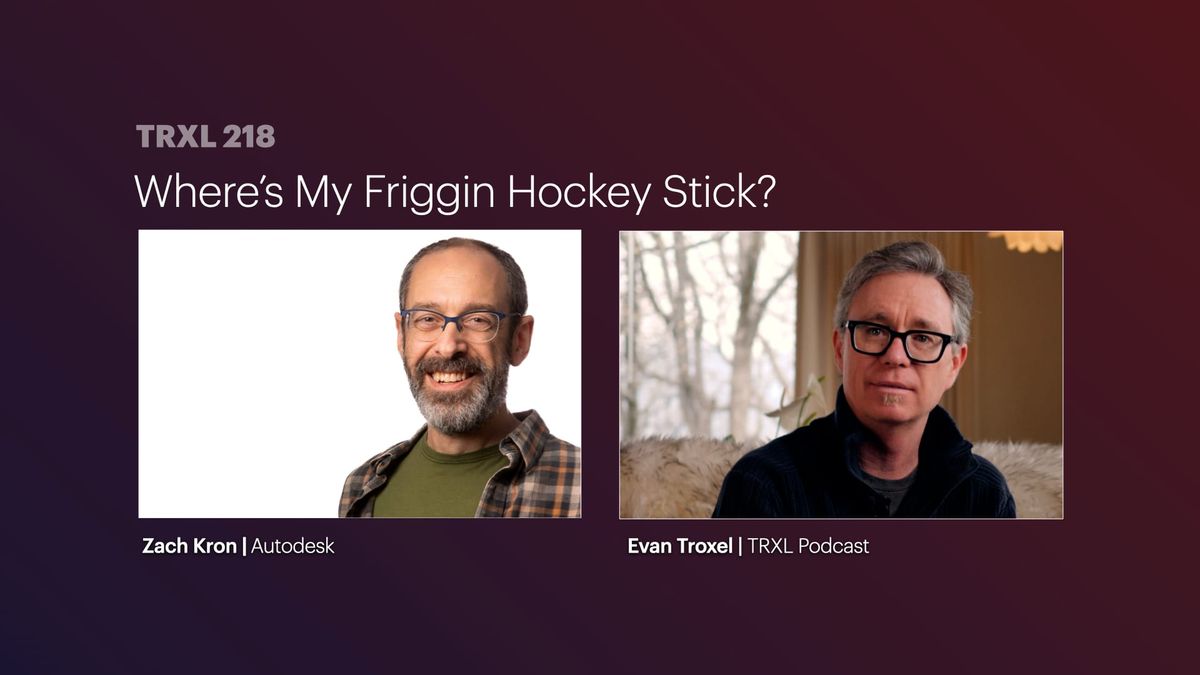
218: ‘Where’s My Friggin Hockey Stick’, with Zach Kron

Zach Kron joins the podcast to talk about what it really means to apply architectural thinking to products for AEC from inside a technology company. We explore designing systems, learning by shipping imperfect work, the real tradeoffs that come with pursuing leverage beyond traditional practice, and more.

This is an honest conversation for architects considering a move into tech, or looking to evolve their careers without leaving the discipline behind. It’s about agency, constraints, and redefining what impact and success can look like in architecture today.

Original episode page: https://trxl.co/218


Icons of podcast platforms where you can find TRXL
Listen wherever you get your podcasts.

Watch This Episode on YouTube:


Some links on this page help fund our work, and we may earn a commission from purchases at no extra cost to you.


Connect with the Guest

Books and Philosophies

  • Shop Class as Soulcraft – Matthew B. Crawford
    • Amazon
    • A grounding reflection on craftsmanship, agency, and the dignity of applied skill—highly relevant to architects navigating abstraction, automation, and AI.
  • The Shallows – Nicholas Carr
    • Amazon
    • Explores how constant digital input reshapes cognition, attention, and deep thinking—an undercurrent in discussions about modern knowledge work.
  • Thinking, Fast and Slow – Daniel Kahneman
    • Wikipedia Overview
    • Amazon
    • A foundational text for understanding bias, intuition, and decision-making—critical for leaders navigating emerging technology.

Computational Design & Practice Tools

  • Python for Designers
    • Python.org
    • A gateway language for architects expanding into automation, data, and AI-adjacent workflows.
  • Revit + Dynamo
    • Autodesk Revit
    • Dynamo BIM
    • Core tools discussed implicitly through Zach’s background in computational design and parametric thinking.
  • Autodesk Forma
  • Rhino + Grasshopper
    • Rhino 3D
    • Grasshopper
    • Still central to practice, even as conversations shift toward what comes after BIM.

About Zach Kron:

Zach is a Product Manager at Autodesk where he helps research, strategize, and implement parametric, computational, and analytic tools for the Architecture, Engineering, and Construction industries. Long ago he was an architectural designer working in multiple scales of projects from furniture to landmark bridges.
Connect with Evan


Episode Transcript:

218: ‘Where’s My Friggin Hockey Stick?’, with Zach Kron

Evan Troxel: Welcome to the TRXL Podcast, I'm Evan Troxel, and in this episode I welcome Zach Kron. Zach's career spans an increasingly important intersection in our industry between design, systems thinking, and product development. Trained as a designer. His work evolved beyond individual projects toward building tools, workflows, and repeatable frameworks that scale impact.

Instead of asking how to make better buildings one at a time, he started asking a harder question, how do we design the systems that produce better outcomes over and over again? In this conversation, we dig into what it actually means to move from designing objects to designing systems and why that shift is both powerful and uncomfortable at times.

We also talk about craft. Constraints and the real trade-offs that come with building products instead of projects, Zach shares what he learned by shipping imperfect things into the world, making decisions without full certainty, and embracing the friction that comes with choosing leverage over familiarity.

If you're an architect who's considering pursuing a career in tech, or if you're trying to figure out how to focus your architectural career into a more technology specific role, this conversation is for you. We talk honestly about what you can gain, what you give up, and what doesn't get talked about enough when people make that transition.

This isn't about escaping architecture, It's about recognizing where your skills actually create leverage and how designing systems, tools and products can be a legitimate and deeply architectural path forward.

A quick note before we jump in. Just before I hit record, Zach proposed a game that adds some levity and constraint, so listen for more on that in the early part of the conversation. It was really fun. As usual, there's an extensive amount of additional information in the show notes, so please be sure to check that out.

You can find them directly in your podcast app if you're a paid member and if you're a free member, you can find them over at the website which is TRXL.co. Lastly, you can really help the podcast by sharing the episode with your colleagues, commenting on and sharing my LinkedIn posts and engaging with a conversation on YouTube. Please leave a comment with the final score that you got of Zach's and my game. So now without further ado, I bring you my wide ranging conversation with Zach Kron.

Zach, welcome to the show. Where do, where do you work, Zach?

Zach Kron: This is the first test. Um, now we find out if this is a terrible

Evan Troxel: a test.

Zach Kron: Right. Uh, I work, I work at, at, at a, at a, at a pretty well established old, um, software company. We make tools for designing buildings and doing engineering and media and entertainment and manufacturing design, and sold all over the world.

And actually, some of the interesting, I mean, the, so the other thing about this approach is that then you sort of have to say like what the, what the, what it means to you. I mean, I'm kind of curious to also poke you about this, about like, as soon as you go to reference something, so it's like, and it's a publicly traded company, you know, which is interesting and different about where I work and sort of the pressures that are on you, you know, as opposed to like, you know, smaller companies that are just as old, that are privately held, have different things going on with them.

So.

Evan Troxel: It, it's interesting to think about that in the context of, of the technology landscape too, where there's companies out there and so, so for those who are listening in and we're, we're playing a little game here. We're playing, do you wanna explain the game or do we just wanna let people try to figure out what the game is?

May, maybe that's, there's, there's like a, a meta layer to the game is like, there's a game that is being played here and the listeners have to figure out what the game is. But in, in the, in the larger technology landscape, uh, technology, company landscape, there are companies that definitely behave like they are publicly traded companies.

And then there are companies who are publicly traded companies. Who act like they, they aren't one, like they're, they're maybe their previous incarnation. Um, and they don't follow necessarily the rules of publicly traded companies and act more like startups throughout their, their lifespan.

I don't know. I, I just think that's kind of interesting, like, like there's definitely like an attitude that companies can take, even if they are publicly traded companies, to still choose to not act like that or to like really double down and, and act like that. Like, for example, even, even technology companies that aren't publicly traded yet, who are doing everything they can to raise that valuation for when that actually happens are, are really pushing, pushing, pushing, but but also acting like publicly traded companies to, I guess, continue to deliver value to prop up that initial public offering or that stock price.

Mm-hmm. Yeah.

Zach Kron: finding new kinds of people that your stuff appeals to, um, and new, new things to sell people in some ways.

Um, and there's also, you know, the whole dynamic of like, are you, are you spending a lot of time with the existing user base or are you spending time with like, the new user base that like, hasn't discovered your stuff yet? And there's a lot of those dynamics that go into that aspect of it. I am not a expert on sort of the distinctions between public and private, but um, you know, it's like I do see a lot of that distinctions showing up in things like, um, you know, the relationship between sort of new user bases and existing user bases.

Um, and, and how you sort of try and think about do we want, do we need to get more people involved? Do we need to get the people that are already involved to be spending more and more time using the stuff that we have? Um. How much do we partner with other people? That kind of stuff. A little oblique.

Evan Troxel: do you diversify? You're offering to cast a wider net or do you add value that deepens the trough? I mean, there's so many ways to kind of go about that. it makes me think of this there's companies who definitely are always going deeper, deeper, deeper. And then there's ones who are always going wider, wider, wider.

And it's interesting to think about how the company sells to markets when it's widening, it's trying to widen its user base. So when a company's trying to sell to the AEC market but offers a bunch of other stuff, like the messaging is like all I hear because of the internet and targeted advertising is I hear about the thing that relates to what I'm doing, but the company's putting tons of effort and resources into those other ones.

And I don't actually know how my. Compares to those other markets in the balance sheet for that company. I mean, I'm, I'm sure that information is not difficult to find, but I'm also, I don't have time to go look for that and really try to understand that, but it probably would help to understand that kind of information because

Zach Kron: Well, I mean, at, at, at my company it's like, you know, AEC is huge. Um, and I mean, but it's also, it's like my particular exposure to it. So, you know, I do product management in the AEC world, you. In a market where we're looking at how do we make stuff that is helpful and useful for people who are all the way from super early AEC workflows to, you know, did your fan system conk out in the building that already exists and can you get an alert about it and everything in between,

Evan Troxel: Yeah.

Zach Kron: um, in Japan and Argentina and the US and all that stuff.

So it becomes, it's, it's really funny just sort of thinking about stuff that way.

Evan Troxel: Yeah. Yeah. Like stepping back and having that wider view of, I mean that to you, you're perfectly illustrating what I'm talking about. I, and I know you're building on what I was talking about, but it's like, like this, this is what you understand because this is what you do, but there is all this other stuff going on all the time and Yeah.

It's really, really crazy. The other thing I, that, that you made me think of was just even how, like there's publicly traded companies, there's private companies, but in the private realm there's also bootstrapped vc and, and then there's different incentives aligned with, I mean, there's your shareholders at that point, right?

It's, it's a, the group of people who are actively funding what you're doing, having a say and, and looking for return on investment.

Zach Kron: yeah. No, there's a lot of different ways to get to, oh my God, we need to grow like crazy. And you, you know, you don't, yeah. You don't need to be publicly traded to do that. Right. You know, it's like anybody who's, you know, got a bunch of investors breathing down their neck is being told, like, where's my frigging hockey stick?

Um,

Evan Troxel: Yeah. There's the title for the episode right there.

Zach Kron: for, for those at home that don't know, the hockey stick is, is the expectation of line go up, of, of, of growth. Like, you can grow nice and slow for a little while, but at some point people expect you to have exponential growth. Um, which is, um, it's a beautiful thing when it happens.

Evan Troxel: Yeah, but super rare. And, and, and what's interesting about that, and I, I guess my question even around where, where we started off with this conversation about the constant, um, need to add value to add more users, to find new markets, to expose to new people. Can you talk about the sustainability aspect of that?

I mean, I mean that is, that is pretty much an American capitalism, kind of a, a rooted idea. I think. Um, maybe, maybe it's bigger than that even, but, but there's this, who can, is that even possible to just constantly, constantly be pushing for growth, constantly

Zach Kron: I mean,

Evan Troxel: that ROI.

Zach Kron: oh boy. We're gonna, we're gonna get into capitalism right away. Um.

Evan Troxel: This is like a, this is like an end of year extravaganza episode

Zach Kron: Yeah, no kidding. Um, is it, is it, I mean, you know, I, so, um, I, I used to work for a Marxist puppet theater, um, which we can also talk about. Um, and there

Evan Troxel: just a small aside.

Zach Kron: just a small aside, how did you get here? Well, first you have to be inside of a giant paper mache puppet on stilts. Um, you know, there was a lot of talk there, like, you know, constant growth is of course the growth of cancer.

Um, and you know, that, you know, of course it's not sustainable to grow like that. Um, that being said, like, you know, that's how populations work. Populations grow and grow and grow. Um, so is it sustainable? It's like, in some ways it's like, is it not, you know, how could it not be sustainable? It's like we've got more and more and more people on the planet all the time who.

need to have houses and ways to get themselves around the world and are, hungrily consuming more entertainment and all the rest of that. So, demand is growing and growing and growing. So, yeah, I mean, it's like as, as companies, you can grow and grow and grow. Um, that being said, there's also, I, it drives me crazy that there's a term of art, which is a lifestyle company, which is a company that has decided that it does not need to grow vigorously like that.

Um, I remember talking to, um, uh, a rendering company that was like six people or something, and we were gonna partner with them to build some stuff. And, we got six people, we're selling our stuff to a bunch of folks and we're putting our kids through college and we're paying our mortgage.

And, um. You know, I don't know if that we can sort of get involved with this right now because we don't particularly need to grow, and it's just, you know, it's very refreshing. It's just, you know. Great.

Evan Troxel: Yeah, they were very, they were satisfied, right? I mean, it, it, it's interesting. I think about, there's a company that I follow called 37 Signals. They make a, a platform called Basecamp. And they've done a bunch of different things and of course they've grown and they've, dang, ah, so, so yeah, here we go, take a drink. so they've grown and shrunk over the years but. They're not interested in VC funding, they're not interested in other people telling them what to do, I think is a big part of that. Um, they're not interested in making something for everybody necessarily either.

Um, and so in, in that regard, I mean, there, there definitely are, there are many. That's just one example, but there's many companies out there who, like you, they're just sat kind of satisfied with, and they, they wanna make a sustainable business over the long haul and constantly chasing the expectations.

The, the framework of, of what we were talking about earlier is not interesting to them because it's, that is a, that is a never ending game. Right? That's an infinite game.

Zach Kron: Yeah. And, but I mean, once you kind of get into it, like for us it's like at a certain point it becomes a responsibility in some ways of just, we've got an awful lot of people using our stuff. it's very exciting. It's like I can, so last time you and I saw each other was in New York, um, you know, I could walk around downtown New York and sort of look around and like look at, you know, I remember when that one was lines on a screen and I remember when that one was lines on a screen.

Um. And people depend on our stuff they have more stuff they need to make, and so we need to make more stuff to help them make more stuff. So it's, it isn't, it's, it's two different ways. It's like, it's as a company in our capitalist system, in a publicly traded realm, the expectation is that you're gonna grow like crazy.

And when you've got a lot of people that are depending on your stuff for an ungodly number of hours that they're putting in every month to make roofs over people's heads, they need better ways to do it. So it's, um, it is a supply side and a demand side. So, I don't know, we don't want to talk all about

Evan Troxel: What? Yeah. I'm just gonna, I'm gonna, I'm gonna squirrel. I'm gonna squirrel right now. What's that stuff over your shoulder? You talk about that. I would love to kind of talk

Zach Kron: Oh, sure. This is, um, uh, yeah, I could sort of, I don't, are we, are we in sort of vertical format? You're just seeing a

Evan Troxel: No, it's wide. It's wide. I, I only get to see a little bit, but I can go wide screen so people can see more of it here.

Zach Kron: Oh. So this is, um, um, you are, you are also joining me in my kind of art making place. Um, so my walls are for those who are listening just on the podcast, um, my walls have a bunch of, uh, artwork on the walls that are from, uh, my process. Um, I use, I use our tools that we make it work a lot to just do things that are off-label uses.

Um, so what you're seeing are pen plotter drawings of, um. 3D objects on, on various backgrounds, um, done with a whole collection of pens and inks and sprays and sponges and all the rest. Um, I've been making stuff since I was tiny, and so it's, uh, it's just part of, part of my world. Um, almost all of it is made with, um, a, a visual programming environment that I was involved in for years.

Um, where, you know, the, the idea is you, you know, you can string together functions that do geometric operations and, you know, the, the, the main on-label usage of it is to make buildings,

Evan Troxel: Hmm.

Zach Kron: uh, use this tool to sort of say, here's what I want the behavior of this building to be, and I'm going to describe it, and then I'm gonna instantiate them inside of a building model.

Um. I, I spend a lot of time using our tools in ways that they weren't intended. So I used them for, uh, drawing and working out ideas and thinking about the world. And my, my background before, before I went to architecture school was I did, uh, I worked for a bunch of artists and, uh, my undergraduate was in studio arts and, uh, sociology and anthropology also.

But, um, so yeah, so I, I do a lot of the sort of printmaking and, um, I think, I think when we were down in New York, you probably saw some of that, of, uh, was handing out

Evan Troxel: I saw them spread out on the bar. Yes. As and, and people were going through them claiming various. Various images that they

Zach Kron: Oh yeah. You didn't grab one.

Evan Troxel: I, I didn't, I felt like that was gonna get destroyed before I made it back to my hotel room. And I, I was not willing to do that to one of those things.

And I thought, oh, maybe there'll be another opportunity later on where, where I just will be a little bit safer for that artifact to make it back to my place.

Zach Kron: well, I just, I just did a big run of these, of, um, I've been trying to, uh, how to describe this. Um, I, I do a lot of sort of old and new kind of stuff colliding, so I've been doing a lot of block printing. Um, so, you know, it's like a 15th century method of reproduction where you carve into a woodblock and you spread some ink on it and then you squish it with a piece of paper on it.

Um, so I've been going with this process now doing the visual programming into a laser cutter to cut the woodblock print and then printing from it. And

Evan Troxel: okay.

Zach Kron: now it suddenly have like a giant pile of

Evan Troxel: I was imagining you with, with chisels and, and mallets and, but that's not what's happening.

Zach Kron: No there. Um, where's the, uh, where's my test block? Uh, here again, this is not podcast friendly, but this is a, this is a laser cut test print that's doing hatches.

Evan Troxel: Nice.

Zach Kron: All that stuff's on Instagram if you wanna see it.

Evan Troxel: Yeah, I'll put a link, I'll put a link to that. Oh, you gotta take a drink.

Zach Kron: Oh, it is on a social media platform for sharing images in particular. There we go.

Evan Troxel: We're one for

Zach Kron: my own rules. Um, yeah, so, no,

Evan Troxel: We'll put links to your, to your art on the, on the, in the show notes for this episode though, that I, I would love for people to see that because I, I think it's super interesting that you do this and you've so consistently done this and that you're using tools that you work on or have worked on to, I don't know.

I mean, like you said, use them for the unintended purposes, but still finding ways to apply them to something that is interesting to you. And I, I'm curious like why you've kept this part of Zach going for so long. I like, I guess it's just part of your DNA and you can't not do it. But I, but at the same time, like this is, it's a really cool kind of, it, like there are artifacts here, there are physical things that you are making and, and you've really dedicated your life to the digital making side of things.

And I, I think this is really intriguing.

Zach Kron: Yeah, I mean it's, um, I actually back to undergraduate again. Um, I remember, uh, so I, I did a liberal arts education and, um. I had a, I had an advisor who, uh, you know, I was, I was asking her, um, actually this is a good reference. Uh, Sid Carpenter, uh, shout out to Sid was my ceramics teacher back forever ago.

Um, I was asking her, you know, why should I do studio arts at this, you know, intellectually based school that, you know, we're gonna spend all of our time, like using our hands and making stuff. And her response, which was spot on and still like rings in my ears, was, um, making art is about thinking. Um, and then, you know, the stuff that you make sort of comes out of that.

So, you know, for me it's like, you know, when, when I, when I go to a meeting, I always, I, I always end up doing like the marginal notes because it actually helps me keep paying attention to what's going on. Um, and, um. I mean, I, it is just sort of a way to sort of keep involved with the world. Um, you know, you, you see what's going on, you think about it and you do something about it.

Um, and that's, that's part of where this stuff comes from, uh, is, you know, I, I, I very much walk around like, like, boy, drop to earth sometimes it's like my, my family sort of makes fun of me that like I'm the, I'm not the glass half full kind of guy. I'm the, oh my God, a glass. Um, so, so a lot of this is just, you know, walking around and sort of being like, oh, this is really cool, you know, let's make some stuff about it.

So, um, you know, a lot of this stuff, just, just these ones that are on the wall are kind of, you know, they, they, they don't really read at this kind of resolution, but they're just, they're just like light and shadow studies. Like, you know, you walk around the world and you see like the light con across a tree in a particular way, and you kind of think like walls.

Do that. Um, and that's where the visual programming stuff comes in, is that it? Uh, when people sit down and they're like making a drawing, I mean, everybody has a different process, but for me it's like if you sit down and you make a drawing, I'm not really thinking so much about like why the light is doing the thing that it's doing. Um, but with the visual programming environments, it's really, I've always found it really interesting because it forces you to think about why things are doing the thing that they're doing and what it is that you wanna do. And also that's, that's, that's why I think that the, so I, I spent about 10 years doing product management for visual programming environments.

And one of the things that I thought was really magical about that was it brought a set of tools to a whole group of people that kind of didn't. Have that as a relevant part of their work life and a whole bunch of people that didn't necessarily think that they were gonna think about architectural problems in a computational way, were suddenly like, oh, hey, here's a way for me to solve a problem of like, you know, all of the, all of the footings of my building all need to be adjusted so that they're x distance from the terrain.

And, you know, my modeling application doesn't do that outta the box. So every time I need to do that on my model, it takes me, you know, two days to do it. And here's a way that I can do it in a way that's fast. So they, they got into that process for like the, the economical reasons about it. But in talking to people, one of the things that was incredibly rewarding was that people were then thinking about thinking, they were thinking about what it's, that they, that's important about the project or about the problem.

And they were putting it into a. They're creating automations and they're making things more efficient and blah, blah, blah, blah, blah. But they're also thinking about the world in a different way. And so to, to me, that's one of the really magical things about some of those tools is that, uh, people who didn't necessarily have that as a way for them to engage with the world now have that way to engage with the world. And for me, you

Evan Troxel: rethinking stuff, right? Like you can't approach it the same way, and so you have to rethink how you're even approaching the problem and therefore maybe actually defining what the problem is instead of just plowing into it and taking it head on. Which we were all trained to do in architecture school

Zach Kron: yeah. I mean, and some people hate it. Some people it's just like, no, thank you. Not for me today. No,

Evan Troxel: Yeah.

Zach Kron: not today, Satan. Um, uh, it was fine. Um, you know, of. In terms of like, you know, that that just means that there's, back to our growth questions. Like, well, that, that then, and those people will continue to be a, a growth, a new growth thing if we can make other things to appeal to them.

Um, yeah, I mean there's a huge amount to be said for, you know, there muscle memory and intuition and gut instinct and all the rest of that stuff. Um, uh, the intentionality of computational tools and visual programming tools, um, is jarring for a lot of people and very uncomfortable for a lot of people. there was a, there was a long time where I thought that it was just gonna be, I thought it was gonna be like this hockey stick thing of, you know, we're teaching kids.

Starting in elementary school, how to think about problems computationally. Um, I had a whole graph that I would use in like, you know, different pitches for like, here's why you should keep investing in this. Um, that was based on the, the deployment of visual programming tools in elementary schools, which started at a particular time.

And when I was sharing these sort of slides in my pitches, it was like the people who started using these tools when they went out are now entering the professional world. And you know, therefore you are going to start seeing professionals who are assuming that computational tools will be part of their lives. Um, and that, that sort of inflection point hit, it was hitting like five years ago or something like that of, you know, if you look at, um. There's an open source sort of block programming tool, um, that got pretty popular with, um, elementary school sets that was built around social networking aspect of it.

Um, and was getting more and more and more, more and more popular. Um, you know, then they went online and it got even more popular. And so that was like a trend that you could sort of see. And then computer science programs became more and more and more popular at the university level. And, you know, we started seeing more and more people coming out of schools that at least had a passing familiarity with the idea of, um, you know, there's a difference between integers and floating point numbers.

And there's, there's a thing that is Boolean logic. Um, and you know. Geometry as a data type and like that kind of stuff, which is sort of part of the grist for the mill of doing this kind of thinking. Um, and, and, and my son went through that and is, is sort of in his last part of college and seeing folks coming out of that now into the work world, it's super interesting right now because there's, now there's the speculation of like, do we need all of these people who know computer programming?

Because now you can vibe and, um, so it's, it's kind of fascinating to see that progression over the last 15 years.

Evan Troxel: Yeah. It like your, your slides didn't, didn't see that coming, right? I mean, it's like,

Zach Kron: My slides did not see that coming when I, when I first started doing that. A hundred percent. It was like we can make it easier and easier for people to think about traditional computational concepts. And there was a bunch of stuff that happened in there that was like, so things like my company makes a big building information modeling application that allows people to sort of, you take, you take a wall and you put a door in it and the door knows that it's hosted on the wall and it, the door has certain behaviors that are built into it.

And the only people who can make the behaviors in that door are the people who made the software, right. They're the ones who can make that behavior that interacts with the door. And when I change the definition of that door, I can reload it in and all the doors will update in the project and have their new behaviors. And that was, that was like this new weird thing, like when this came out like 20 plus years ago, and it snuck the idea of object oriented programming into the AEC world. It was like, we're not gonna tell you that this is the scary thing called object oriented programming, where they're the things called objects that have certain properties and they have certain guaranteed behaviors for what they're gonna do.

But that was what these things did.

Evan Troxel: Yeah.

Zach Kron: Um, and

Evan Troxel: architecture, it was an abstraction,

Zach Kron: yeah.

Evan Troxel: You, you still had to think about it architecturally or present it architecturally to architects for sure.

Zach Kron: Yeah. And you need, you know, and, and, and people kind of got the idea of like proxy objects, you know, it's like I'm gonna put something in and maybe it'll, it's not the thing that I really want it to be in the end, but I can replace it and then it'll allow autopopulate and all the rest of that stuff. And then the visual programming stuff came along.

Um. You know, certainly earlier than the time that I got involved with it, like there was a whole bunch of other tools that had sort of done this sort of visual programming in the building space. But what that did that was also fascinating is that it snuck dependency management into the architecture and engineering worlds of saying, I have this function that me do a building process. And that function that I put into this whole string of commands comes from someplace else. Somebody else made this function and now I've grabbed it and I've put it into my workflow. And now when that gets updated, it breaks my workflow.

Evan Troxel: Yeah,

Zach Kron: Which is, again,

Evan Troxel: it or not,

Zach Kron: thing of just like dependency, how is like a thing that, you know, is kind of like, it's like an unsolved problem in computer science and saying it's like, yeah, when you depend on other contributions to your tool chains like that, when it changes, it changes your tool chain.

And then you need to update things. And then people who are doing visual programming sort of needed to figure out like, oh, you know, it's like, well, why can't you guys fix this so that I don't have to worry about dependency management? It's like nobody's really solved it. So like we're, we're just passing on this other industry problem to you.

And then other things come up with just things like, you know, like quality assurance as a software process. You know, then people need to sort of like, okay, you made a workflow that you know works when you run it on three windows. But what happens when you run it on a hundred windows? What happens when you run it on a window that's on a corner condition rather than a field condition?

Um, and people needing to start thinking about problem solving, like thinking about edge conditions versus field conditions in a kind of different way than what architectural training might, might do for you. And the, and the, the vibe coating is just sort of accelerating that so that people are now doing things where they're vibe coating, very big, complex things, and it works on one problem and then it blows apart when you apply it to a slight variation on that problem.

So you still need to think about classic computational thinking problems. You just get accelerated into it. I've sort of been going off on this thing for a second. Does any of this making sense?

Evan Troxel: It totally makes sense. I I, I'm even thinking of kind of the unintended consequences of what this has done to staffing and. The needs of a, of a firm today if they're pursuing this kind of tool chain, right? Because I mean, how many times now do we see, I mean, this, this is, in one way it's opened up the, the field to more roles and more possibility for people to specialize in technical things.

For example, in this, in this example. But it's also like, you can, you can also label that as a, as a huge burden on firms who are classical, classically trained, classically, like the way that they do their process. And it's like, what do you mean we need computational designers to maintain this stuff? What do you mean we need data scientists?

What do you mean? Like, oh my gosh, what's going on here? And. And so you can, you can see that really clearly from both sides, where some firms who want to use this as their, the, the way they do things and the way they approach problem solving and the way they want to approach future problem solving by building tools that address those that are reusable, hopefully.

Um, and, and have people who are really dedicated to doing that kind of thing. And then the other side where it's just like, uh, the, it's an overwhelming burden for them and, and it's, it is interesting to watch that unfold over time.

Zach Kron: I mean, I think that one of the things that, that I've seen in sort of the adoption of these tools is, you know, what is it helping people do that either they couldn't do before or is just really hard for them to do? Um, some of the other stuff that the groups that I've been working with for years have been trying to figure out how to do is things like when you get into data based workflows, that is, you know, where you're saying, I'm gonna, I'm gonna design the building in a particular way because I have a, I have a data source that is, that I'm trying to sort of align with, whether that's a pro a building program, um, or performance requirements of the building.

You got data coming in, how do you process data and get a sort of a physical artifact out of it at the other end, um, in the other direction of saying, I have certain performance requirements at the end. What data do I need to put in the front in order to get there? All that becomes sort of, yes, you could do it in an intuitive and sort of, I'm gonna try something, see if it works.

I'm gonna try something and see if it works. Um, but it, it allows people to sort of put analysis into their workflows in a way that I think has been less accessible 15 years ago. So, so we, we tried to, we've had a bunch of different tries at doing things, for instance, of giving people environmental analysis tool sets early on in the design process.

Um, we've kind of knocked our heads against that since, uh, you know. 10, 15 years. I, I know the groups that I've been working with have been trying to sort of say, is there a way to meaningfully get things like wind analysis or, you know, just basic solar analysis, let alone things like carbon and that sort of thing into people's workflows.

And there's, there's a bunch of reasons why it's been hard. I think the biggest one probably being that it needs to be demand driven on the sort of owner operator side, which is growing, but it's also do people just have the tools that aren't crazy and cranky and nerdy. Um, and we try to do a lot of that with visual programming tools.

But I think generally found that the mental overhead was too much for people. It was like there was a bunch of sort of muscle flexors who were like able to sort of like, look what I made the tools do of, you know, being able to sort. Exactly. Um, you know, I, you know, I managed to wrangle this analysis tool into my pipeline for doing building geometry definition and that sort of stuff.

Um, and the, the, the newer tools that allow sort of, it's easier to do computation and it's easier to get data into the systems and it's easier to get data out of the systems has also made it much easier for people to do analysis workflows. So on the supply side of, I think that there's a lot of change that's happened in the last few years of those analysis tools can just be much more accessible.

Like people kind of have a little bit more of the, sort of the technical literacy to be able to sort of say, here's the data source that is gonna be plugged into my building design process. And that's less of an exotic thing. Um. That's something I find really exciting right now is that finally, like, it's, it's not just something that you can do with nerds, um, but that you can sort of have a more ubiquitous availability of, you know, it's not just, it's not just making pretty pictures in the sun, it's that you can actually get performative data on your buildings without having to be a PhD.

For sure. And, you know, our ability to also explain what it means has gotten a lot better, which is non-technical in that way of just like, so for instance, I, the, the, the reason I was in the office yesterday, um, was we had, we had 30 or 40 kids in from the Boston school system who are using our tools and sitting down.

Here's a great unpaid endorsement. I totally think everybody should try to see if they can explain what they do to high schoolers, to elementary schoolers, to, you know, saying like, you know, again, this is back to the sort of the thing explainer to Randall Monroe, to the, you know, getting rid of jargon. Can you explain why you're, why is your shit important to somebody who isn't in the AEC industry?

Um, is scary as hell to stand in front of a bunch of high schoolers and say, I'm gonna explain wind analysis on buildings. And, you know, um,

Evan Troxel: You're competing with, with whatever's on their device screen at this,

Zach Kron: yeah,

Evan Troxel: right?

Zach Kron: I did, I did a, I did a kindergarten class once on, um. On geometric unfolding of, you know, how to take cubes and all these, you know, geometric primitives and lay them out flat and then put them back together. That was fun. Um, no, but so with the, the high school students was like, you know, what does it look like to design a building that has really bad wind conditions?

Um, and being able to sort of, so our tools have gotten to the point where you can do stuff of saying like, I'm gonna pick a place on the planet. I'm gonna instantly get all the stuff that's right there in front of me and I'm gonna run sun and carbon and wind analysis on it, and bam, you'll get it. Explaining why that's important is kind of like a non, that that's not a technical thing. That's like a how, how do you get that across? So,

Evan Troxel: of a thing potentially, especially with wind. Right?

Zach Kron: we looked at, um. Uh, if you're familiar, uh, in the Boston Cambridge area, there's a, there's a, there's a famous sort of three sets of housing towers made in the, probably late seventies.

Um, so they're, you know, it's like the big vast sea of parking with 40 story towers spaced strangely apart from each other. And I remember looking at, I'm like, that, that is my, that is my teachable moment. And it was really fun because it's like you, you gather your buildings, you put 'em on the screen, and then you have everybody run their analysis.

And it's like, what can you tell me about, like, you know, we're gonna, we're gonna make a little pavilion, or we're gonna make a little sort of public space in here. Where's a good place to put that space? So, you know, everybody goes and they put their spaces somewhere. It's like, okay, well what happens? It's like if you put your space there, everybody's gonna have their hat blown off every time they go there because these big fins make this funnel and they pull the wind through it and it gets really fast.

And they can see it like these

Evan Troxel: Yeah.

Zach Kron: big towers, you know, when the sun comes up in the morning, is throwing a shadow from one side, and when the sun goes down in the west, it throws a shadow from the other side. And between those two, you never get any sunlight. Um, and being able to do that with, I mean, a bunch of 15 year olds, um, on Chromebooks

Evan Troxel: Right.

Zach Kron: is, uh, for me that was a very cool experience.

Evan Troxel: Yeah, I

Zach Kron: Highly recommend.

Evan Troxel: that that's really interesting and, and it is interesting to think about how you get their attention. And, and I guess the other thing that I was thinking about while you were explaining this is, you know, because the tools are available in, in easily accessible way, now, it kind of goes back to your example of object oriented.

Programming being put into the, the, the platform that then, you know, you weren't calling it that, but it's like, it, it, it just becomes like the way you present it becomes extremely important and the way that it is, uh, accessible or findable in that program. The way, like what is that first run experience?

Because I thought about, as you were speaking like the Gartner hype cycle of large technology. It, it's also like that inside of firms for all of these little initiatives, right? Like there's this initial excitement that's just like, look like the Hans and Franz version, right? It's like, look what I did, look what I made it do.

It's so cool. And then it's like at some point, like the, the, just the excitement of the audience wears thin on that kind of stuff. It's like, what do you mean it's taking this many hours and this many days to come up with this thing that we might not use again? Oh, there's many different versions of that, but.

And then it finally gets to the point where it's actually maybe usable on more projects. But go ahead.

Zach Kron: Yeah, well, I mean the, um, people are very aware of the hype cycle, right? I mean, they be become it. I mean, I, um, we have a big industry conference that we run every year and we showed a bunch of tools about, you know, sort of the future of design things that are using a lot of AI technology. And I got a lot of feedback from people about like, we're really excited.

This is really cool stuff. I can't wait to get my hands on it. Can you please not put it in the product yet? I was like, wait, what? And, and it, and it's there is. Uh, uh, uh, a fear of are we exposing it? Are we exposing the tools to people who are not technophiles too soon? Because if you bring people who are not inherently interested in the technology, to the technology, when it's not ready yet, they won't come back for another five to 10 years.

Evan Troxel: Yeah. Right?

Zach Kron: And then it was just like, and so it's the technophiles who are really excited about it, but they also wanna make sure it's like, before I give it to my people, I wanna make sure that we're good to go. And, you know, and then on the, on the product side, it's always like, um, if you waited until the product was ready, you waited too long

Evan Troxel: Mm-hmm.

Zach Kron: because, so you need to get it out there and you need to get the feedback so that it is because you, it will never be ready if you don't give it to people and they rip you a new one telling you what was wrong with it.

Like that's, that's the sort of iterative cycle of making stuff that people can use. So, you know, when I, you know, a lot of these tools Yeah, they, they come out and they're too young and they get matured by interacting with people.

Evan Troxel: Yeah, it, it, the, the response to this that I've seen with technology companies or software platforms is like a labs section, you know, or, or, you know, opting into some kind of a beta cycle that is, you know, developer kind of level betas that are happening before for those enthusiasts that are willing to forge new ground or try these things before others and, and opt into that feedback cycle with the developer to make that happen, but not making it obviously available to everybody, uh, at and, and with cloud-based applications, this is.

I mean, new features show up all the time, right? Uh, and, and like I, I use an editing program called Descrip. Ah, dang it. I gotta take a drink. I use this online browser based, uh, video and audio editing application that allows me to, uh, opt in to certain things, uh, or see them early or not. And I can't tell you Zach, how many times I'm like, no, not yet. I just can't. I'm not ready. I'm not in the space right now to have the appetite to learn something new or to try to do something in a different way.

And then every once in a while, there is something where maybe it's compelling enough or maybe it's just the right time. Um. Be at some point though, the stuff kind of makes it through the cycle and then it's just there and you have no choice at that point with these, this new way of deploying tools on through the web browser that it, you guys have to decide to make it live for everybody and then everybody's gotta deal with it.

Zach Kron: Well, so, uh, yeah, the web browser, browser

Evan Troxel: can't use the 3-year-old version anymore. Right. Like I just can't, it's not

Zach Kron: yeah, the, the, the cloud versions make that easier to do. It's interesting that it is not, I don't think it's actually the limiting factor. So, um, like with, with the visual programming stuff, like we, we did this sort of, you know. Desktop deployed tool set. And at some point we were coming out with it. We had new versions that were ready to go every month,

Evan Troxel: Mm-hmm.

Zach Kron: and people asked us to stop because it was too, you know, we, we would put the builds out, people could get it and download it, and then, and they were the, they were the latest release builds.

So people sort of felt the pressure to sort of get it, and then it would sort of make this mixed environment that people had, and different colleagues would have different things because they weren't all adopting it at the same time. So availability of this stuff is like, that's one thing. And then sort of how do people deploy it and how do people deploy it sort of uniformly across groups is, is another thing.

So, and, and that's like, like the, the web tool sets allow you to sort of homogenize that of saying, you know, now we are all going into this version, you know.

Evan Troxel: you're deciding. You're deciding for us.

Zach Kron: Right. And, and that's, and that's the thing you get, you know, it all comes back down to culture at some point of just, you know, web allows us to do things and make it easier for people to do that, but culture still needs to be ready to, to make those sorts of changes.

Um,

Evan Troxel: I was gonna interject a minute ago and just say that there were people in, in my firm, project management and above saying, what do you mean there's a new version of this once a year. Can we just please stop once a year? Can we please take a

Zach Kron: yeah. No, I mean we're, we're, we're fighting against every other year. Um, the adoption, adoption of a lot of, a lot of the, sort of the bigger flagship tools is every other year. And, um, you know, it's, you know, again, with the sort of constant growth and constantly being able to sort of give people new tools, it's like that's a hard, that's a hard pace.

Evan Troxel: Well, and you're dealing with the behavior or, or the. I mean, it's probably not worked at some point. Like something went wrong and that burned somebody, and now you have to fight that battle of hope. That's not gonna happen anymore because we've, we've addressed that or whatever, and, but that burn is still like, we still feel that burn from before.

Zach Kron: yes. No. And if it, if it was all seamless and easy, you know, that would, that would make sure, that would make things easier. But yeah, it's a hard problem. But it, it also, like, I guess all I'm saying is that a lot of these things are not technological problems. Um, you know, ma making, making sure that you have consistency and upgrades and all the rest of that stuff.

Yeah. That is definitely a technical problem and Will, will, will harm the adoption. Um, I was thinking about one other thing that we just sort of branched off of with the, um. Teaching people about technology and the whole object oriented stuff. Um, the new one that is fun to start talking to people about now is, um, entity component systems, which

Evan Troxel: Okay, school me. I haven't heard of this.

Zach Kron: so this is, um, if things like building information modeling sort of snuck people into object oriented programming, whereas like the factory makes a thing that when you put it into your modeling environment, it's gonna have a certain behavior and you're gonna put it on a wall and it's gonna do, the behavior it's gonna do, um, is really good and it's very stable and it allows people to very dependably, you know, have the window behavior, have the wall behavior, have the door behavior.

It means that for the most part, that those objects and those behaviors have to come from sort of. The factory from the central distribution group. Um, you know, in order to sort of have that sort of control, there's this way that people are, have been developing stuff now that is called this entity component system, which is this way of rethinking the way that people structure data, data so that instead of having these objects that have all of their properties and all of their behaviors baked into this one thing, like a door knows that it belongs to a wall and knows that it has a certain behavior.

It's like, it's like a bagged lunch, like everything comes with it.

Evan Troxel: Super explicit, right?

Zach Kron: yeah. Um, the entity component system model is this thing that's been getting used in like the gaming industry and sort of for a long time, but it's, it's this idea that like, you make a, you make a, a bag of stuff. And anybody can make their bag of stuff and they can put different things inside of the, the bag.

And then you have, then you put it inside of a larger sort of overarching system, which is basically a bunch of functions and behaviors and it looks at all the different bags in that environment for different contents and operates on them. So for instance, you know, you put, you put a bunch of cars and weapons and helmets and monsters into an environment and you say some of them have a gravity aspect and some of them don't. And then the system goes around and it looks for things that have gravity and things that have gravity. The system will go and grab it and pull it down.

Evan Troxel: It's just like a tag. It's just waiting to be seen

Zach Kron: Yeah, and it's, and it's, and it's just sort of like a different way of thinking about sort of constructing these systems and uh, what it allows people to do is to sort of say. To make systems that go into these software environments and they're just looking for stuff and then there's people who are making stuff and they put it into the environment and then it can behave certain ways.

So I I, I always sort of throw it out there because we, 'cause I, I brought up the topic of object oriented systems and the whole, the component system is sort of an interesting new thing that already is getting injected into the AEC environment and people don't necessarily know it. Um, and I'm trying to think if I can actually point to an example of it, but

Evan Troxel: Yeah. I would love to hear an example because it, it, it makes me think of kind of these, uh, what we've seen maybe in the last five years, like these scene descriptor formats where that, that's what I, what you're making me think of. It's like, it's like a collection with descriptions and. What's what's super interesting about that is all of that is really lightweight and it can be changed pretty easily if you wanted to make a modification, like, or a, or a maybe, maybe you've got something in the scene, but you wanted to swap it out for something else.

It's relatively easy compared to how it used to be. Um, and so, I mean, is that, is that kind of in the right

Zach Kron: Yeah, yeah. Yeah. I mean, one of the, I mean, yeah, I mean, just sort of a straightforward example is that, you know, sort of in our, one of the applications that I've been working with is a, it's a, it's a web-based environment for doing early stage environmental analysis and program analysis on building designs, sort of at the sort of, uh, neighborhood scale. Um, and, you know, you can draw a building and shine the sun on it, and you can, you know, it'll, it'll light up. Um, lots of different applications could contribute ways of making buildings in this environment. And as long as you attach certain data to it. It'll behave the same way that our buildings behave.

So we've got a tool where, like you draw a line and it just like sprouts a building because you've got different parameters associated with that line so that then it can generate a width and a height and the units that go inside of it. And things like does our residential or commercial units and all the rest of that stuff.

Um, when you sun, when you shine the sun on it or you try and run a carbon calculation on it, those are systems that are operating in this environment. And if you throw in a bag of triangles that has a few of these pieces of data attached to it, the carbon analysis will pick up on it and say like, sure, I can, I can analyze that.

Um, which is just a, it's just a very different way of putting the software together than, you know, here is a door and the, the, you know. We'll make the door, the door will always behave the same way, and as long as this robust definition of a door suits all of your needs, you're not gonna have any problem with it. This other way of thinking about it just sort of opens it up so that there's multiple ways for people to contribute into one of these

Evan Troxel: and is, so, is that the big benefit right there? Is that just kind of it, it just makes it easier for collaboration? Or what do you really see? Kind of, or maybe there's multiple payoffs to this way of thinking about it?

Zach Kron: It's sort of a scalable way of thinking about how you can make design software is to say is, is to separate out sort of behaviors and objects

Evan Troxel: Mm-hmm.

Zach Kron: to sort of say, um, it is valuable for people to contribute certain kinds of analysis, and it's valuable for people to contribute certain ways of designing objects. They don't need to all be packed into the same thing. So you can have people who are developing tools that do analysis, and as long as the design objects that they're operating on have certain characteristics, they will play with them. And there are people who are designing software that creates buildings, they don't necessarily need to know anything about the analysis stuff. they wanted to interact with the analysis stuff, they need to include certain pieces of information with it.

Evan Troxel: Mm.

Zach Kron: And what it just allows for is for more people to be contributing to the overall design environment, uh, in a way that's, I think is actually quite sort of inclusive and dare I say, democratizing, which is a term that I feel like went out of favor, um, be because it, it, um, it, it's, it's a, it's in some ways it's a less tightly controlled environment.

That is it is, it is not. It isn't a system that is constructed and provided by only one provider. It allows for contributions from multiple different things, different people. It makes it a little bit more wild. Westy, you know, it's like, you know, you can, you can make your building that operates within this environment and if you didn't put in the information that allows us to do carbon on it, you know you're gonna have building A, building B, building C, and for some reason, building B just isn't lighting up with carbon analysis because building B contributor didn't define their building that way.

So then you gotta go and see like, okay, well why is BA special, special snowflake?

Evan Troxel: There, there's kind of two things that this brings up in my mind. I, the first one, I think maybe just a quick digression, which is, you know, architectural models have different purposes and models is plural because the purposes are plural. It's like we have to have a model for this analysis. We have to have a model for this rendering.

We have to have a model for the constructability. We have to have a, and those are all different models because the thing that's doing the analysis or the, you know, the visualization software needs. Different levels of detail, for example, right? Um, how many times have we stripped down a model to just the barest version to do some kind of mechanical analysis or whatever.

And then there's like the visualization version, which is like, we want, every tree's got a million polygons and we want it hyperrealistic, and we want all of this, the tiniest details, you know, the, the edges of the curbs are perfectly rounded, and so it looks very real. What it sounds like to me is, is this could potentially address that issue so that there's literally one model, right?

And, and, and, and may, maybe that's just like the, the glorified vision of what this could possibly be. I don't know that it could get there, but it seems like it's more in line with that because how much time have we spent rebuilding stuff for these different purposes in, in. In service to, you know, all the things that architects have to do, but it's also just a ton of parallel.

I, I, I hate to call it rework, but it's like it's all happening at the same time for different reasons and incentives. Um, but doesn't necessarily want, it's not the way we necessarily want to work.

Zach Kron: Yeah. No, and, and I, I, I think you're absolutely right actually what it, that it does allow us to sort of have singular, singular locations for your project for sure. And then have multiple representations that come out of it, depending on the needs that you have of saying, um. I'm gonna, I'm gonna have a line that defines my building.

It's like the, the simplest thing, and then I'm gonna hang a whole bunch of properties on it. And then depending on the system that is looking at it, depending on the, the, the manner in which I want to interpret it, I can see diff I can, I can pull different information out of it and see it in different ways.

Sort of the, the idea that saying like, if I have attached the appropriate information in order to do carbon analysis to the model, then it can, then it can derive it. That doesn't mean that every single model needs to have the carbon analysis information attached to it, but you can't attach that information to it when and if you need it.

And then, then they're all sort of built off of the same thing. There's a lot of discussion in this about authoring models and derived models of saying, here's a model where you actually. Make the thing that you want to build, and then here are all the other models that you pull out of it to do things like analysis or simplified representations or renderings and that sort of thing.

I feel like we've gone down a bit of a rat hole here, but it's also the steps that I get interested.

Evan Troxel: Well, well, the other, the other point that I wanted to, to talk about there was just this idea of creating a place where lots of things could plug into it versus creating all of the tools where it's only possible to do that by you creating all the, all the tools that allow the user to actually do that.

And that seems to be a, a shift. I mean, I, I don't know a better way to explain it, but, but could you talk about the, the reason why you've gone down this path?

Zach Kron: Um. I mean, a lot of it is that, you know, one of the things that's been pretty apparent over the last, you know, 20 years of the lifecycle of some of the, you know, big, you know, building modeling tools, is that an enormous amount of the value that people get from them is from third party development and contributions from groups that are not, you know, the company that made this stuff in the first place.

Um, and, you know, whether that's, you know, opening up public APIs or opening up sort of a common data formats for people to contribute to, you know, that's a big evolution. Like, like for, for our, you know, building modeling tools. Um, when they first came out, there was no API, there was no customization of the ui.

Um, everything that was delivered was. Through the application itself. And what people got from that was an enormous amount of, um, of consistency and continuity. Um, and, you know, you could, you could do the whole thing of like, you could stand up, walk over to somebody else's machine and sit down and you would get exactly the same thing.

Like there was no differences that were gonna happen. Um, and that was, that's, that's great for a lot of stuff, but it doesn't, it doesn't allow for the complexity of building design that people need more tools and they need different things for different people. And you know, there's, there's, you know, there's, there's a, a need to be flexible on these sorts of things. So that's on one hand is like, just like the, you know, the, you know, multi-decade learning that comes from that. Um, you know, opening up APIs so that people can work on these things. Um, and then the other is. I've been really psyched about really what I, I would consider an evolution of, um, you know, my group sort of in a larger sort of sense, attitude towards competition. Um, that, you know, groups and people and skill sets that would have sort of traditionally been considered to be competitive threats, um, are partners. You know, it's very, you know, like I said at the beginning, it's like look of glass. Like I'm, I'm an optimist. Um, so, uh, I, I do see a really big change in that respect in the industry, um, for like the big heavy hitters to kind of just be like, you know what?

There's a whole bunch of stuff that other people are gonna do that we should just work with 'em in order to sort of. Add value

Evan Troxel: Mm-hmm.

Zach Kron: for, for what our customers can do. So, you know, for instance, um, you know, like, so we've got our, we've got our big heavy hitter building information platform. Um, and there's a, um, similarly old established, recognized surface modeling application.

People adore generations of people teaching it to their kids, to their students, to their students students. Um, where they like to do early design and more exploratory design. You know, surface modeling is really great. It's very forgiving. Um, you know, to be able to sort of do anything that your imagination has.

And the building information modeling is much more sort of strict and, uh. I actually really enjoy it because I enjoy the constraints, but it, it can be very constraining. So the sort of the recognition that like these other people who are doing like these sort of more open-ended surface modeling tools that people really like for their sort of early design process that's like a peanut butter in our chocolate thing.

Like we should be able to sort of make these play together. Well. And I think as a company we have started sort of foregrounding people that we would traditionally say are competition and saying it's like, Hey, here are all these tools that come from this, you know, this other service modeling application and you can use it now inside of this building information modeling application.

And we'll facilitate that. Or I mean like more conservatively say like, we're not gonna block it. We're not gonna, we're not gonna be hostile to it. So again, back to the idea of like. The object oriented programming aspect of it where things were like very, very tightly controlled and you had a uniformity of experience and you got sort of all the, the benefit of that and the sort of the, the movement towards variable experiences for different people experiencing the software and also being able to include more things that come from the community. Um, I think it's like a whole evolution of the software industry and the AEC industry. And in a lot of ways I think it's the AEC software industry catching up with the culture of we're gonna use a hell of a lot of tools and we just need to make sure that a hell of a lot of tools can work with each other better.

Um, you know, which has always been the case, but I think it's just that the, the businesses and the software. Technology, make it easier. Um, the things with that, that are coming around the corner now with like AI and vibe coding and all the rest of this stuff, um, one of the things that just really gonna be able to open up is interoperability.

Um, one of, one of my biggest aha moments was, um, actually back to these drawings on the wall. Like I, I go from. I go from the, the sort of visual programming language to, um, a vector editing tool. It's just the vector editor is just like one of these things that just, you know, it drives my, my pen plotter.

It's like a little 2D robot, right? And it works on an SVG format, which is for people who do this stuff. It's just nuts. It's so like a low level vector format. And I've been using this one package that somebody made 10 years ago to go from my visual programming environment into SVGs. And it was fine. It wasn't particularly made for me.

It just sort of, it dumped out this dump SVG file. And, you know, I sat down with one of the LLMs, one of the large language model interfaces chats at some point and said, I've got curves that are coming out of this visual programming environment. I want to get a python. Node that will output it into an SVG.

And I need it to be structured in this particular way. Nobody else wants this structure. It's just me. I mean, I'm surrounded by very, very talented developers and for years I've never wanted to ask any of them to tinker with this, to make this SVG export for me, because I am not a customer. I am, I, I do not represent our customer needs.

And so I do not need to distract our developers with making this tool that will be customized to Zach fucking around in his home office trying to make hearts and whatnot. So, you know, I just, I just did this thing and it did, and it nailed it in like three tries, two tries maybe. Um, you know, I think, I think most people sort of like are having like some kind of aha moment of just like, Hey, I, you know, I got the AI and it did the thing.

Um, and. To me that the, the thing that that was doing was it was saying, I've got tool A and I've got tool B, and I need them to relate to each other in a way that is very specific to my needs. That is certainly not an 80% use case of the big platforms. And in the past that's been, okay, well now I need a independent software vendor to go and make this special plugin in order to do that.

And now I can just do this thing. It means that like, now I need to carry the burden of maintenance and I need to carry the burden of like, you know, the first time I did it, it worked great except for nerves, and then it worked great for nerves, but not like with, you know, degree five or above, you know, whatever.

So I needed to start finding all of my own edge cases and all these. So you, you can't, you can't escape the problems associated with software development. And a lot of these tools are basically, they're doing the same thing again of like they're exposing people to object-oriented programming. Back in the day, we exposed people to dependency management with visual programming environments.

Now the AI tools, were exposing people to quality assurance of, you know, you gotta make your own tools, you gotta make sure that that damn thing works. You gotta make sure that, like when it cuts a hole in a thing, you know, I made this tool and it cuts a hole in a thing. Great. Does it cut two holes in a thing? Does it cut tool? Does it cut holes in a thing when it's on the edge of the thing? Like all of those things are things that's like people just don't, as a regular course of their day, think is a problem they need to engage with. And we've just accelerated people into a domain of problems that they might not have known existed, but are still there.

Evan Troxel: It, it makes me, it reminds me of the early days of web development, right? When I first started coding in the brow, you know, in a text editor next to the browser, right? And you would save that file, you would FTP it to your server. You'd hit reload and you'd see what happened. And then you would go over here and, oh, okay, that's not right.

Oh, I didn't close the tag. Whatever, let's. Do it again, re-upload it over my 5,600 k mo modem, whatever it was, and then refresh the page and just watch what happens. And this is like the, the newest version of that. To me it's just this tinkering with the tooling kind of a thing. And that's, that's a really creative place to be in computing.

It's not geometry, it's not form making necessarily. It might be enabling you to do something like that, but it's really low level, like making the tools. I, I don't you, you make prints and stuff. Like I've got a wood shop and I've actually had to make tools so that I could make something physical tools so that I could, I made my own metal break once because my wife wanted some cold boxes for the garden and I could buy sheets of metal, but I needed to bend it and I wanted to bend it precisely.

So I build a tool that would do that. And that to me is what we're talking about. And that's even what computational design was, right? It was like building a tool. To accomplish this thing, and it's a, it's a just a different function, but it's still in the process of design and architecture to get to that final outcome.

But it's like you really, and it's not for everybody, right? Some people just want to use the tools that are given to them and figure out a way to maybe brute force that or work around this or whatever to get there. Then there's, there's like that other breed of tool makers and it is interesting that it exposes you now to these other issues of maintaining your code, finding the edge cases, fixing the bugs, doing all of those things.

But that kind of just comes with the care, all the territory of being a tool maker.

Zach Kron: Right. And, and I think that, um, that one of the things that it also sort of pointed, I think that this is a real distinction or that, you know, the distinction between sort of scripting and coding is like something that people talk about. I'll, I'll just, just to sort of say like, it's, uh, the difference between make, if, if coding is, I'm making a bulletproof tool that can be used in a lot of different environments and you know, is durable over time and scripting is, I have a very specific problem that I need to make a solution for right now, and then I'm gonna move on from it. And, um, uh, FA friend of mine, uh, said that, you know, there's, there's, there's, there's different ways of doing development where you either think about development as like, development is expensive, or development is cheap. Of like, you know, we're gonna, we're gonna spend a bunch of time and we're gonna think about the problem.

We're gonna make a thing that does the thing and it's gonna be durable over time. Or we're gonna try something and we're gonna see it break, and then we're gonna change it again and we're gonna change it and we're gonna move on. It's like both of them work in different context. Um, but a lot of the, so what I think that we're, we're seeing right now is that there's a lot more capacity for people to do scripting and just understanding that that's what they're doing.

Evan Troxel: It's the, the vibe. Vibe is the new word for that, basically, right? Like.

Zach Kron: Well, vibe, I would, I would say that a lot of the vibe coding is doing scripting and a lot of people might think that they're doing coding that is. And it, and it's like, it is totally like five coding is really fun and it, and it, and it's quite productive. And people should have a, have a perspective on how durable they need the thing to be. Like, are you, are you making something that is gonna solve the problem? And then that's all the value that you needed from it. And the next time you're gonna make another tool, do another thing. Um, you know, it's like when you're, I don't know, when you made your own break to do your metal work, was your expectation that you were gonna be able to continue using this tool and so you made it in a particular way and you invested enough time to make sure that this tool was gonna be durable over time versus, you know, I just need to do this thing so that it makes these boxes for the garden and then I'm gonna move on and.

Evan Troxel: I I, I totally see what you're saying. And, and it is interesting to think of the range and, and that question often never gets asked in the beginning of, of the process, right? Which is kind of setting that mindset moving forward. It's just like, we don't know, like, let's find out even, like, that's another, I guess that's probably another viable path, right?

Let's see, who

Zach Kron: Well, and this is, I, this is, I think that this is actually a really exciting part of some of the new technology that's coming out around, um, you know, prompt based interfaces for AEC tools is, you know, there's, there's a way of sort of saying, I want to ask a question of my building. I want to, I wanna, or my of my model, uh, or I want to, I want to do this thing of like, I think one of the things that we showed recently was window to wall ratio area.

Like can you ask your building what it's window to wall ratio is? Um, and. There's, there's ways to ask that sort of in natural language where you say, you know, just put my window to wall ratio and it'll give you an answer. And now you need to sort of say like, okay, how did you do that? Like, like, and, and to make it inspectable.

And that once you inspect it, can you repeat it? So there's, and, and, and the, the, the software development end of this has sort of has a bunch of tooling around this problem of going from like something that is exploratory where it's like, I'm gonna ask a question and I'm gonna try some things out and the this time that I did it, it did the right thing.

But if I do it again, is it still gonna do the right thing? And how you go from a process, like a chat process, which is kind of exploratory to something that's sort of a repeatable automation.

Evan Troxel: Mm.

Zach Kron: And, you know, there's, there's a, a bunch of different, I almost did it, I almost said names, but there's a, there's a bunch of tools specifically for software development where, you know, you'll say the thing that you want and then it will write some code for you, and then you can inspect the code and then you have the code and you know what the code is gonna do.

So your exploratory process is a metaprocess. I'm trying to, I'm trying to see if I can set up the right process to solve my problem. And now, once I've set up the process, do I have a way of sort of encapsulating that in using it? Again,

Evan Troxel: Right.

Zach Kron: computer programming has code, like you have a chat interface, it writes code for you, and then you have code that you can keep using building design. Doesn't quite have that. I mean, some of the visual programming environments are kind of the closest that we have to that, right? And it's closer to people's level of literacy. And there's a bunch of exciting stuff that's going on in that realm of saying, it's like, I'm gonna discu, I'm gonna define my AEC specific problem, and then I'm gonna get quote unquote code.

I'm gonna get some inspectable repeatable process that I can say like, okay, I validated this and now I'm not gonna be using the ai, but now I'm gonna be using sort of traditional code as an automation and a dependable process. And that's how I think that we're going to, we're gonna start seeing this blossoming of lots and lots and lots and lots of very customized tool sets that people make for themselves that are, you know, the, it's, it's, it's your wood shop that's full of a lot of tools that you made for your process.

Evan Troxel: It seems like the next version of that then is these. Uh, let's just call it chat interfaces. I language is not the perfect, uh, use case for, for what architects do. I mean, language fails us in many ways, right? Uh, there's, there's so many variables in language with meanings of words and mul multiple meanings of words and, um, interpretation of the words because of the order that they're put in.

And all these things, and, and large language models have the same problems with that, that we do. It's like, how come it didn't answer the question? Well, you didn't ask it the right question, or you didn't frame it or give it the proper context or whatever. But it does seem like these tools are gonna be showing up inside these other tools so that you don't have to do it over there and then bring it into this.

You just do it all right here. And I mean, we're just seeing the. That really taking off. I think now where it's just like, why go somewhere else to do that? Just do it right where you are already. And is that what you're seeing as well? Do you see potential there? Do you see that as being, uh, the ification of, of every product out there?

I.

Zach Kron: Um, yeah, I mean, it, it, it kind of starts with like natural language of, you know, is everybody benefits from having an interface that can do something with you, asking it something. So, um. It's, it's, I I think about a lot of these tools, like, you know, it's, it's your intern for the most part. Everybody wouldn't mind to have somebody who works pretty fast. They don't really know how you, what your world is about. You're investing in them because, you know, you, you re I'll lemme back up for a second. When people get an intern, you don't expect that you're gonna get an intern and they're gonna like, they're gonna suddenly be able to be super productive. You're investing in their

Evan Troxel: actually, I've actually had architects who are always. Like, why don't they know this?

Zach Kron: Yeah.

Evan Troxel: But, but that's the opposite of what you just said,

Zach Kron: right. And that's not, and that's not gonna work. I mean, it's, it's, um, I think, I think that management skills, like people management skills. Every time I see people talking about like, Hey, here's a trick for actually getting these tools to sort of do the thing that you want.

They're all people management techniques, like, I mean like almost to a T. And this is like, I don't know, I'm an old guy. I'm looking at this stuff and thinking it's like nothing's really new. Okay. But I also look at this and think it's like, you know, okay, so yeah, your intern shows up. You give them context.

You say, here's the problem I'm trying to solve. Here's the audience I'm trying to address. I'm gonna give you a little bit of a problem. Go off and work on it. Come back. Don't go too far. Take a first step in this. Come back, ask me some questions about what you've learned, and then go back and do it again.

And like, I'm gonna try and set you up for success because every time you get some more success, you get a little bit better. And or, I mean, it's like, it's exactly the same description of just like, you know. Don't have your intern come in on the first day and say, Hey, go design my whole skyscraper because here's the program and I need it by Tuesday.

Evan Troxel: And it better be,

Zach Kron: back when it's done. It's just like, yeah. I mean, you wouldn't, you wouldn't do that.

Evan Troxel: yeah.

Zach Kron: And, and I think that people are trying to figure out like what, what the small bite is. That makes sense. 'cause some of this stuff is huge. Like, I don't know, the image generation stuff is bananas, but I mean, I didn't say, I didn't say a product name.

Evan Troxel: I was gonna nail you for it anyway.

Zach Kron: Um, you know, but at the same time it's also like, uh, you know, it's addressing a different problem of like, you know, yeah. But that, that isn't the building. That's, that's a picture of the building

Evan Troxel: It's a picture of a

Zach Kron: so passive deep. Um.

Evan Troxel: It, it's interesting to see this stuff the way that it's developing, and I'm just skeptical that, like, I think, I think the general consensus in the industry, or at least from the technology side, is that democratization, disruption, these are all good things. Like there's, it's, it's making tools available to people who don't have to go through gatekeepers.

This, what, what was that, what was that book called? I mean, it's like the, about the professions, right? And it, it, it talks about kind of the

Zach Kron: Oh, future of the professions.

Evan Troxel: Yeah. The future of the professions and, and, and it talks about the gatekeepers and disruption and it talks about kind of, you know, the next version of whatever you do is not gonna be like this version.

Um, or if, if you plan on surviving. And so there's this big push of democratization stuff, and then there's just n now we're seeing, like, I, I'm curious maybe what you think about, and I've brought this up a couple times on, on episodes, they may or may not have been released yet, but it's the, the theory is like, like you just mentioned, the intern.

And so what actually happens to the real people, interns in this scenario? When I don't need one anymore, when I, if, if I'm not thinking that it's important to proliferate the way that I approach problem solving in this industry by investing in a real person to become the next version of maybe even the potential that I can't even foresee.

Right. That that's totally. A viable outcome, right? You investing as a professional, as an older individual in the profession into a younger person who's gonna take it somewhere you never did, never could. Um, obviously there's lots of influences on that, but, but what if that's technology now instead of a real person?

Because I used to be concerned about the older people in the industry not being technology literate and just retiring with all of their wisdom. And now we've got these young people, and hopefully that got co codified into something, but probably not. And what do they have to rely on when nobody's investing in them?

Because the tool can do it.

Zach Kron: So, um, Robert, um, Robert Ani from, um. T uh, he was, he gave a talk recently that you were also at that, uh, put in. I, I thought that he actually put it on a nice kind of, you know, it's a not, not a, not a, not a binary switch of talking about in his day when, when he was learning the, the tools of the trade for doing structural engineering. There was some process that he had talked about that he spent like two years he did this thing. That was what you had, you know, the, the junior engineers do. And while it was valuable for him to do that thing, it wasn't valuable for him to do it for two years and. Again, you know, I, I think that he, I think that Roberts also is sort of a, you know, a techno optimist in this way.

I was thinking that it doesn't, it doesn't mean none of this stuff goes away, but it probably means that we don't have to spend quite as much time thinking about it as we did before. Um, you know, when did you learn how to do Poche?

Evan Troxel: Absolutely.

Zach Kron: Yeah. You know,

Evan Troxel: you use frisk it or did you,

Zach Kron: no, I mean, I,

Evan Troxel: by hand?

Zach Kron: did the, I did the whole like, you know, it's like a triangle and in a straight edge, and you just make a line, move, make a line, move, make a line.

Very meditative. It was like, it was great. It was, I I'm actually really glad that I did it. Am I glad that I didn't have to do it for two years? Absolutely. Um, you know, you learn a little bit by these things, but then there's things that make it so you don't have to do it all the freaking time. And, and what I it means is that people will accelerate through their early training.

Faster.

Evan Troxel: Mm-hmm.

Zach Kron: Which again, going back to the sort of the internal and management means that people will become managers faster. That is, you understand a process and then you understand how to oversee a process and you understand how to delegate processes, but that the first thing that you do isn't delegating processes that you don't understand.

So it, it, it may be, I mean, and I think that this is, this is traditionally what's happened with technology anyway is that it, um, people learn more things not as deeply. And that is something to lament, I mean, for sure of like, you know, I, you know, I'm doing block making, you know, at a certain level of shallowness.

Because it's really easy for me to go onto Amazon and buy a press, and I don't, I'm not, I'm not making the blocks with a chisel and I don't have to, I don't have to grind my pigments in a mortar and pestle. And my involvement in the ink production is a loss to a depth of this technology and this craft that I could have had.

But you know what it means that I can also have a day job that is also very fulfilling. Um, so, you know, we are going to, we are gonna get to do a lot of different stuff and some of that stuff you're going to want to do deeper than others. And there's, I mean, you know, we're gonna have a lot of Dantes, you know, which is, again, it's like that's, that's not a special thing to this technology like.

Technology allows people to have a shallower experience of things that otherwise meant that you needed. It's like that. Otherwise you would've been up to your elbows in.

Evan Troxel: It, it makes me think that the, the value of the license, and I, I say that with maybe three asterisks after it still, right. It's just like maybe worth even more in this kind of potential future environment because of the rigor it takes to get that and then. Then the risk associated with it, like in the insurance and all of those things that like lock you into that system of, um, legal, you know, ramifications.

Um, it's, it's interesting. Kind of think about, about that part of the overall process

Zach Kron: Interesting. So, so you think that this is gonna make, this could potentially make. Licensure and professionalism more essential.

Evan Troxel: when Yeah, I think, and I don't know how that lines up with the future of the professions book, right? Because like, one interesting side note is, I mean, and it's kind of obvious, right? If people don't have to use architects, like they're just not going to, right. Why would they put red tape into a system? I mean, then that's how they see it.

I'm, I'm not trying to. Uh, I definitely still advocate for, for my own profession, right? But it's like, it's, it's a process. It costs money, it takes time. It's black box at some level. Um, all of those things. And like I, the book really argues that that is going away because of technology and disruption, because the information is available.

But it also means that, well, we really need to be able to regulate the health, safety and welfare literally, of the occupants of these things. And therefore, like, and I hate to say it this way because I don't think architects should merely be able to rely on the fact that there is a law in place that says in order to do these kinds of buildings, you have to have this kind of a person stamp it.

I think that that is a really thin thing to rely on. And at the same time, I actually think I could see it potentially getting thicker based on. This democratization and the proliferation of, of tools available to a wider audience,

Zach Kron: Yeah, I mean there's, the thing that's, I I I think that from, from my company perspective, that we need to sort of keep in, in mind as we develop these tools is that, um, professional codes of conduct make the kind of things that we are making for AEC fundamentally different than

Evan Troxel: media and entertainment.

Zach Kron: what the, what the, yeah.

What the, what the robust graphics industry is needing to do right now. And, you know, uh, there, there's two specific items in the, uh, architecture industry that I believe are coherent with this, which is, um, uh, you can't make anything that you. You can't provide anything that you don't actually have the skills to provide, which is like, it's so, it's so funny to sort of see that now in this context of like, you know, it's like, well, well, yeah, you shouldn't do that.

But that is not a requirement of lots of other sort of work. It's like if you can provide it, like, and, and the other is you, I I, I'm trying to remember, there's, there's two specific parts of the code. One is like, don't provide anything that you don't have the skills to provide. And the other is don't, don't sign off on anything that you haven't inspected. And those are two things that are sort of real basic, but that's, that's the whole ball game, right? Um, you know, if you don't know how to do structural analysis, don't say that this thing is structurally sound.

Evan Troxel: Mm-hmm.

Zach Kron: Um, and if, if you didn't actually read. All these drawings don't give to anybody.

Evan Troxel: Yeah. The, the terms are escaping me right now, but like responsible control, right? It's like you have to have overseen even the production of the work. And that rarely happens, right? It's still, they still get reviewed, they still go through the QA process, and that, I guess, probably satisfies that requirement.

But, but you're right. It's like that your, your, your license, your registration actually, and, and the code of ethics, right? Uh, is, uh, all. Glued together at that level. And, and therefore, I mean, and I think what's interesting about that is I think, uh, you know, what is the value of architecture? And I don't necessarily think it's a stamp, right?

It's, there's been many unlicensed, world famous architects who I shall not name dare, I dare I name them. But it's buildings are incredible, absolutely incredible experiences. Um, their world heritage sites, their, you know, all, all of these things and they weren't licensed. And so I don't think it's that.

And, and, and so it is an interesting place that we operate within this, this whole environment. And it's, it's got a bunch of things pulling us in different directions, but I, I, I. The technology side of it is curious to me of where we're going with this and what it means to be a licensed professional and could it actually mean more and, and the promise, I guess, of these tools.

Like you're talking about kind of the getting up to speed part, not having to take two years to do a thing. Um, again, points back to like spending your time where the value actually is on the problems that are the challenges or the opportunities that actually are there to impact people's lives for real in meaningful ways.

And way more so than just, you know, any random building on the street. Right. Um, but, but in a very architectural, spatial way with all the things that come along with that. I think we all can cite examples of buildings that really make you feel a certain way and really do their job in that way. Not every building needs to be that, of course, but I would hope that with the proliferation of these tools and with.

The democratization of them, that we would actually see a lot more of that and that that would be more available to people to understand why architecture matters. Um, even if it does mean architecture costs less, maybe there's more of it instead. I don't know.

Zach Kron: Yeah, no, there's, um, there's a lot of discussion also I know within, within my sort of work circles about, um. Architecture is not available to most people.

Evan Troxel: Yeah.

Zach Kron: Um, so, so when you say, you know, that there's, again, back to sort of growth markets, there's a lot more people who could be affected by architectural design thinking. Um, so I, I think that there's, I think there's a very positive value in that one way or another, population's growing, world's growing.

A lot of people need more of that sort of personalized attention.

Evan Troxel: These tools though, like, okay, so tools like the ones you work on. A lot of times the examples you see are just these boxes with punched openings and, and okay. Like it's really important when we talk about architecture and the design process to say like, like these are the most basic versions of testing ideas out.

This isn't architecture yet, right? This is what this is. These are the first steps that get us toward architecture and we still have to spend, or I don't know, spend the time is necessarily the right way to, to describe it, but it's like you still have to apply. The architectural training, the architectural process, the un, the understanding, the experience, the wisdom of doing projects, all of these things to that, to create architecture.

So like, it might be easier to make buildings than ever, but at the same time, like, I would hope that people still just see this as, and, and this is for architects to do some education around, I think is just like, these are the first steps and you can pull this out in a client meeting and people can all be there participating and you could be doing stuff in real time, but it's not architecture yet.

Zach Kron: Right at the same time, back to my sort of 1970s, three giant tower project that I was looking at with the high school students that creates wind tunnels, creates awful shade effects, and all the rest of the stuff articulated surfaces, um, interesting interiors. All the rest of the stuff made by architects,

Evan Troxel: Hmm.

Zach Kron: made by fully trained professional architects that we're not able to sort of anticipate these aspects, which now I can teach in a half an hour.

Evan Troxel: Touche. Yeah, no,

Zach Kron: Um, so, you know, I, I, it's like I look at a lot of this stuff out there. It's like people have the capacity to screw up stuff really well too, like, you know, and, and, um, you know, I think about this a lot with like self-driving cars and all the rest of this stuff's like, people are terrible at driving cars. Like, can't wait, can't wait for us to get people to stop driving cars. Um, there's a lot of aspects of architecture that people aren't good at, like hot take, um, like that they aren't good at it without having help. I'll do it that way of saying it's like, you know, it's hard to look at a big slab and sort of understand all of its behaviors and all of its like, you know, after. After 40 years in the industry, there's a lot of things that people can anticipate about how a building is gonna behave or how, how, you know, how reasonable a program is, how reasonable a cost estimate is.

Um, but those people are rare. And if we can get more people overseeing those processes earlier on, we can help people. I mean, we got a housing crisis, we got all sorts of crisis for, you know, people being able to do these things. And if we're gonna be producing buildings at the rate that we need in order to sort of keep people housed and, you know, happy and affordable and all the rest of the stuff, people need a little help.

Evan Troxel: Yeah. Yeah. What are we missing here, Zach, in this, this holiday spectacular episode of Wide Ranging Conversation?

Zach Kron: Yeah, we just sort of went, um, yeah, I don't know. Any, anything, anything you, you. Where are you looking to go with this? You've got like a, a gazillion of these episodes now, like

Evan Troxel: I, I'm, I'm approaching a gazillion Yes.

Zach Kron: Yeah. Is that, that, is that, is that your benchmark?

Evan Troxel: yes. Yeah. Good question. I don't know the answer to that. Uh, I, it just keeps chugging along. Actually, this year has been, uh, 2025 has been. A really consistent year of, of releasing episodes and conversations. And I guess may, and maybe I could use you as a sounding board for this, but, um, the cadence at which these episodes come out, you know, once a week, let's just normalize it and say, what do you think about that?

You think at for, I mean, we've been recording for over an hour and a half now, hour and 45 minutes. So it's, it's, that's a long conversation to listen to. I don't expect anyone to listen to it in one X speed even, but it's a lot again, and I don't deny that. Right. So, um, but then there's other pod large podcasts out there that'll put out three episodes a week, and it's like, well, you just catch the ones you're interested in, you know?

Zach Kron: Right. I, uh, that's, that's exactly what I was gonna say. It's like, well, I mean, if, if, if you did an episode a day, I would pick and choose, you know, um, you know, at, at once a week. I do a little picking and choosing, but I listen to, to more often than not. Yeah, I do. I do 'em at two x Well, no, I do 'em, I do 'em at time and a half or 1.2, something like

Evan Troxel: I think that's, that's

Zach Kron: x gets a little frantic. Um, uh, I mean, pace of delivery is like, it's, we've already touched on this. It's like there's only so much change people can absorb. Right. Um, as, as much as you are providing value, how much can people sort of adjust and sort of, I'm, this, this is actually be. I would be, do you put analytics into your, into your, uh, your, your pods?

Do you like look at things like, are there high points that people, like, people always make it 15 minutes in, people make it half an hour in

Evan Troxel: Podcasting is, is

Zach Kron: the speed that they deliver.

Evan Troxel: certain, certain platforms allow for that, but then you're only seeing a segment of the overall listenership. Not all of 'em do that, so I don't, it's not something that you can necessarily extrapolate across the board, but it, it might be an indicator. Yeah,

Zach Kron: Because this is, I mean, this is, again, this is my sort of PE way of thinking of those. Like, you know, do you look at geos? Do you look at like, you know, user demographics? You know, are people, you listening to it more on Spotify versus, oh shoot, I did it again on two

Evan Troxel: trap. That was a

Zach Kron: and I did the description at the beginning too. Um, yeah, I guess I'd, I'd, I would, I would approach it, I would approach it from that point of view of saying. What does it look like the rate of consumption is with what groups and how to appeal to different groups? Are you looking for a retention or are you looking for a growth?

Evan Troxel: Yeah. Well, okay. So yeah. Am I a business who wants to grow at any cost or am I a business that's happy where I am? Right. To go back to kind kind of where we've been and, and I'm curious to you though, just maybe you, you know, you've provided a, an endorsement previously for the podcast, for listening, and I appreciate that.

And I'm just curious if, if you were to kind of summarize your, um, the value of what this podcast does in real time, what, what, what do you feel like for this, for this show?

Zach Kron: Um, a lot of the times I feel like this show is actually designed for me because, uh, you know, and you, you were asking at the first that you had listened back to Designwise. Um, you know, that was another one where, um, for me. A lot of my job is going and finding people who have a lot of understanding of the industry and turning them upside down and shaking all the change outta their pockets to try and understand what's important to them.

Of saying it's like, you know, what's top of mind for you? What's important in the industry? What keeps you awake at night? What's making your business go? And then taking that information and going back and talking with developers and designers about, here are the problems in the industry and what can we do about them?

Um, that is my job. So you make my job easier because now I get to get exposed to more of those sorts of people. Um, so for me, that's the value of, of, of the show. I have a very particular thing that I'm trying to get out of it, which is, you know, my company serves everybody all over the world. So the, the more that you get different people from different walks of life, it helps me understand that, um.

So I guess what I would be looking for is, you know, to some degree I recognize too many of the people already that you have on your show.

Evan Troxel: Hmm,

Zach Kron: You know? And seeing people that I don't know is always sort of fascinating. So,

Evan Troxel: for sure. Yeah. And, and there's actually no end to that list. I, I've said it kind of jokingly many times previously on the show, but I thought after the first 10 episodes I was just done. Like, who else is there to talk to? And. The list is never ending actually. Uh, and the, the difficult part, and it's not that difficult, but it's just like logistics over and timing and all of those things that it's never difficult to just have a conversation and record it, which it was.

The whole point of this podcast when it was just getting started was these types of conversations should be available to a wider audience in our industry who cares about where we're going? And I feel like we've achieved that goal so

Zach Kron: If, if, I mean, I've got a whole list of people that I think would be great for, I mean, that, that I already know, that I think would be great for people to hear about. But you know, that would be, uh, that's for the rest of your viewership and then, and, and it's not for me.

Evan Troxel: well, and I, I am interested, I and I have sent out emails before to previous guests, say, Hey, hey, who should be on the show? And that the referrals are super appreciated because it just gives some focus to that never ending list. Right. It's, yeah. And people love to be referred. Two, right? It's like, Hey, this person referred me to you.

I think you'd be a great fit. And that having that endorsement behind it is usually a, a door opener. So, yeah. Anyway, this was the, the meta conversation around the show. Uh, I appreciate the feedback there. And, um, yeah, we'll see where, we'll see where things go. But it's been a really fun conversation, Zach.

I, I've been looking forward to this one for a long time.

Zach Kron: long time listener. First time caller. So exciting.